DP Solutions


The Biggest Cybersecurity Risks for SMBs in 2027
Cyberattacks are no longer just a concern for large enterprises. Small and mid-sized businesses have become attractive targets for cybercriminals, and the tactics used to compromise organizations are more sophisticated, accessible, and difficult to detect. “78% of SMBs fear a serious cyberattack could put them out of business.” -ConnectWise State of SMB Cybersecurity Report The biggest shift is how attacks happen. Cybercriminals are no longer “breaking in.” According to ConnectWise’s 2026 MSP Threat Report, compiled from real-world incident response investigations and customer telemetry,
Cyberattacks are no longer just a concern for large enterprises. Small and mid-sized businesses have become attractive targets for cybercriminals, and the tactics used to compromise organizations are more sophisticated, accessible, and difficult to detect. “78% of SMBs fear a serious cyberattack could put them out of business.” -ConnectWise State of SMB Cybersecurity Report The biggest shift is how attacks happen. Cybercriminals are no longer “breaking in.” According to ConnectWise’s 2026 MSP Threat Report, compiled from real-world incident response investigations and customer telemetry, attackers are logging in. They use stolen credentials, trusted tools, and everyday access points to operate undetected inside business networks. The most successful attacks follow a recognizable pattern: 1. Gain access using stolen or weak credentials.2. Move through systems using legitimate tools.3. Disable backups and security controls.4. Steal data and/or deploy ransomware, often within hours. The common thread is trust. Attackers exploit normal business activity to avoid detection. This means traditional perimeter defenses are no longer enough. Businesses need to focus on preventing the misuse of access, not just blocking threats at the door.
Read full post on dpsolutions.com

How AI is Impacting Your Business
AI is no longer something businesses are experimenting with on the sidelines. It's already built into the tools your team uses, the applications your vendors provide, and the way customers interact with organizations every day. For small and mid-sized businesses, that creates both opportunity and responsibility. Teams are using AI to draft emails, summarize information, automate tasks, improve customer experiences, and make faster decisions. At the same time, cybercriminals are using the same technology to create more convincing phishing attacks, automate fraud, and scale their efforts in wa
AI is no longer something businesses are experimenting with on the sidelines. It's already built into the tools your team uses, the applications your vendors provide, and the way customers interact with organizations every day. For small and mid-sized businesses, that creates both opportunity and responsibility. Teams are using AI to draft emails, summarize information, automate tasks, improve customer experiences, and make faster decisions. At the same time, cybercriminals are using the same technology to create more convincing phishing attacks, automate fraud, and scale their efforts in ways that weren't possible a few years ago. The businesses using AI well are not the ones using it the most. They are the ones using it in a way that makes their people more capable, their customers better served, and their decisions better informed. Whether you have formally adopted AI tools or not, AI is already part of how your business operates. The question is not whether to engage with it. That decision was made for you. The question is whether you have a plan for getting the most out of AI while managing it responsibly. This is where having the right technology partner can make a difference. DP Solutions helps organizations understand where AI is already at work in their environment, how to use it effectively, and how to manage it responsibly.
Read full post on dpsolutions.com

The New Reality of Ransomware: What Organizations Need to Know
Ransomware remains one of the most disruptive cybersecurity threats facing organizations today. While ransomware once focused primarily on encrypting files, modern attacks often involve data theft, extortion, and the threat of publicly exposing sensitive information. The financial impact continues to grow. According to Sophos' State of Ransomware in the U.S. 2026 report, the average cost to recover from a ransomware attack reached $2.51 million, up from $1.91 million the previous year. That figure excludes any ransom payments and includes costs such as downtime, recovery efforts, lost product
Ransomware remains one of the most disruptive cybersecurity threats facing organizations today. While ransomware once focused primarily on encrypting files, modern attacks often involve data theft, extortion, and the threat of publicly exposing sensitive information. The financial impact continues to grow. According to Sophos' State of Ransomware in the U.S. 2026 report, the average cost to recover from a ransomware attack reached $2.51 million, up from $1.91 million the previous year. That figure excludes any ransom payments and includes costs such as downtime, recovery efforts, lost productivity, and business disruption. Additionally, Verizon's 2026 Data Breach Investigations Report found ransomware was involved in 48% of all analyzed breaches, demonstrating how common these attacks have become across organizations of all sizes. No business is immune. Whether you're a small business, manufacturer, healthcare provider, nonprofit, or government contractor, understanding how ransomware works and how to reduce your risk is critical.
Read full post on dpsolutions.com

Inside the DP Solutions Onboarding Process: A Conversation with Our Team
Switching IT providers can feel overwhelming. Business leaders often worry about downtime, communication breakdowns, and whether their new provider will truly understand their environment and goals. At DP Solutions, onboarding is designed to eliminate those concerns. From the first sales conversation through ongoing strategic planning, our teams work together to create a seamless transition with clear communication, minimal disruption, and a strong foundation for long-term success. To give you a behind-the-scenes look at how it all works, we sat down with Ken Goldstein, Chief Revenue Officer
Switching IT providers can feel overwhelming. Business leaders often worry about downtime, communication breakdowns, and whether their new provider will truly understand their environment and goals. At DP Solutions, onboarding is designed to eliminate those concerns. From the first sales conversation through ongoing strategic planning, our teams work together to create a seamless transition with clear communication, minimal disruption, and a strong foundation for long-term success. To give you a behind-the-scenes look at how it all works, we sat down with Ken Goldstein, Chief Revenue Officer, and Chad Dukes, Project Manager, to discuss what clients can expect during onboarding and how DP Solutions approaches the transition differently.
Read full post on dpsolutions.com

Why Social Media Is a Cybersecurity Issue
Most organizations think about cybersecurity in terms of email security, firewalls, endpoint protection, and phishing attacks. But what about LinkedIn, Meta, YouTube, Canva, or Linktree? For many businesses, social media accounts are among their most visible and valuable digital assets. Yet they're often managed with less security, less oversight, and fewer processes than almost any other business system. That creates risk. A compromised social media account can damage your brand, expose sensitive information, impact customer trust, create compliance concerns, and disrupt business operation
Most organizations think about cybersecurity in terms of email security, firewalls, endpoint protection, and phishing attacks. But what about LinkedIn, Meta, YouTube, Canva, or Linktree? For many businesses, social media accounts are among their most visible and valuable digital assets. Yet they're often managed with less security, less oversight, and fewer processes than almost any other business system. That creates risk. A compromised social media account can damage your brand, expose sensitive information, impact customer trust, create compliance concerns, and disrupt business operations. Many businesses view social media as purely a marketing responsibility. Cybercriminals often view it differently. They see social media accounts as opportunities to impersonate a business, gather information, target employees, scam customers, or gain access to connected tools and applications. So here's our question to you: Are your social media accounts managed with the same level of security and accountability as the rest of your IT environment? For many organizations, the answer is no.
Read full post on dpsolutions.com
CMMC Phase 2 Hits Pause. Now What?
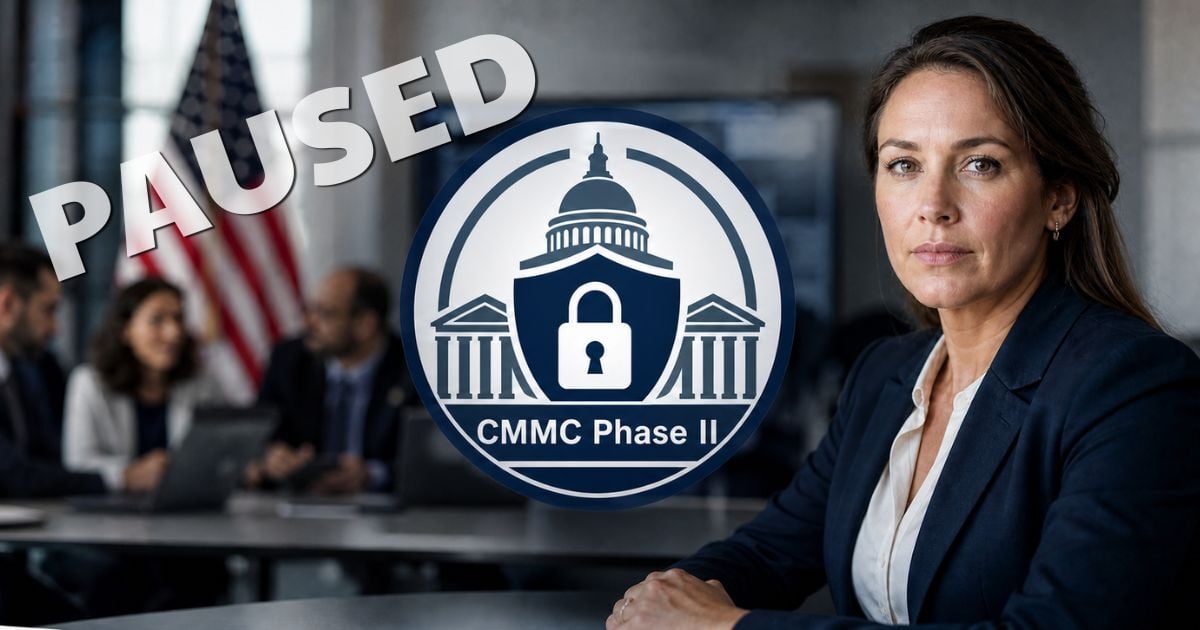
Updated: July 14, 2026 The Department of War recently announced the immediate suspension of CMMC Phase II requirements and launched a 60-day review of the program. The third-party assessment requirements that were scheduled to take effect on November 10, 2026, are now on hold while the Department evaluates the future direction of CMMC. Phase I self-assessment requirements remain in effect. For many organizations across the Defense Industrial Base (DIB), this announcement raises an important question:
Updated: July 14, 2026 The Department of War recently announced the immediate suspension of CMMC Phase II requirements and launched a 60-day review of the program. The third-party assessment requirements that were scheduled to take effect on November 10, 2026, are now on hold while the Department evaluates the future direction of CMMC. Phase I self-assessment requirements remain in effect. For many organizations across the Defense Industrial Base (DIB), this announcement raises an important question:
Read full post on dpsolutions.com

The Hidden Costs of Doing Nothing: Why Outdated Infrastructure Will Hurt More Than Upgrading
Organizations rarely set out to “do nothing.” But when budgets are tight, teams are stretched thin, and systems seem stable enough, delaying upgrades becomes the path of least resistance. Unfortunately, in today’s environment, doing nothing has become the most expensive IT strategy of all. Whether it’s an aging firewall, an outdated endpoint, a legacy application, or a server running on borrowed time, the longer you wait to modernize, the more risk, cost, and disruption you accumulate. And with major deadlines approaching, like the end of support for Windows Server 2016 in January 2027, bus
Organizations rarely set out to “do nothing.” But when budgets are tight, teams are stretched thin, and systems seem stable enough, delaying upgrades becomes the path of least resistance. Unfortunately, in today’s environment, doing nothing has become the most expensive IT strategy of all. Whether it’s an aging firewall, an outdated endpoint, a legacy application, or a server running on borrowed time, the longer you wait to modernize, the more risk, cost, and disruption you accumulate. And with major deadlines approaching, like the end of support for Windows Server 2016 in January 2027, businesses are realizing that staying still actually moves you backward.
Read full post on dpsolutions.com

Using Managed Detection and Response to Reduce Alert Fatigue in Internal IT Teams
Security alerts never stop. Internal IT teams often deal with hundreds or even thousands of notifications every day, many of which turn out to be low risk or false positives. Managed Detection and Response, often called MDR, reduces alert fatigue by filtering noise, prioritizing real threats, and giving organizations access to around-the-clock security monitoring and response support. When IT staff spend too much time sorting through alerts, real threats can slip through unnoticed. A managed security operations approach helps teams focus on the incidents that matter while improving visibility
Security alerts never stop. Internal IT teams often deal with hundreds or even thousands of notifications every day, many of which turn out to be low risk or false positives. Managed Detection and Response, often called MDR, reduces alert fatigue by filtering noise, prioritizing real threats, and giving organizations access to around-the-clock security monitoring and response support. When IT staff spend too much time sorting through alerts, real threats can slip through unnoticed. A managed security operations approach helps teams focus on the incidents that matter while improving visibility across systems, users, cloud platforms, and devices. Businesses that use MDR services often see faster response times, better reporting, and less pressure on internal staff.
Read full post on dpsolutions.com
How Managed Backup Services Simplify Compliance and Data Protection
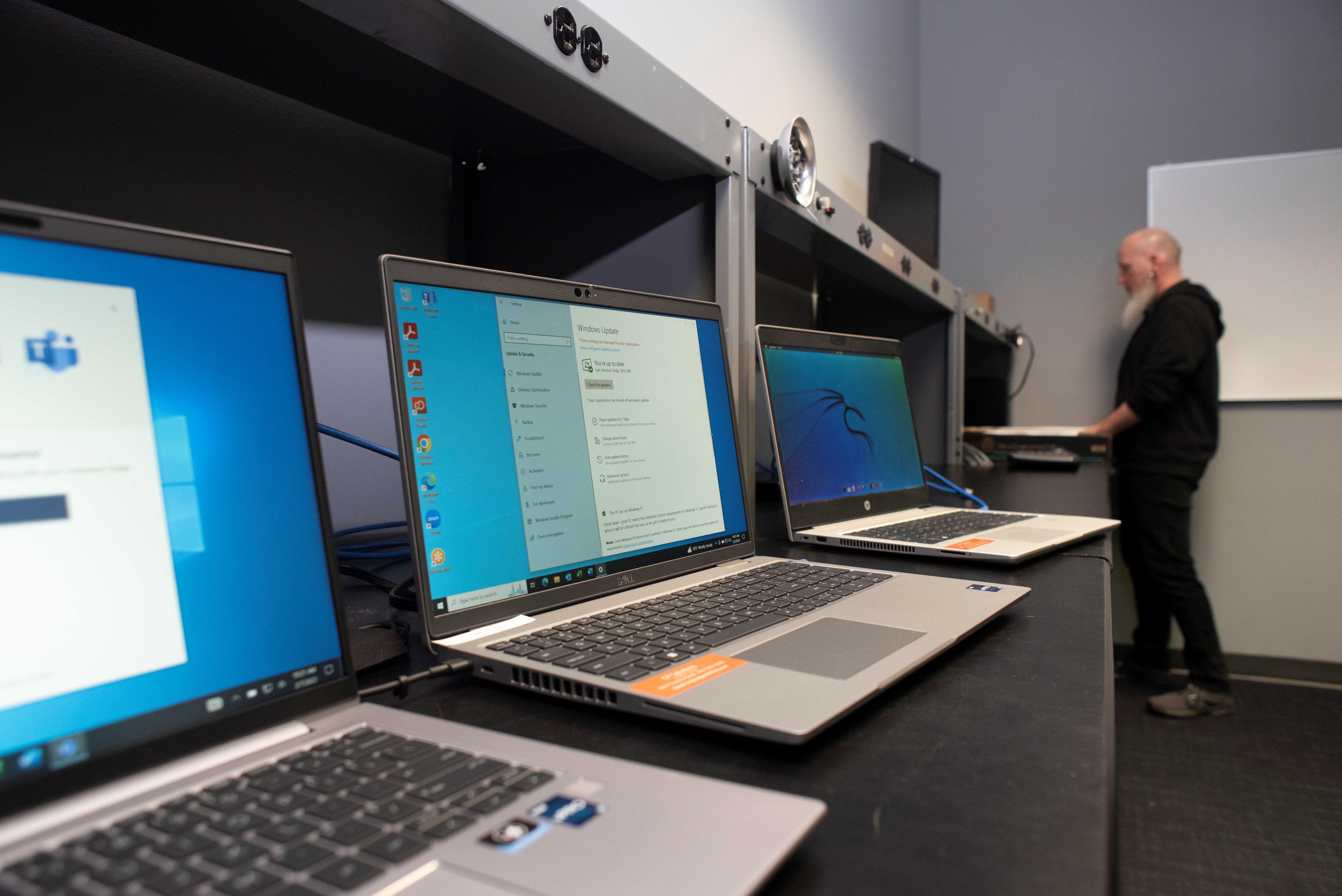
Managed backup services protect your business data through automated, continuous backups and secure offsite storage while helping meet strict compliance rules. They reduce manual work, lower risk, and allow fast recovery when something goes wrong. Businesses rely on managed backup to keep systems available and meet audit requirements without stress.
Managed backup services protect your business data through automated, continuous backups and secure offsite storage while helping meet strict compliance rules. They reduce manual work, lower risk, and allow fast recovery when something goes wrong. Businesses rely on managed backup to keep systems available and meet audit requirements without stress.
Read full post on dpsolutions.com

What Is CMMC Compliance & Why It Matters
Every year there are growing cybersecurity risks, especially across the Defense Industrial Base (DIB). To strengthen national security and ensure consistent cyber hygiene across contractors, the U.S. Department of War (DoW) created the Cybersecurity Maturity Model Certification (CMMC). The latest version, CMMC 2.0, streamlines the framework by reducing the levels from five to three and aligning the requirements with NIST standards. This guide covers: what CMMC is, why this compliance matters, the three certification levels, and the path to compliance.
Every year there are growing cybersecurity risks, especially across the Defense Industrial Base (DIB). To strengthen national security and ensure consistent cyber hygiene across contractors, the U.S. Department of War (DoW) created the Cybersecurity Maturity Model Certification (CMMC). The latest version, CMMC 2.0, streamlines the framework by reducing the levels from five to three and aligning the requirements with NIST standards. This guide covers: what CMMC is, why this compliance matters, the three certification levels, and the path to compliance.
Read full post on dpsolutions.com
Failed to load more articles
You're all caught up!
Check back later for more profile news.

DP Solutions is more than just a technology vendor, but rather a true partner who is there for the long-run to help support our clients' business initiatives.
Our breadth of technology expertise includes: managed IT services, managed security services, managed backup, disaster recovery, cloud business solutions, project services, help desk services and hosting solutions.
DP Solutions is committed to excellence in its work ethic, in the products and services provided, and in the relationships with its clients and communities. For more information, please visit, www.dpsolutions.com.
When you work with DP Solutions, you're not outsourcing, you are tapping into a powerful resource. Problem Solved!
The Biggest Cybersecurity Risks for SMBs in 2027
Cyberattacks are no longer just a concern for large enterprises. Small and mid-sized businesses have become attractive targets for cybercriminals, and the tactics used to compromise organizations are more sophisticated, accessible, and difficult to detect. “78% of SMBs fear a serious cyberattack could put them out of business.” -ConnectWise State of SMB Cybersecurity Report The biggest shift is how attacks happen. Cybercriminals are no longer “breaking in.” According to ConnectWise’s 2026 MSP Threat Report, compiled from real-world incident response investigations and customer telemetry,
Cyberattacks are no longer just a concern for large enterprises. Small and mid-sized businesses have become attractive targets for cybercriminals, and the tactics used to compromise organizations are more sophisticated, accessible, and difficult to detect. “78% of SMBs fear a serious cyberattack could put them out of business.” -ConnectWise State of SMB Cybersecurity Report The biggest shift is how attacks happen. Cybercriminals are no longer “breaking in.” According to ConnectWise’s 2026 MSP Threat Report, compiled from real-world incident response investigations and customer telemetry, attackers are logging in. They use stolen credentials, trusted tools, and everyday access points to operate undetected inside business networks. The most successful attacks follow a recognizable pattern: 1. Gain access using stolen or weak credentials.2. Move through systems using legitimate tools.3. Disable backups and security controls.4. Steal data and/or deploy ransomware, often within hours. The common thread is trust. Attackers exploit normal business activity to avoid detection. This means traditional perimeter defenses are no longer enough. Businesses need to focus on preventing the misuse of access, not just blocking threats at the door.
Read full post on dpsolutions.com
How AI is Impacting Your Business
AI is no longer something businesses are experimenting with on the sidelines. It's already built into the tools your team uses, the applications your vendors provide, and the way customers interact with organizations every day. For small and mid-sized businesses, that creates both opportunity and responsibility. Teams are using AI to draft emails, summarize information, automate tasks, improve customer experiences, and make faster decisions. At the same time, cybercriminals are using the same technology to create more convincing phishing attacks, automate fraud, and scale their efforts in wa
AI is no longer something businesses are experimenting with on the sidelines. It's already built into the tools your team uses, the applications your vendors provide, and the way customers interact with organizations every day. For small and mid-sized businesses, that creates both opportunity and responsibility. Teams are using AI to draft emails, summarize information, automate tasks, improve customer experiences, and make faster decisions. At the same time, cybercriminals are using the same technology to create more convincing phishing attacks, automate fraud, and scale their efforts in ways that weren't possible a few years ago. The businesses using AI well are not the ones using it the most. They are the ones using it in a way that makes their people more capable, their customers better served, and their decisions better informed. Whether you have formally adopted AI tools or not, AI is already part of how your business operates. The question is not whether to engage with it. That decision was made for you. The question is whether you have a plan for getting the most out of AI while managing it responsibly. This is where having the right technology partner can make a difference. DP Solutions helps organizations understand where AI is already at work in their environment, how to use it effectively, and how to manage it responsibly.
Read full post on dpsolutions.com
The New Reality of Ransomware: What Organizations Need to Know
Ransomware remains one of the most disruptive cybersecurity threats facing organizations today. While ransomware once focused primarily on encrypting files, modern attacks often involve data theft, extortion, and the threat of publicly exposing sensitive information. The financial impact continues to grow. According to Sophos' State of Ransomware in the U.S. 2026 report, the average cost to recover from a ransomware attack reached $2.51 million, up from $1.91 million the previous year. That figure excludes any ransom payments and includes costs such as downtime, recovery efforts, lost product
Ransomware remains one of the most disruptive cybersecurity threats facing organizations today. While ransomware once focused primarily on encrypting files, modern attacks often involve data theft, extortion, and the threat of publicly exposing sensitive information. The financial impact continues to grow. According to Sophos' State of Ransomware in the U.S. 2026 report, the average cost to recover from a ransomware attack reached $2.51 million, up from $1.91 million the previous year. That figure excludes any ransom payments and includes costs such as downtime, recovery efforts, lost productivity, and business disruption. Additionally, Verizon's 2026 Data Breach Investigations Report found ransomware was involved in 48% of all analyzed breaches, demonstrating how common these attacks have become across organizations of all sizes. No business is immune. Whether you're a small business, manufacturer, healthcare provider, nonprofit, or government contractor, understanding how ransomware works and how to reduce your risk is critical.
Read full post on dpsolutions.com
Inside the DP Solutions Onboarding Process: A Conversation with Our Team
Switching IT providers can feel overwhelming. Business leaders often worry about downtime, communication breakdowns, and whether their new provider will truly understand their environment and goals. At DP Solutions, onboarding is designed to eliminate those concerns. From the first sales conversation through ongoing strategic planning, our teams work together to create a seamless transition with clear communication, minimal disruption, and a strong foundation for long-term success. To give you a behind-the-scenes look at how it all works, we sat down with Ken Goldstein, Chief Revenue Officer
Switching IT providers can feel overwhelming. Business leaders often worry about downtime, communication breakdowns, and whether their new provider will truly understand their environment and goals. At DP Solutions, onboarding is designed to eliminate those concerns. From the first sales conversation through ongoing strategic planning, our teams work together to create a seamless transition with clear communication, minimal disruption, and a strong foundation for long-term success. To give you a behind-the-scenes look at how it all works, we sat down with Ken Goldstein, Chief Revenue Officer, and Chad Dukes, Project Manager, to discuss what clients can expect during onboarding and how DP Solutions approaches the transition differently.
Read full post on dpsolutions.com
Why Social Media Is a Cybersecurity Issue
Most organizations think about cybersecurity in terms of email security, firewalls, endpoint protection, and phishing attacks. But what about LinkedIn, Meta, YouTube, Canva, or Linktree? For many businesses, social media accounts are among their most visible and valuable digital assets. Yet they're often managed with less security, less oversight, and fewer processes than almost any other business system. That creates risk. A compromised social media account can damage your brand, expose sensitive information, impact customer trust, create compliance concerns, and disrupt business operation
Most organizations think about cybersecurity in terms of email security, firewalls, endpoint protection, and phishing attacks. But what about LinkedIn, Meta, YouTube, Canva, or Linktree? For many businesses, social media accounts are among their most visible and valuable digital assets. Yet they're often managed with less security, less oversight, and fewer processes than almost any other business system. That creates risk. A compromised social media account can damage your brand, expose sensitive information, impact customer trust, create compliance concerns, and disrupt business operations. Many businesses view social media as purely a marketing responsibility. Cybercriminals often view it differently. They see social media accounts as opportunities to impersonate a business, gather information, target employees, scam customers, or gain access to connected tools and applications. So here's our question to you: Are your social media accounts managed with the same level of security and accountability as the rest of your IT environment? For many organizations, the answer is no.
Read full post on dpsolutions.com
CMMC Phase 2 Hits Pause. Now What?
Updated: July 14, 2026 The Department of War recently announced the immediate suspension of CMMC Phase II requirements and launched a 60-day review of the program. The third-party assessment requirements that were scheduled to take effect on November 10, 2026, are now on hold while the Department evaluates the future direction of CMMC. Phase I self-assessment requirements remain in effect. For many organizations across the Defense Industrial Base (DIB), this announcement raises an important question:
Updated: July 14, 2026 The Department of War recently announced the immediate suspension of CMMC Phase II requirements and launched a 60-day review of the program. The third-party assessment requirements that were scheduled to take effect on November 10, 2026, are now on hold while the Department evaluates the future direction of CMMC. Phase I self-assessment requirements remain in effect. For many organizations across the Defense Industrial Base (DIB), this announcement raises an important question:
Read full post on dpsolutions.com
The Hidden Costs of Doing Nothing: Why Outdated Infrastructure Will Hurt More Than Upgrading
Organizations rarely set out to “do nothing.” But when budgets are tight, teams are stretched thin, and systems seem stable enough, delaying upgrades becomes the path of least resistance. Unfortunately, in today’s environment, doing nothing has become the most expensive IT strategy of all. Whether it’s an aging firewall, an outdated endpoint, a legacy application, or a server running on borrowed time, the longer you wait to modernize, the more risk, cost, and disruption you accumulate. And with major deadlines approaching, like the end of support for Windows Server 2016 in January 2027, bus
Organizations rarely set out to “do nothing.” But when budgets are tight, teams are stretched thin, and systems seem stable enough, delaying upgrades becomes the path of least resistance. Unfortunately, in today’s environment, doing nothing has become the most expensive IT strategy of all. Whether it’s an aging firewall, an outdated endpoint, a legacy application, or a server running on borrowed time, the longer you wait to modernize, the more risk, cost, and disruption you accumulate. And with major deadlines approaching, like the end of support for Windows Server 2016 in January 2027, businesses are realizing that staying still actually moves you backward.
Read full post on dpsolutions.com
Using Managed Detection and Response to Reduce Alert Fatigue in Internal IT Teams
Security alerts never stop. Internal IT teams often deal with hundreds or even thousands of notifications every day, many of which turn out to be low risk or false positives. Managed Detection and Response, often called MDR, reduces alert fatigue by filtering noise, prioritizing real threats, and giving organizations access to around-the-clock security monitoring and response support. When IT staff spend too much time sorting through alerts, real threats can slip through unnoticed. A managed security operations approach helps teams focus on the incidents that matter while improving visibility
Security alerts never stop. Internal IT teams often deal with hundreds or even thousands of notifications every day, many of which turn out to be low risk or false positives. Managed Detection and Response, often called MDR, reduces alert fatigue by filtering noise, prioritizing real threats, and giving organizations access to around-the-clock security monitoring and response support. When IT staff spend too much time sorting through alerts, real threats can slip through unnoticed. A managed security operations approach helps teams focus on the incidents that matter while improving visibility across systems, users, cloud platforms, and devices. Businesses that use MDR services often see faster response times, better reporting, and less pressure on internal staff.
Read full post on dpsolutions.com
How Managed Backup Services Simplify Compliance and Data Protection
Managed backup services protect your business data through automated, continuous backups and secure offsite storage while helping meet strict compliance rules. They reduce manual work, lower risk, and allow fast recovery when something goes wrong. Businesses rely on managed backup to keep systems available and meet audit requirements without stress.
Managed backup services protect your business data through automated, continuous backups and secure offsite storage while helping meet strict compliance rules. They reduce manual work, lower risk, and allow fast recovery when something goes wrong. Businesses rely on managed backup to keep systems available and meet audit requirements without stress.
Read full post on dpsolutions.com
What Is CMMC Compliance & Why It Matters
Every year there are growing cybersecurity risks, especially across the Defense Industrial Base (DIB). To strengthen national security and ensure consistent cyber hygiene across contractors, the U.S. Department of War (DoW) created the Cybersecurity Maturity Model Certification (CMMC). The latest version, CMMC 2.0, streamlines the framework by reducing the levels from five to three and aligning the requirements with NIST standards. This guide covers: what CMMC is, why this compliance matters, the three certification levels, and the path to compliance.
Every year there are growing cybersecurity risks, especially across the Defense Industrial Base (DIB). To strengthen national security and ensure consistent cyber hygiene across contractors, the U.S. Department of War (DoW) created the Cybersecurity Maturity Model Certification (CMMC). The latest version, CMMC 2.0, streamlines the framework by reducing the levels from five to three and aligning the requirements with NIST standards. This guide covers: what CMMC is, why this compliance matters, the three certification levels, and the path to compliance.
Read full post on dpsolutions.com
Failed to load more articles
You're all caught up!
Check back later for more profile news.