
Intelligent Technical Solutions
ITS Named Finalist for 2026 MSP Titans Nationwide and MSSP Awards
LAS VEGAS, NV – Intelligent Technical Solutions (ITS), a national Managed Security Service Provider (MSSP), announced today that it has been named a finalist in two categories for the 2026 MSP Titans of the Industry Awards: Nationwide/Multi-Location and MSSP.
LAS VEGAS, NV – Intelligent Technical Solutions (ITS), a national Managed Security Service Provider (MSSP), announced today that it has been named a finalist in two categories for the 2026 MSP Titans of the Industry Awards: Nationwide/Multi-Location and MSSP.
Read full post on itsasap.com

Onboarding: The ITS Way
Disclaimer: This blog was originally published on February 24, 2023, and has since been updated for accuracy and clarity.
Disclaimer: This blog was originally published on February 24, 2023, and has since been updated for accuracy and clarity.
Read full post on itsasap.com

Why Does Your Business Need Security Awareness Training?
This blog was originally published on July 1, 2021, and has since been updated for accuracy and clarity.
This blog was originally published on July 1, 2021, and has since been updated for accuracy and clarity.
Read full post on itsasap.com
ITS Returns to 2026 Inc. 5000 for Third Consecutive Year
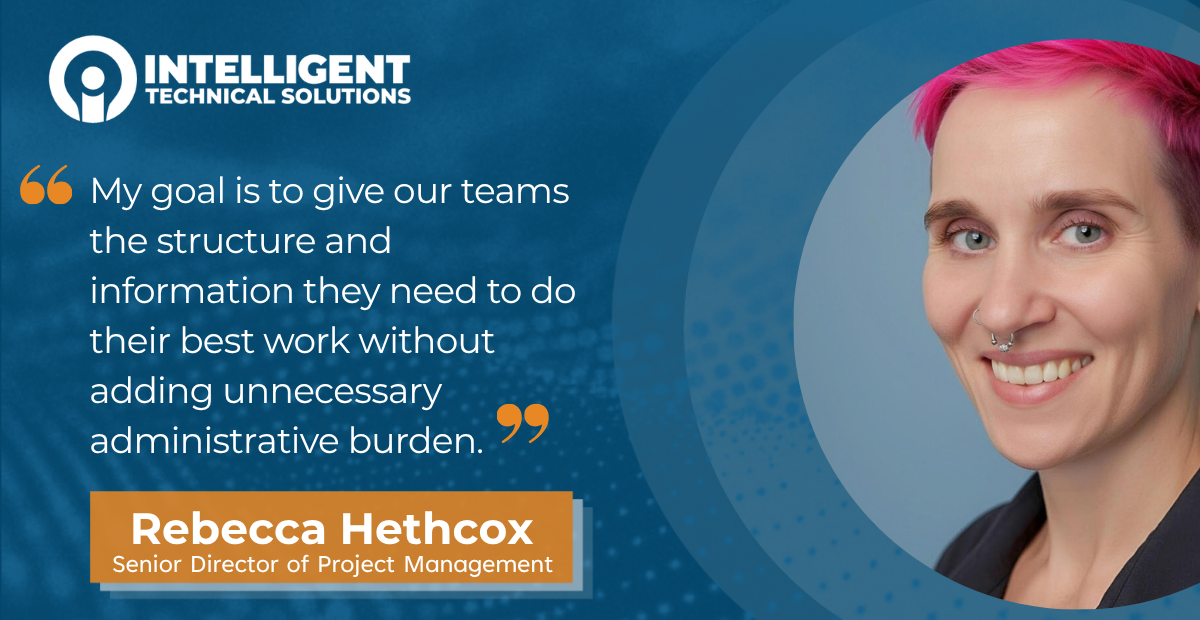
ITS Names Rebecca Hethcox Senior Director of Project Management
LAS VEGAS, [AUGUST 6, 2026] — Intelligent Technical Solutions (ITS), a national managed IT and cybersecurity services provider, has named Rebecca Hethcox its new Senior Director of Project Management.
LAS VEGAS, [AUGUST 6, 2026] — Intelligent Technical Solutions (ITS), a national managed IT and cybersecurity services provider, has named Rebecca Hethcox its new Senior Director of Project Management.
Read full post on itsasap.com

Velocity IT Partners With Intelligent Technical Solutions
Dallas, TX [AUGUST 4, 2026]: Dallas-based managed service provider Velocity IT has joined Intelligent Technical Solutions (ITS), adding 12 employees and Dallas-Fort Worth clients to the ITS network. The move gives ITS its 14th U.S. location and its first in Texas.
Dallas, TX [AUGUST 4, 2026]: Dallas-based managed service provider Velocity IT has joined Intelligent Technical Solutions (ITS), adding 12 employees and Dallas-Fort Worth clients to the ITS network. The move gives ITS its 14th U.S. location and its first in Texas.
Read full post on itsasap.com
What Does the CMMC Phase II Suspension Mean for Contractors?
On July 13, 2026, the Department of War (DoW) announced the suspension of CMMC Phase II certification requirements and Phase III milestones pending a 60-day program review. Although it removes the immediate assessment requirements, it does not remove your obligation to protect controlled unclassified information under DFARS 252.204-7012. If you work in the Defense Industrial Base, you have likely spent the past year preparing for CMMC Level 2 certification. Then, without warning, the rules changed. On July 13, 2026, the Department of War announced it was suspending CMMC Phase IIrequirement
On July 13, 2026, the Department of War (DoW) announced the suspension of CMMC Phase II certification requirements and Phase III milestones pending a 60-day program review. Although it removes the immediate assessment requirements, it does not remove your obligation to protect controlled unclassified information under DFARS 252.204-7012. If you work in the Defense Industrial Base, you have likely spent the past year preparing for CMMC Level 2 certification. Then, without warning, the rules changed. On July 13, 2026, the Department of War announced it was suspending CMMC Phase IIrequirements before the initial November 10, 2026 deadline. For contractors mid-assessment or mid-remediation, the announcement raises an obvious question: what does this mean for your compliance program? Intelligent Technical Solutions (ITS) has helped defense contractors navigate cybersecurity compliance for years. We track changes like this closely because a paused certification requirement is not the same as a paused security obligation. Misrepresenting your cybersecurity posture can put your contracts at risk and may create False Claims Act exposure. In this article, we'll cover: What Is CMMC Phase II, and who does it affect? What changed with the CMMC Phase II suspension? What do defense contractors still need to do? What Is CMMC Phase II, and who does it affect? What changed with the CMMC Phase II suspension? What do defense contractors still need to do? What Is CMMC Phase II, and Who Does It Affect? CMMC Phase II was the second stage of the Department's planned CMMC rollout. It would have required certain Defense Industrial Base contractors and subcontractors to pass a Level 2 assessment by a certified third-party assessment organization, or C3PAO. The requirement would have applied to certain contracts involving controlled unclassified information, or CUI. Prime contractors would also have needed to pass the right security requirements down to affected subcontractors. Phase II is now suspended, along with the government-led Level 3 assessments planned for Phase III. However, Phase I self-assessments, SPRS reporting, and existing DFARS obligations remain in effect. Read: CMMC Certification: Its Process and Timeline Explained What Changed with the CMMC Phase II Suspension? The Department of War suspended the CMMC Phase II requirements that were set to begin on November 10, 2026. This means certain third-party and government-led assessment requirements will not take effect as planned.
Read full post on itsasap.com

Is a Virtual Firewall Right for Your Business? (Pros & Cons)
Disclaimer: This blog was originally published on June 7, 2023, and has since been updated for accuracy and clarity.
Disclaimer: This blog was originally published on June 7, 2023, and has since been updated for accuracy and clarity.
Read full post on itsasap.com
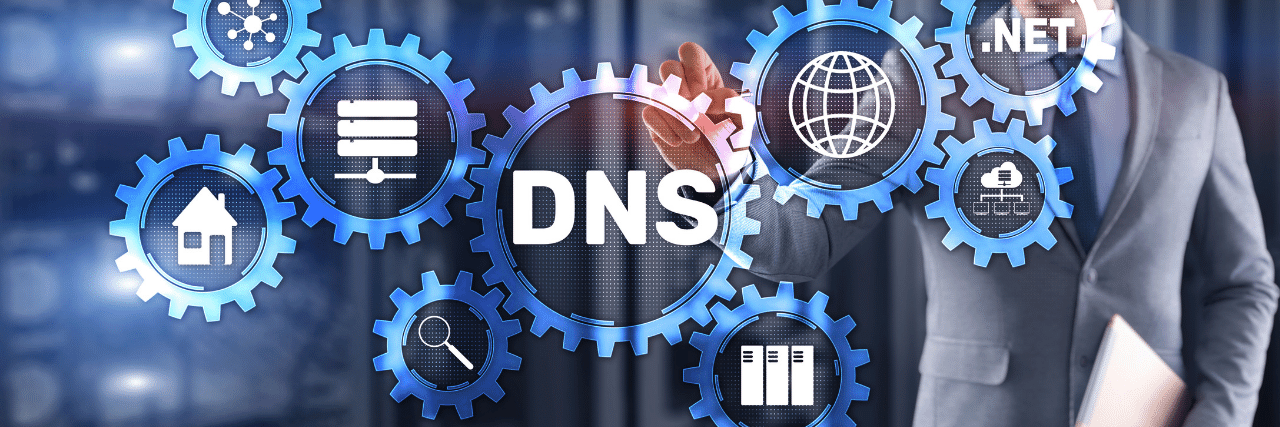
What Is DNS, and How Does It Affect Your Business?
This blog was originally published on November 26, 2021, and has since been updated for accuracy and clarity. DNS, or Domain Name System, is the internet’s address book, connecting domain names to the records that power websites, email, and cloud tools. When DNS fails or is attacked, your business can lose access to essential services, send users to unsafe sites, or give cybercriminals a path into your environment. In most cases, when someone visits your website, sends an email, or connects to a cloud application by name, DNS is working in the background, often using cached records. Most
This blog was originally published on November 26, 2021, and has since been updated for accuracy and clarity. DNS, or Domain Name System, is the internet’s address book, connecting domain names to the records that power websites, email, and cloud tools. When DNS fails or is attacked, your business can lose access to essential services, send users to unsafe sites, or give cybercriminals a path into your environment. In most cases, when someone visits your website, sends an email, or connects to a cloud application by name, DNS is working in the background, often using cached records. Most people never notice it until something breaks and websites, email, or cloud tools suddenly stop working the way the business expects. At Intelligent Technical Solutions (ITS), we help small- to mid-sized businesses in healthcare, finance, and other regulated industries manage and secure the technology they depend on, including DNS. For this article, we spoke with Peter Swarowski, ITS Chief Information Officer, to explain what DNS is, how it works, and why protecting it matters. You will learn: What is DNS? Why is DNS important for your business? How do you protect your business from DNS attacks? What Is DNS? DNS stands for Domain Name System. It is a system that connects domain names to IP addresses so people can reach websites, email servers, and cloud applications. For businesses, DNS matters because it affects website availability, email delivery, cloud access, and cybersecurity. Think of DNS as a phonebook for the internet. It is a hierarchical, distributed system that stores DNS records for domains and helps devices find the right online destination. Without DNS, you would need to memorize a string of numbers to reach every website or service. DNS handles that lookup behind the scenes. Here are the four key components that make DNS work: Domain Name: The name of your website, such as itsasap.com. Domain names make the internet easier to navigate by using human-readable words instead of long strings of numbers. IP Address: A numeric address assigned to a device or server to enable machines to find and communicate with each other over a network. For illustration, an IP address may look like 192.0.2.1. DNS Server: A DNS server helps answer DNS queries. Some servers look up records for users, while authoritative nameservers store the official DNS records for a domain. DNS Hosting Service: This service hosts and manages your DNS records on authoritative DNS servers. Many domain registrars offer DNS hosting, but businesses can also use a separate managed DNS provider.
Read full post on itsasap.com
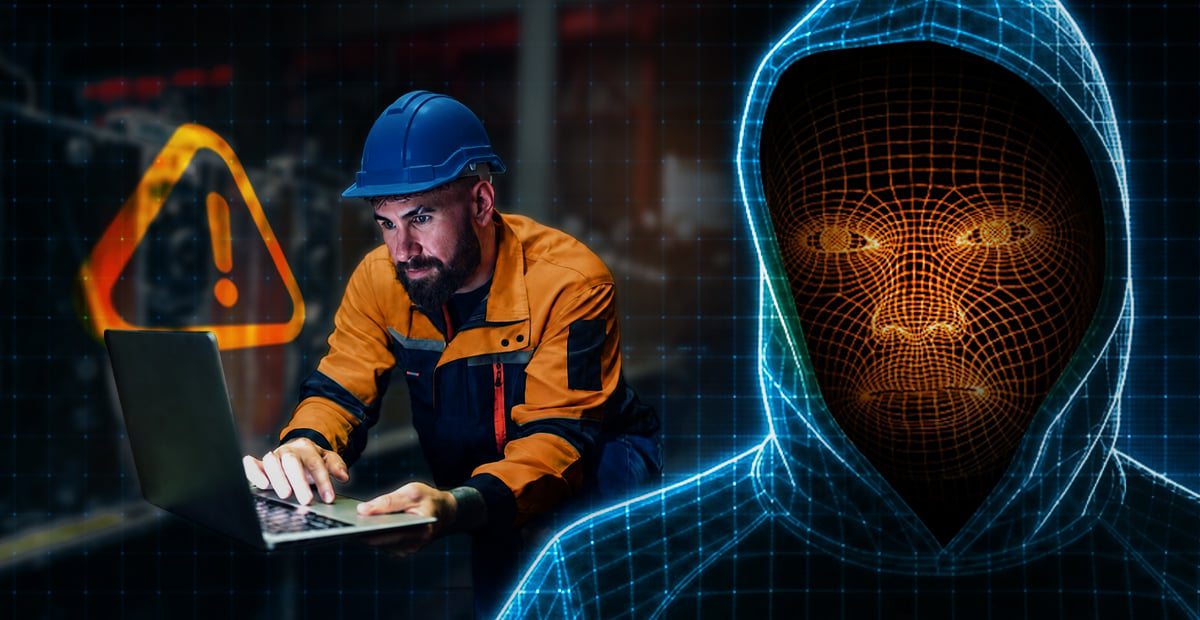
How Can Manufacturing Plants Stop AI-Powered Cyberattacks?
AI can help criminals write more effective phishing emails, identify weak spots faster, and create more convincing fake voices for urgent requests. Manufacturing plants can reduce this risk by strengthening identity controls, separating IT from factory systems, locking down vendor access, and practicing recovery. When AI-powered phishing, ransomware, or vendor account attacks hit manufacturing plants, downtime stops production, and missed shipments hurt customer trust. Intelligent Technical Solutions (ITS) has spent over 20 years helping organizations, including manufacturers, protect thei
AI can help criminals write more effective phishing emails, identify weak spots faster, and create more convincing fake voices for urgent requests. Manufacturing plants can reduce this risk by strengthening identity controls, separating IT from factory systems, locking down vendor access, and practicing recovery. When AI-powered phishing, ransomware, or vendor account attacks hit manufacturing plants, downtime stops production, and missed shipments hurt customer trust. Intelligent Technical Solutions (ITS) has spent over 20 years helping organizations, including manufacturers, protect their networks without shutting down production. We help you prevent attacks that cause downtime and protect your reputation. In this article, we've invited Sean Harris, ITS Chief Risk and Compliance Officer, to share practical steps manufacturers can take to defend against AI-powered attacks. You will learn: How can manufacturing plants reduce the risk of AI-driven phishing and payment fraud? How can MSSPs help protect manufacturing plants from AI-powered attacks? Why Are AI-Powered Attacks a Growing Threat to Manufacturing Plants? Manufacturing plants run on equipment that often can't be patched easily. Production schedules don't allow lengthy security updates. Remote vendor access creates necessary but risky entry points. These realities make manufacturing targets attractive to criminals. In some cases, AI and automation can cut the time from targeting to action from days to hours by finding weak spots faster and attacking more targets at once. These capabilities create three specific problems for manufacturers: AI-Powered Phishing AI tools write emails that sound natural. Criminals scan your website and LinkedIn to learn vendor names and project details. These emails often match your plant's normal style. Deepfake voice tools can imitate a person's voice from short recordings, making urgent fraud calls more believable. Fewer Obvious Warning Signs Traditional phishing emails had clear red flags, such as spelling errors, awkward phrasing, and requests that didn't align with normal business processes. However, AI-generated attacks look professional and sound natural, so these old warning signs no longer help. Faster Network Attacks
Read full post on itsasap.com
Failed to load more articles
You're all caught up!
Check back later for more profile news.
Helping your business meet its goals is our top priority – it is what sustains and drives us. We use the latest technology to help you succeed by providing all the advantages of IT service and support while eliminating the high costs of managing IT in-house.
Our service programs are designed and implemented based on a thorough inquiry and understanding of your unique business processes.
Our devoted team of managed IT service engineers and support specialists monitor your networks and servers 24x7 with a proactive approach to managing your technology.
Intelligent Technical Solutions: Enabling business through managing technology.
We are growing! Be part of our team of cool, professional people.
ITS Named Finalist for 2026 MSP Titans Nationwide and MSSP Awards
LAS VEGAS, NV – Intelligent Technical Solutions (ITS), a national Managed Security Service Provider (MSSP), announced today that it has been named a finalist in two categories for the 2026 MSP Titans of the Industry Awards: Nationwide/Multi-Location and MSSP.
LAS VEGAS, NV – Intelligent Technical Solutions (ITS), a national Managed Security Service Provider (MSSP), announced today that it has been named a finalist in two categories for the 2026 MSP Titans of the Industry Awards: Nationwide/Multi-Location and MSSP.
Read full post on itsasap.com
Onboarding: The ITS Way
Disclaimer: This blog was originally published on February 24, 2023, and has since been updated for accuracy and clarity.
Disclaimer: This blog was originally published on February 24, 2023, and has since been updated for accuracy and clarity.
Read full post on itsasap.com
Why Does Your Business Need Security Awareness Training?
This blog was originally published on July 1, 2021, and has since been updated for accuracy and clarity.
This blog was originally published on July 1, 2021, and has since been updated for accuracy and clarity.
Read full post on itsasap.com
ITS Returns to 2026 Inc. 5000 for Third Consecutive Year
ITS Names Rebecca Hethcox Senior Director of Project Management
LAS VEGAS, [AUGUST 6, 2026] — Intelligent Technical Solutions (ITS), a national managed IT and cybersecurity services provider, has named Rebecca Hethcox its new Senior Director of Project Management.
LAS VEGAS, [AUGUST 6, 2026] — Intelligent Technical Solutions (ITS), a national managed IT and cybersecurity services provider, has named Rebecca Hethcox its new Senior Director of Project Management.
Read full post on itsasap.com
Velocity IT Partners With Intelligent Technical Solutions
Dallas, TX [AUGUST 4, 2026]: Dallas-based managed service provider Velocity IT has joined Intelligent Technical Solutions (ITS), adding 12 employees and Dallas-Fort Worth clients to the ITS network. The move gives ITS its 14th U.S. location and its first in Texas.
Dallas, TX [AUGUST 4, 2026]: Dallas-based managed service provider Velocity IT has joined Intelligent Technical Solutions (ITS), adding 12 employees and Dallas-Fort Worth clients to the ITS network. The move gives ITS its 14th U.S. location and its first in Texas.
Read full post on itsasap.com
What Does the CMMC Phase II Suspension Mean for Contractors?
On July 13, 2026, the Department of War (DoW) announced the suspension of CMMC Phase II certification requirements and Phase III milestones pending a 60-day program review. Although it removes the immediate assessment requirements, it does not remove your obligation to protect controlled unclassified information under DFARS 252.204-7012. If you work in the Defense Industrial Base, you have likely spent the past year preparing for CMMC Level 2 certification. Then, without warning, the rules changed. On July 13, 2026, the Department of War announced it was suspending CMMC Phase IIrequirement
On July 13, 2026, the Department of War (DoW) announced the suspension of CMMC Phase II certification requirements and Phase III milestones pending a 60-day program review. Although it removes the immediate assessment requirements, it does not remove your obligation to protect controlled unclassified information under DFARS 252.204-7012. If you work in the Defense Industrial Base, you have likely spent the past year preparing for CMMC Level 2 certification. Then, without warning, the rules changed. On July 13, 2026, the Department of War announced it was suspending CMMC Phase IIrequirements before the initial November 10, 2026 deadline. For contractors mid-assessment or mid-remediation, the announcement raises an obvious question: what does this mean for your compliance program? Intelligent Technical Solutions (ITS) has helped defense contractors navigate cybersecurity compliance for years. We track changes like this closely because a paused certification requirement is not the same as a paused security obligation. Misrepresenting your cybersecurity posture can put your contracts at risk and may create False Claims Act exposure. In this article, we'll cover: What Is CMMC Phase II, and who does it affect? What changed with the CMMC Phase II suspension? What do defense contractors still need to do? What Is CMMC Phase II, and who does it affect? What changed with the CMMC Phase II suspension? What do defense contractors still need to do? What Is CMMC Phase II, and Who Does It Affect? CMMC Phase II was the second stage of the Department's planned CMMC rollout. It would have required certain Defense Industrial Base contractors and subcontractors to pass a Level 2 assessment by a certified third-party assessment organization, or C3PAO. The requirement would have applied to certain contracts involving controlled unclassified information, or CUI. Prime contractors would also have needed to pass the right security requirements down to affected subcontractors. Phase II is now suspended, along with the government-led Level 3 assessments planned for Phase III. However, Phase I self-assessments, SPRS reporting, and existing DFARS obligations remain in effect. Read: CMMC Certification: Its Process and Timeline Explained What Changed with the CMMC Phase II Suspension? The Department of War suspended the CMMC Phase II requirements that were set to begin on November 10, 2026. This means certain third-party and government-led assessment requirements will not take effect as planned.
Read full post on itsasap.com
Is a Virtual Firewall Right for Your Business? (Pros & Cons)
Disclaimer: This blog was originally published on June 7, 2023, and has since been updated for accuracy and clarity.
Disclaimer: This blog was originally published on June 7, 2023, and has since been updated for accuracy and clarity.
Read full post on itsasap.com
What Is DNS, and How Does It Affect Your Business?
This blog was originally published on November 26, 2021, and has since been updated for accuracy and clarity. DNS, or Domain Name System, is the internet’s address book, connecting domain names to the records that power websites, email, and cloud tools. When DNS fails or is attacked, your business can lose access to essential services, send users to unsafe sites, or give cybercriminals a path into your environment. In most cases, when someone visits your website, sends an email, or connects to a cloud application by name, DNS is working in the background, often using cached records. Most
This blog was originally published on November 26, 2021, and has since been updated for accuracy and clarity. DNS, or Domain Name System, is the internet’s address book, connecting domain names to the records that power websites, email, and cloud tools. When DNS fails or is attacked, your business can lose access to essential services, send users to unsafe sites, or give cybercriminals a path into your environment. In most cases, when someone visits your website, sends an email, or connects to a cloud application by name, DNS is working in the background, often using cached records. Most people never notice it until something breaks and websites, email, or cloud tools suddenly stop working the way the business expects. At Intelligent Technical Solutions (ITS), we help small- to mid-sized businesses in healthcare, finance, and other regulated industries manage and secure the technology they depend on, including DNS. For this article, we spoke with Peter Swarowski, ITS Chief Information Officer, to explain what DNS is, how it works, and why protecting it matters. You will learn: What is DNS? Why is DNS important for your business? How do you protect your business from DNS attacks? What Is DNS? DNS stands for Domain Name System. It is a system that connects domain names to IP addresses so people can reach websites, email servers, and cloud applications. For businesses, DNS matters because it affects website availability, email delivery, cloud access, and cybersecurity. Think of DNS as a phonebook for the internet. It is a hierarchical, distributed system that stores DNS records for domains and helps devices find the right online destination. Without DNS, you would need to memorize a string of numbers to reach every website or service. DNS handles that lookup behind the scenes. Here are the four key components that make DNS work: Domain Name: The name of your website, such as itsasap.com. Domain names make the internet easier to navigate by using human-readable words instead of long strings of numbers. IP Address: A numeric address assigned to a device or server to enable machines to find and communicate with each other over a network. For illustration, an IP address may look like 192.0.2.1. DNS Server: A DNS server helps answer DNS queries. Some servers look up records for users, while authoritative nameservers store the official DNS records for a domain. DNS Hosting Service: This service hosts and manages your DNS records on authoritative DNS servers. Many domain registrars offer DNS hosting, but businesses can also use a separate managed DNS provider.
Read full post on itsasap.com
How Can Manufacturing Plants Stop AI-Powered Cyberattacks?
AI can help criminals write more effective phishing emails, identify weak spots faster, and create more convincing fake voices for urgent requests. Manufacturing plants can reduce this risk by strengthening identity controls, separating IT from factory systems, locking down vendor access, and practicing recovery. When AI-powered phishing, ransomware, or vendor account attacks hit manufacturing plants, downtime stops production, and missed shipments hurt customer trust. Intelligent Technical Solutions (ITS) has spent over 20 years helping organizations, including manufacturers, protect thei
AI can help criminals write more effective phishing emails, identify weak spots faster, and create more convincing fake voices for urgent requests. Manufacturing plants can reduce this risk by strengthening identity controls, separating IT from factory systems, locking down vendor access, and practicing recovery. When AI-powered phishing, ransomware, or vendor account attacks hit manufacturing plants, downtime stops production, and missed shipments hurt customer trust. Intelligent Technical Solutions (ITS) has spent over 20 years helping organizations, including manufacturers, protect their networks without shutting down production. We help you prevent attacks that cause downtime and protect your reputation. In this article, we've invited Sean Harris, ITS Chief Risk and Compliance Officer, to share practical steps manufacturers can take to defend against AI-powered attacks. You will learn: How can manufacturing plants reduce the risk of AI-driven phishing and payment fraud? How can MSSPs help protect manufacturing plants from AI-powered attacks? Why Are AI-Powered Attacks a Growing Threat to Manufacturing Plants? Manufacturing plants run on equipment that often can't be patched easily. Production schedules don't allow lengthy security updates. Remote vendor access creates necessary but risky entry points. These realities make manufacturing targets attractive to criminals. In some cases, AI and automation can cut the time from targeting to action from days to hours by finding weak spots faster and attacking more targets at once. These capabilities create three specific problems for manufacturers: AI-Powered Phishing AI tools write emails that sound natural. Criminals scan your website and LinkedIn to learn vendor names and project details. These emails often match your plant's normal style. Deepfake voice tools can imitate a person's voice from short recordings, making urgent fraud calls more believable. Fewer Obvious Warning Signs Traditional phishing emails had clear red flags, such as spelling errors, awkward phrasing, and requests that didn't align with normal business processes. However, AI-generated attacks look professional and sound natural, so these old warning signs no longer help. Faster Network Attacks
Read full post on itsasap.com
Failed to load more articles
You're all caught up!
Check back later for more profile news.