

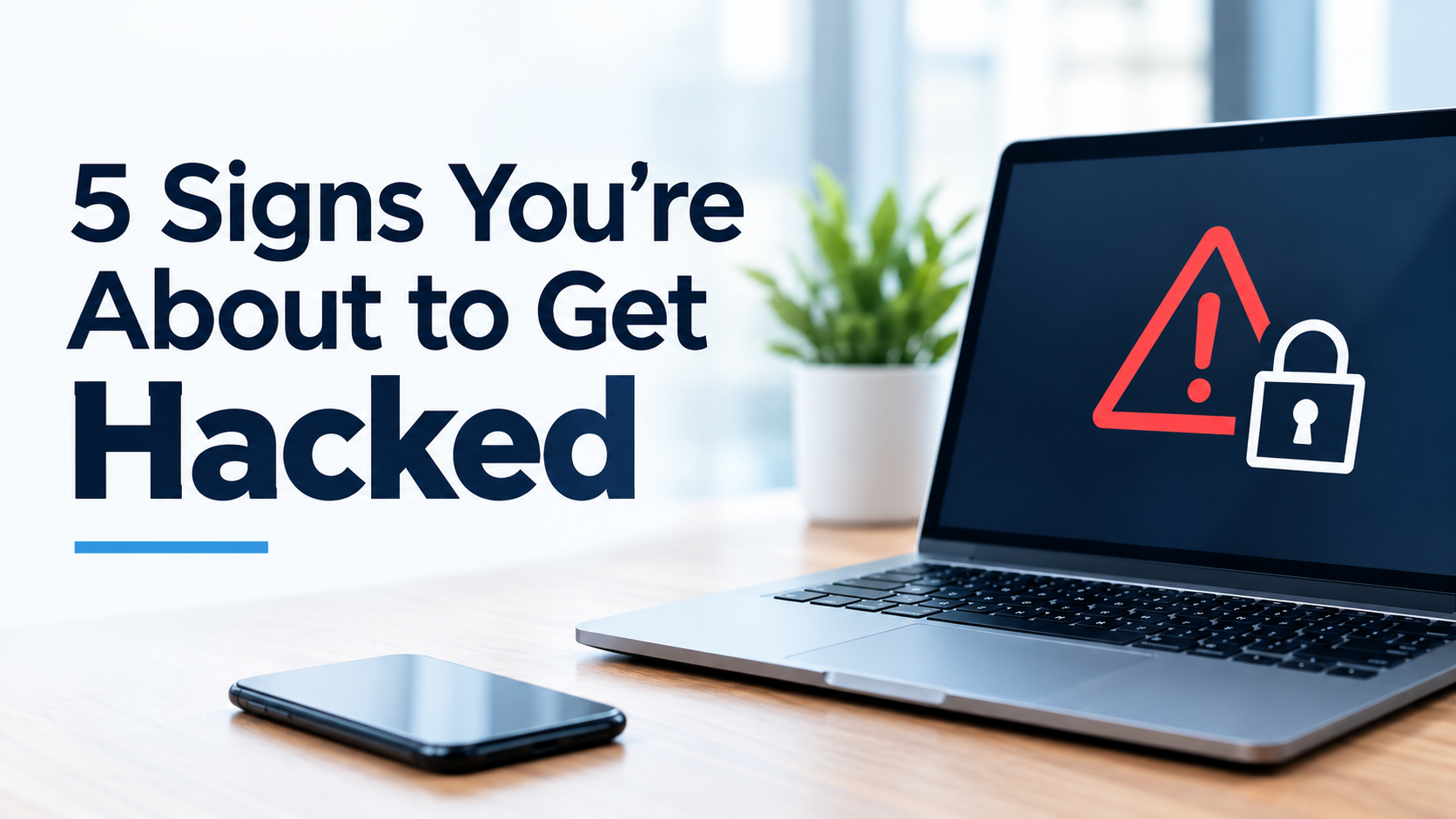
5 Signs You're About to Get Hacked (And What Your Business Should Do About It)
Cyberattacks don’t always start with a dramatic system shutdown or a message demanding a ransom. In many cases, attackers rely on small vulnerabilities, stolen credentials, or a single employee clicking the wrong link to gain access to a business’s systems. For business owners, recognizing the warning signs early can make a significant difference. Unusual account
Cyberattacks don’t always start with a dramatic system shutdown or a message demanding a ransom. In many cases, attackers rely on small vulnerabilities, stolen credentials, or a single employee clicking the wrong link to gain access to a business’s systems. For business owners, recognizing the warning signs early can make a significant difference. Unusual account
Read full post on litechadvisors.com
Cybersecurity Awareness Month: Building a Stronger, Safer Business Starts With You
October is Cybersecurity Awareness Month—a reminder that protecting your business isn't just an IT responsibility. It's a business priority. Cyber threats continue to evolve, and businesses of every size are potential targets. From phishing emails and fraudulent invoices to ransomware and stolen credentials, a single mistake can lead to financial losses, operational downtime, and damage
October is Cybersecurity Awareness Month—a reminder that protecting your business isn't just an IT responsibility. It's a business priority. Cyber threats continue to evolve, and businesses of every size are potential targets. From phishing emails and fraudulent invoices to ransomware and stolen credentials, a single mistake can lead to financial losses, operational downtime, and damage
Read full post on litechadvisors.com
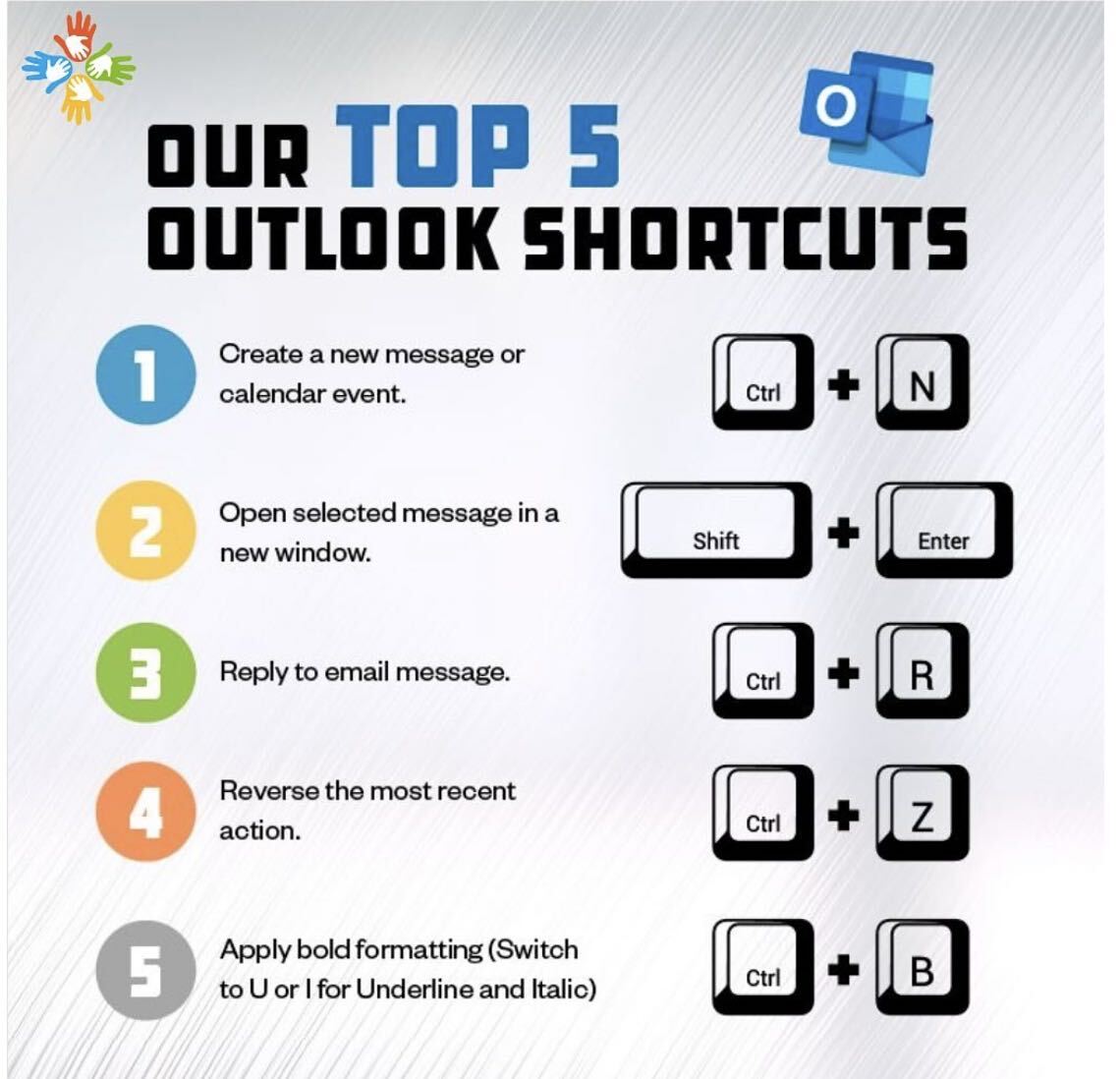
Top 5 Microsoft Outlook Shortcuts to Boost Productivity and Save Time
Top 5 Microsoft Outlook Shortcuts to Boost Productivity and Save Time We spend a lot of time in our inboxes. So why not make some of those everyday tasks a little faster? Microsoft Outlook includes keyboard shortcuts that can help you navigate your inbox, respond to messages, create new emails, and manage your work more
Top 5 Microsoft Outlook Shortcuts to Boost Productivity and Save Time We spend a lot of time in our inboxes. So why not make some of those everyday tasks a little faster? Microsoft Outlook includes keyboard shortcuts that can help you navigate your inbox, respond to messages, create new emails, and manage your work more
Read full post on litechadvisors.com
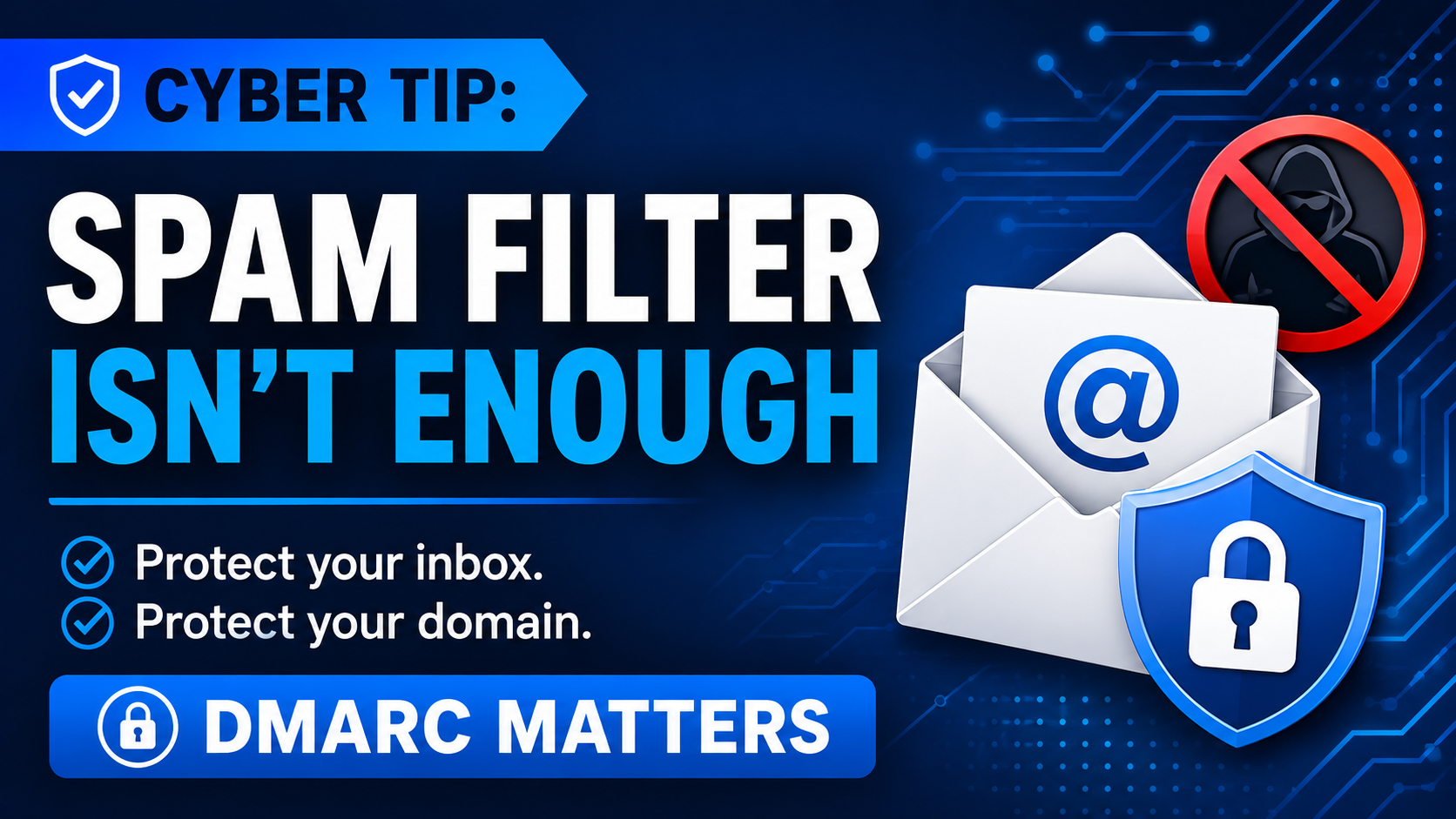
Your Spam Filter Isn’t Enough: Why DMARC Matters
Most businesses have a spam filter in place to help block phishing emails, malicious links, and suspicious messages. That’s an important layer of protection—but it doesn’t solve one major problem: email spoofing. Cybercriminals can make an email appear as though it came directly from your company’s domain. They may use your name and branding to
Most businesses have a spam filter in place to help block phishing emails, malicious links, and suspicious messages. That’s an important layer of protection—but it doesn’t solve one major problem: email spoofing. Cybercriminals can make an email appear as though it came directly from your company’s domain. They may use your name and branding to
Read full post on litechadvisors.com
MSP Email Security: What Every Business Should Expect From Their IT Provider
Email remains the number one entry point for cyberattacks. From phishing campaigns and business email compromise to malware and account takeovers, most successful attacks begin with a single email. If you're evaluating a Managed Service Provider (MSP) to handle email security, you'll quickly discover that not every provider defines "email security" the same way. Some
Email remains the number one entry point for cyberattacks. From phishing campaigns and business email compromise to malware and account takeovers, most successful attacks begin with a single email. If you're evaluating a Managed Service Provider (MSP) to handle email security, you'll quickly discover that not every provider defines "email security" the same way. Some
Read full post on litechadvisors.com
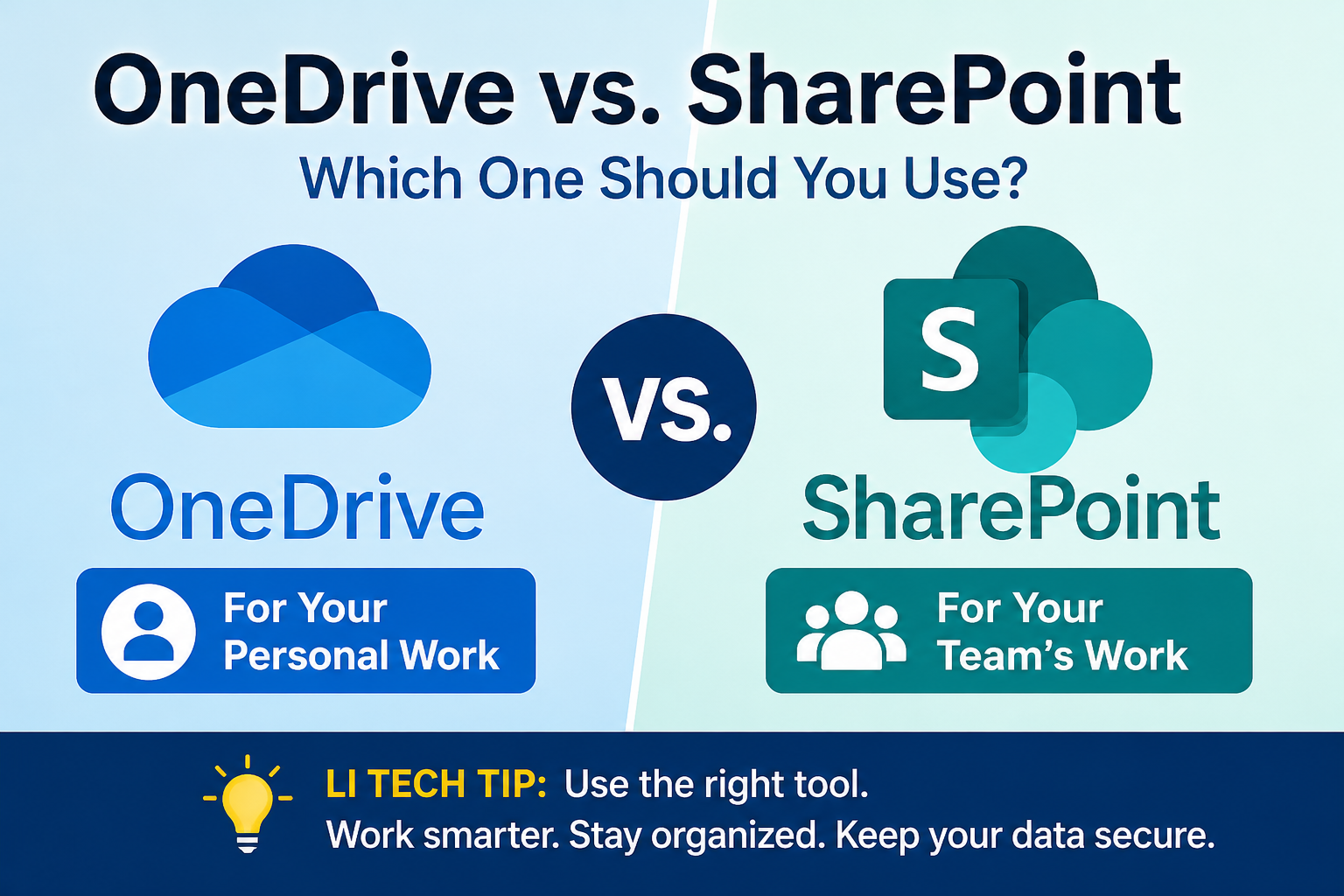
OneDrive vs. SharePoint: Which One Should You Use?
OneDrive vs. SharePoint: What's the Difference? OneDrive and SharePoint are two of the most commonly used Microsoft 365 applications, but they are also two of the most misunderstood. Many businesses treat them as interchangeable, leading to misplaced files, version confusion, and collaboration headaches. The truth is simple: OneDrive is for your personal work. SharePoint is
OneDrive vs. SharePoint: What's the Difference? OneDrive and SharePoint are two of the most commonly used Microsoft 365 applications, but they are also two of the most misunderstood. Many businesses treat them as interchangeable, leading to misplaced files, version confusion, and collaboration headaches. The truth is simple: OneDrive is for your personal work. SharePoint is
Read full post on litechadvisors.com
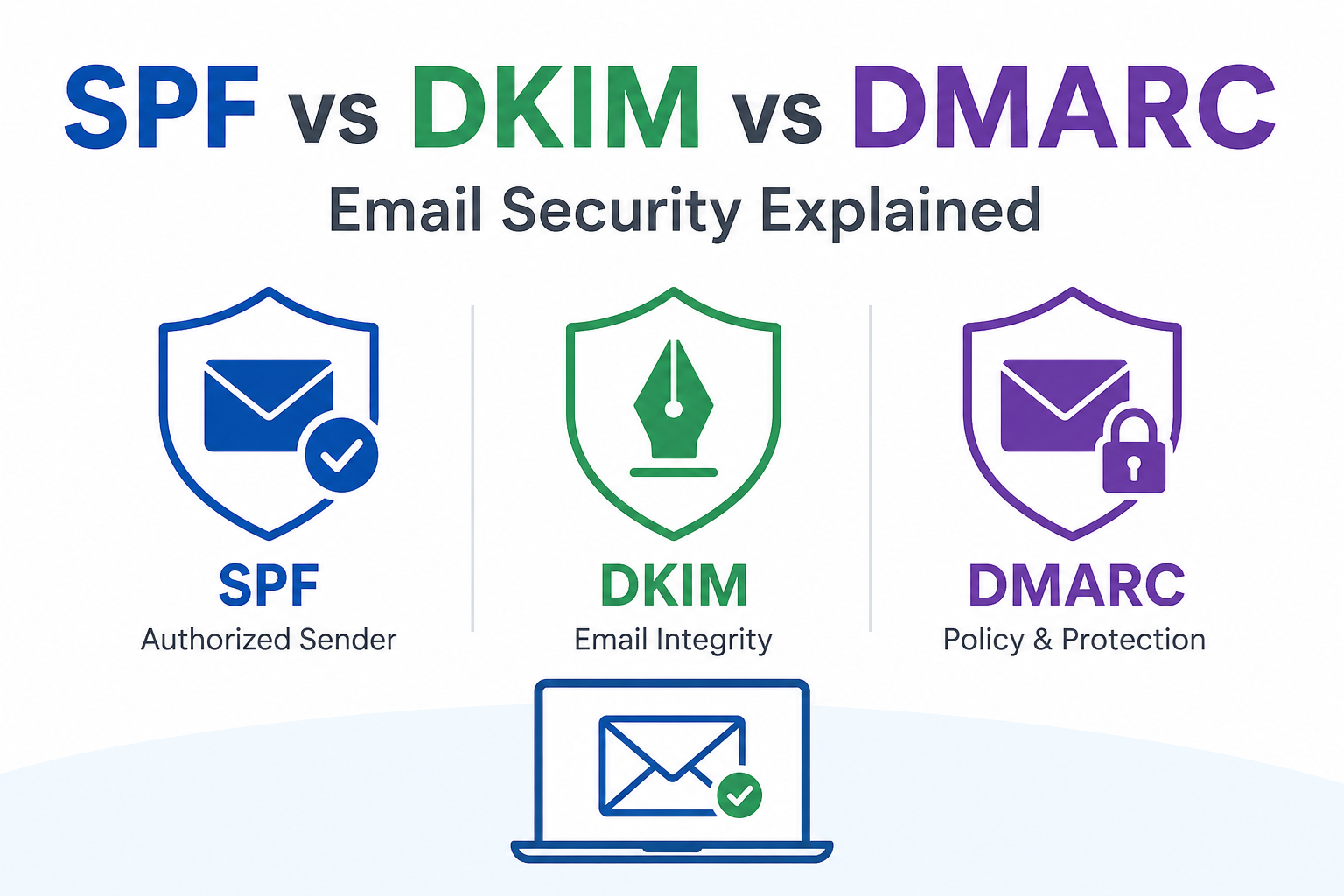
SPF vs DKIM vs DMARC: Understanding the Differences and Why You Need All Three
Email remains one of the most important communication tools for businesses, but it is also one of the most common attack vectors for cybercriminals. If you're researching email authentication, you've likely come across three acronyms: SPF, DKIM, and DMARC. Many business owners ask the same question: "Do I really need all three?" The short answer
Email remains one of the most important communication tools for businesses, but it is also one of the most common attack vectors for cybercriminals. If you're researching email authentication, you've likely come across three acronyms: SPF, DKIM, and DMARC. Many business owners ask the same question: "Do I really need all three?" The short answer
Read full post on litechadvisors.com
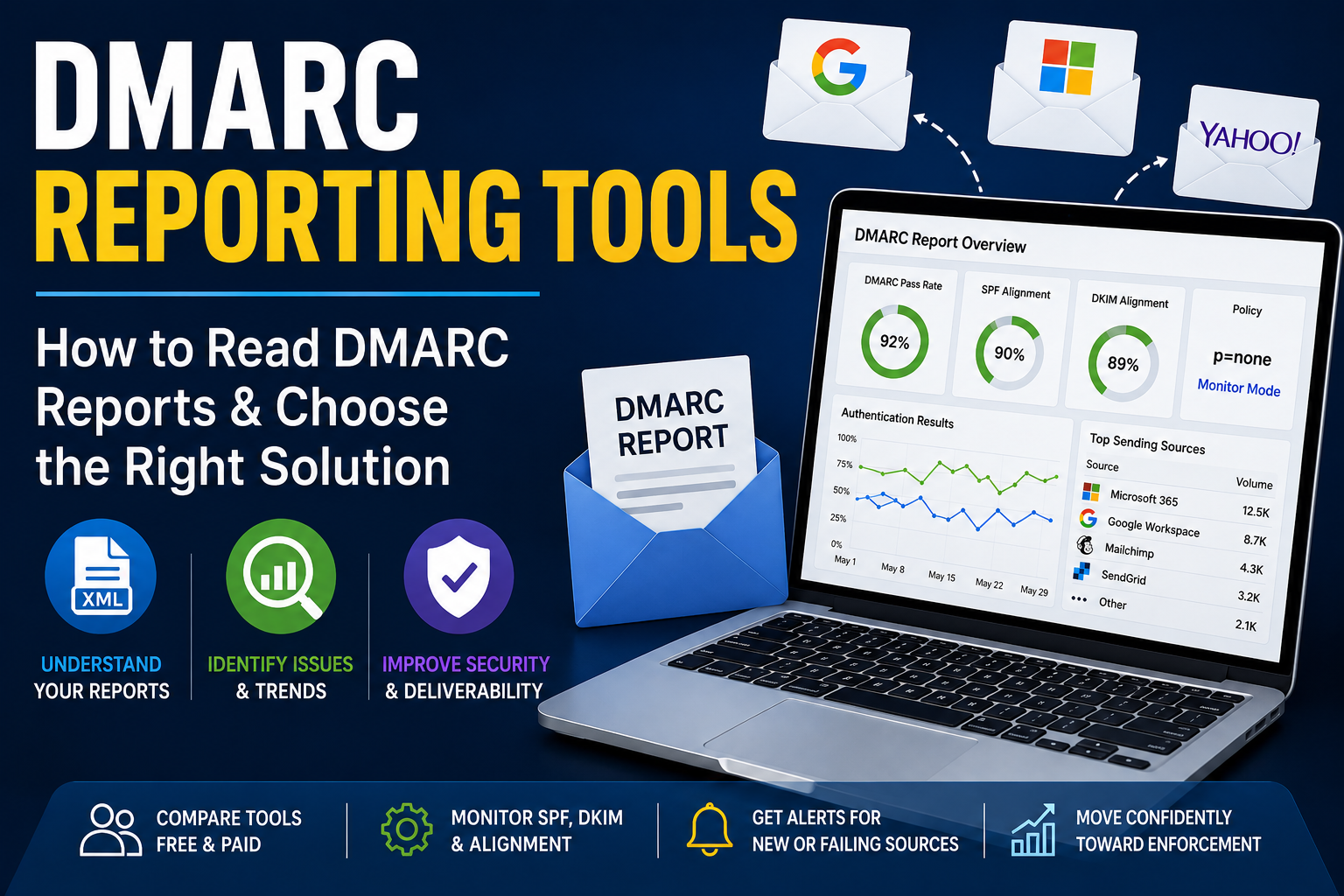
DMARC Reporting Tools: How to Read Your DMARC Reports and Choose the Right Monitoring Platform
You published your DMARC record, set your policy to monitor, and pointed the rua tag to a mailbox. A few days later, XML reports begin arriving from Google, Microsoft, Yahoo, and dozens of other receiving mail servers. You open one expecting useful information, but instead find hundreds of lines of XML code, IP addresses, and
You published your DMARC record, set your policy to monitor, and pointed the rua tag to a mailbox. A few days later, XML reports begin arriving from Google, Microsoft, Yahoo, and dozens of other receiving mail servers. You open one expecting useful information, but instead find hundreds of lines of XML code, IP addresses, and
Read full post on litechadvisors.com
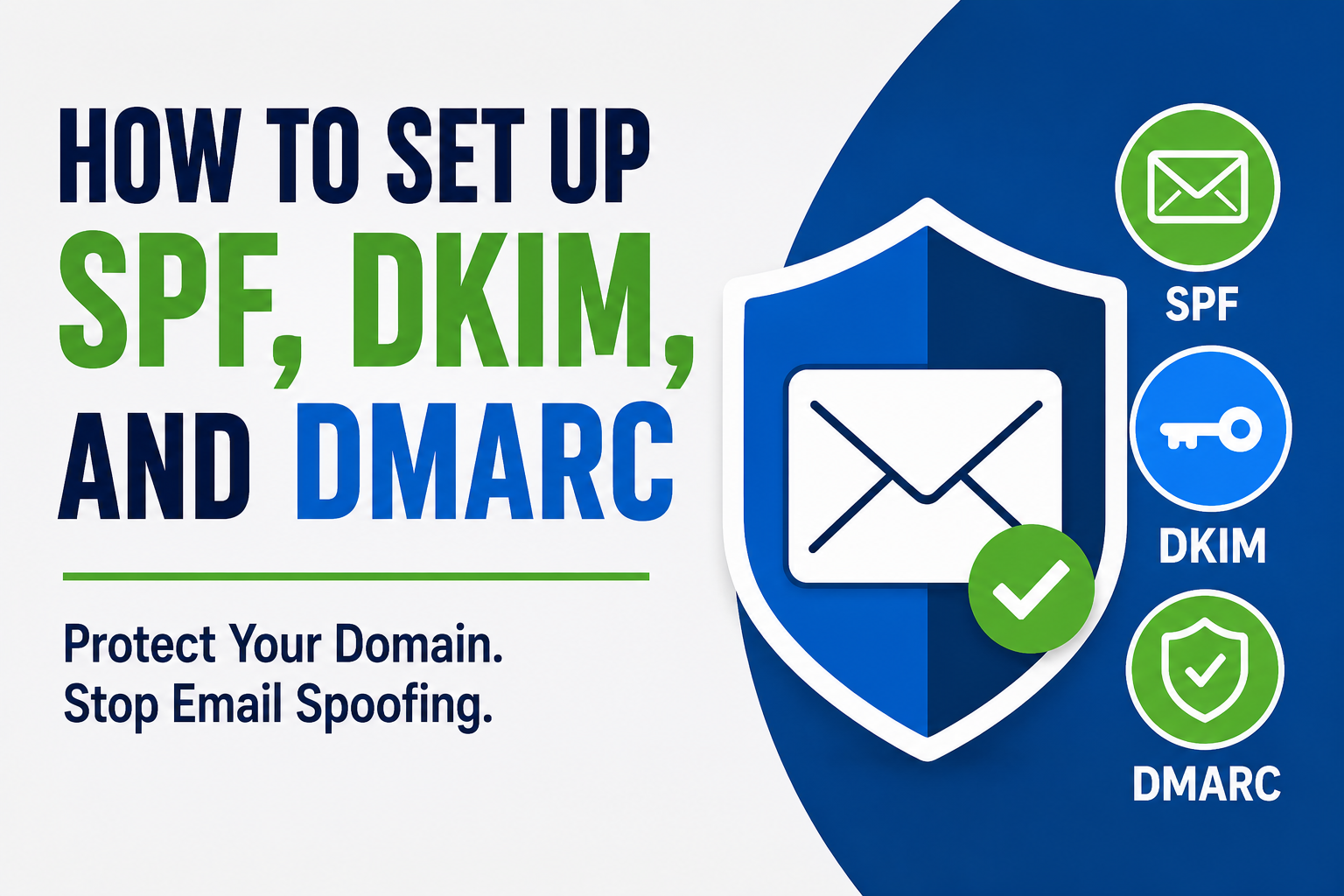
How to Set Up SPF, DKIM, and DMARC (Without Breaking Your Email)
Setting up SPF, DKIM, and DMARC is relatively simple from a DNS perspective. The records themselves aren't complicated the real challenge is ensuring they're implemented correctly. Most deployment issues stem from incomplete sender inventories, skipping the monitoring phase, enforcing policies too quickly, or forgetting to update records when new email services are introduced. This guide
Setting up SPF, DKIM, and DMARC is relatively simple from a DNS perspective. The records themselves aren't complicated the real challenge is ensuring they're implemented correctly. Most deployment issues stem from incomplete sender inventories, skipping the monitoring phase, enforcing policies too quickly, or forgetting to update records when new email services are introduced. This guide
Read full post on litechadvisors.com

How to Prevent Business Email Compromise
Business Email Compromise (BEC) is one of the fastest-growing cyber threats affecting small and mid-sized businesses today. Unlike traditional cyberattacks, BEC doesn't rely on malware or sophisticated hacking techniques. Instead, attackers exploit trust, impersonate legitimate contacts, and trick employees into sending money, sharing sensitive information, or providing access to company systems. The worst part? Most
Business Email Compromise (BEC) is one of the fastest-growing cyber threats affecting small and mid-sized businesses today. Unlike traditional cyberattacks, BEC doesn't rely on malware or sophisticated hacking techniques. Instead, attackers exploit trust, impersonate legitimate contacts, and trick employees into sending money, sharing sensitive information, or providing access to company systems. The worst part? Most
Read full post on litechadvisors.com
Failed to load more articles
You're all caught up!
Check back later for more profile news.
Our Mission is to provide our clients with the IT services and expertise to efficiently operate their school or business.
5 Signs You're About to Get Hacked (And What Your Business Should Do About It)
Cyberattacks don’t always start with a dramatic system shutdown or a message demanding a ransom. In many cases, attackers rely on small vulnerabilities, stolen credentials, or a single employee clicking the wrong link to gain access to a business’s systems. For business owners, recognizing the warning signs early can make a significant difference. Unusual account
Cyberattacks don’t always start with a dramatic system shutdown or a message demanding a ransom. In many cases, attackers rely on small vulnerabilities, stolen credentials, or a single employee clicking the wrong link to gain access to a business’s systems. For business owners, recognizing the warning signs early can make a significant difference. Unusual account
Read full post on litechadvisors.com
Cybersecurity Awareness Month: Building a Stronger, Safer Business Starts With You
October is Cybersecurity Awareness Month—a reminder that protecting your business isn't just an IT responsibility. It's a business priority. Cyber threats continue to evolve, and businesses of every size are potential targets. From phishing emails and fraudulent invoices to ransomware and stolen credentials, a single mistake can lead to financial losses, operational downtime, and damage
October is Cybersecurity Awareness Month—a reminder that protecting your business isn't just an IT responsibility. It's a business priority. Cyber threats continue to evolve, and businesses of every size are potential targets. From phishing emails and fraudulent invoices to ransomware and stolen credentials, a single mistake can lead to financial losses, operational downtime, and damage
Read full post on litechadvisors.com
Top 5 Microsoft Outlook Shortcuts to Boost Productivity and Save Time
Top 5 Microsoft Outlook Shortcuts to Boost Productivity and Save Time We spend a lot of time in our inboxes. So why not make some of those everyday tasks a little faster? Microsoft Outlook includes keyboard shortcuts that can help you navigate your inbox, respond to messages, create new emails, and manage your work more
Top 5 Microsoft Outlook Shortcuts to Boost Productivity and Save Time We spend a lot of time in our inboxes. So why not make some of those everyday tasks a little faster? Microsoft Outlook includes keyboard shortcuts that can help you navigate your inbox, respond to messages, create new emails, and manage your work more
Read full post on litechadvisors.com
Your Spam Filter Isn’t Enough: Why DMARC Matters
Most businesses have a spam filter in place to help block phishing emails, malicious links, and suspicious messages. That’s an important layer of protection—but it doesn’t solve one major problem: email spoofing. Cybercriminals can make an email appear as though it came directly from your company’s domain. They may use your name and branding to
Most businesses have a spam filter in place to help block phishing emails, malicious links, and suspicious messages. That’s an important layer of protection—but it doesn’t solve one major problem: email spoofing. Cybercriminals can make an email appear as though it came directly from your company’s domain. They may use your name and branding to
Read full post on litechadvisors.com
MSP Email Security: What Every Business Should Expect From Their IT Provider
Email remains the number one entry point for cyberattacks. From phishing campaigns and business email compromise to malware and account takeovers, most successful attacks begin with a single email. If you're evaluating a Managed Service Provider (MSP) to handle email security, you'll quickly discover that not every provider defines "email security" the same way. Some
Email remains the number one entry point for cyberattacks. From phishing campaigns and business email compromise to malware and account takeovers, most successful attacks begin with a single email. If you're evaluating a Managed Service Provider (MSP) to handle email security, you'll quickly discover that not every provider defines "email security" the same way. Some
Read full post on litechadvisors.com
OneDrive vs. SharePoint: Which One Should You Use?
OneDrive vs. SharePoint: What's the Difference? OneDrive and SharePoint are two of the most commonly used Microsoft 365 applications, but they are also two of the most misunderstood. Many businesses treat them as interchangeable, leading to misplaced files, version confusion, and collaboration headaches. The truth is simple: OneDrive is for your personal work. SharePoint is
OneDrive vs. SharePoint: What's the Difference? OneDrive and SharePoint are two of the most commonly used Microsoft 365 applications, but they are also two of the most misunderstood. Many businesses treat them as interchangeable, leading to misplaced files, version confusion, and collaboration headaches. The truth is simple: OneDrive is for your personal work. SharePoint is
Read full post on litechadvisors.com
SPF vs DKIM vs DMARC: Understanding the Differences and Why You Need All Three
Email remains one of the most important communication tools for businesses, but it is also one of the most common attack vectors for cybercriminals. If you're researching email authentication, you've likely come across three acronyms: SPF, DKIM, and DMARC. Many business owners ask the same question: "Do I really need all three?" The short answer
Email remains one of the most important communication tools for businesses, but it is also one of the most common attack vectors for cybercriminals. If you're researching email authentication, you've likely come across three acronyms: SPF, DKIM, and DMARC. Many business owners ask the same question: "Do I really need all three?" The short answer
Read full post on litechadvisors.com
DMARC Reporting Tools: How to Read Your DMARC Reports and Choose the Right Monitoring Platform
You published your DMARC record, set your policy to monitor, and pointed the rua tag to a mailbox. A few days later, XML reports begin arriving from Google, Microsoft, Yahoo, and dozens of other receiving mail servers. You open one expecting useful information, but instead find hundreds of lines of XML code, IP addresses, and
You published your DMARC record, set your policy to monitor, and pointed the rua tag to a mailbox. A few days later, XML reports begin arriving from Google, Microsoft, Yahoo, and dozens of other receiving mail servers. You open one expecting useful information, but instead find hundreds of lines of XML code, IP addresses, and
Read full post on litechadvisors.com
How to Set Up SPF, DKIM, and DMARC (Without Breaking Your Email)
Setting up SPF, DKIM, and DMARC is relatively simple from a DNS perspective. The records themselves aren't complicated the real challenge is ensuring they're implemented correctly. Most deployment issues stem from incomplete sender inventories, skipping the monitoring phase, enforcing policies too quickly, or forgetting to update records when new email services are introduced. This guide
Setting up SPF, DKIM, and DMARC is relatively simple from a DNS perspective. The records themselves aren't complicated the real challenge is ensuring they're implemented correctly. Most deployment issues stem from incomplete sender inventories, skipping the monitoring phase, enforcing policies too quickly, or forgetting to update records when new email services are introduced. This guide
Read full post on litechadvisors.com
How to Prevent Business Email Compromise
Business Email Compromise (BEC) is one of the fastest-growing cyber threats affecting small and mid-sized businesses today. Unlike traditional cyberattacks, BEC doesn't rely on malware or sophisticated hacking techniques. Instead, attackers exploit trust, impersonate legitimate contacts, and trick employees into sending money, sharing sensitive information, or providing access to company systems. The worst part? Most
Business Email Compromise (BEC) is one of the fastest-growing cyber threats affecting small and mid-sized businesses today. Unlike traditional cyberattacks, BEC doesn't rely on malware or sophisticated hacking techniques. Instead, attackers exploit trust, impersonate legitimate contacts, and trick employees into sending money, sharing sensitive information, or providing access to company systems. The worst part? Most
Read full post on litechadvisors.com
Failed to load more articles
You're all caught up!
Check back later for more profile news.