SymQuest

Top 10 Cloud Security Best Practices IT Leaders Should Know
Key Takeaways Most cloud breaches trace back to the customer's side of the shared responsibility model, not the provider's. Clarifying ownership closes more gaps than any single tool. Identity, not the network perimeter, is now the primary attack surface. MFA and least-privilege access remain the highest-leverage controls available. Encrypted, tested backups determine whether a breach becomes a headline or a footnote. Untested recovery plans fail when they're needed most. Unmonitored cloud assets accumulate risk quietly. Regular visibility audits catch what default settings miss. A
Key Takeaways Most cloud breaches trace back to the customer's side of the shared responsibility model, not the provider's. Clarifying ownership closes more gaps than any single tool. Identity, not the network perimeter, is now the primary attack surface. MFA and least-privilege access remain the highest-leverage controls available. Encrypted, tested backups determine whether a breach becomes a headline or a footnote. Untested recovery plans fail when they're needed most. Unmonitored cloud assets accumulate risk quietly. Regular visibility audits catch what default settings miss. An incident response plan matters more than any individual security tool. Preparation, not just prevention, determines how fast a business recovers. What Are the Top 10 Cloud Security Best Practices? Most cloud breaches do not start with an attacker breaking in. They start with a gap nobody was watching. Cloud security is now the fastest-growing segment of enterprise security spending, up 28.8 percent as organizations rush to close the gaps that put them at risk, based on Gartner's most recent information security forecast. For IT leaders, understanding cloud security best practices is no longer optional. It is how organizations close the gaps between what the cloud provider secures and what falls to internal teams.
Read full post on blog.symquest.com

The IT Challenges Schools Face That Generic Tech Support Can't Solve
Key Takeaways 82% of schools experienced a cyber incident between mid-2023 and late 2024, and ransomware activity against education has stayed elevated since. Generic tech support fills tickets; it doesn't own FERPA compliance, device fleet security, or audit-ready documentation. Managed IT services for schools should include continuous monitoring, device lifecycle management, and security mapped specifically to FERPA and CIPA. Predictable flat-fee budgeting fits how districts plan, and frees internal staff from constant triage. Compliance exposure runs through print and
Key Takeaways 82% of schools experienced a cyber incident between mid-2023 and late 2024, and ransomware activity against education has stayed elevated since. Generic tech support fills tickets; it doesn't own FERPA compliance, device fleet security, or audit-ready documentation. Managed IT services for schools should include continuous monitoring, device lifecycle management, and security mapped specifically to FERPA and CIPA. Predictable flat-fee budgeting fits how districts plan, and frees internal staff from constant triage. Compliance exposure runs through print and document workflows, not just the network, so a managed IT partner should cover both. Most school districts don't have an IT problem. They have a scope problem. A general help desk can reset a password or reimage a laptop, but it isn't built to FERPA compliance, manage a fleet of one-to-one devices, or catch a phishing attempt before it reaches a business office with wire-transfer access. Managed IT services for schools exist because that gap between "tech support" and "IT partner built for education" has real consequences, and districts across Vermont, New Hampshire, northern New York, and Maine are feeling it.
Read full post on blog.symquest.com

What Healthcare Organizations Should Look For in a Managed IT Provider
Key Takeaways Healthcare-specific expertise is non-negotiable. General IT providers can keep systems running, but healthcare data breaches average $7.42 million and take 279 days to contain, making compliance-aware support essential from day one. A signed BAA is not proof of active compliance management. Look for documented HIPAA risk assessments, endpoint detection, and a tested incident response plan. Fit and reliability outrank flashy tooling. KLAS Research found that misalignment on service expectations and escalation paths is the top reason healthcare IT partnerships fail. PHI m
Key Takeaways Healthcare-specific expertise is non-negotiable. General IT providers can keep systems running, but healthcare data breaches average $7.42 million and take 279 days to contain, making compliance-aware support essential from day one. A signed BAA is not proof of active compliance management. Look for documented HIPAA risk assessments, endpoint detection, and a tested incident response plan. Fit and reliability outrank flashy tooling. KLAS Research found that misalignment on service expectations and escalation paths is the top reason healthcare IT partnerships fail. PHI moves through print and fax, not just servers. A provider should manage document and communication workflows alongside network security, not as a separate vendor relationship. Request a network assessment before signing. A factual baseline of current vulnerabilities protects both sides from assumptions made during the sales process. Choosing a managed IT provider affects more than uptime. For healthcare organizations, the right managed IT services for healthcare protect patient data, support compliance, and keep clinical operations moving without disruption. Here is what leadership teams should evaluate before signing a contract.
Read full post on blog.symquest.com

Signs Your Small Business Has Outgrown Its Current IT Setup (And Needs Managed IT)
Key Takeaways Downtime costs scale faster than most businesses expect. Companies with 20-100 employees increasingly see costs exceed $100,000 per hour. A single internal IT hire cannot cover networking, cybersecurity, cloud, and help desk at the same standard a specialized team can. Shadow AI, unpatched systems, and unapproved tools create security gaps that often go undetected until a breach or audit surfaces them. Hiring delays, slow hardware refresh cycles, and cloud migration friction are signs infrastructure has become a growth constraint. Managed IT replaces reactive, unpredi
Key Takeaways Downtime costs scale faster than most businesses expect. Companies with 20-100 employees increasingly see costs exceed $100,000 per hour. A single internal IT hire cannot cover networking, cybersecurity, cloud, and help desk at the same standard a specialized team can. Shadow AI, unpatched systems, and unapproved tools create security gaps that often go undetected until a breach or audit surfaces them. Hiring delays, slow hardware refresh cycles, and cloud migration friction are signs infrastructure has become a growth constraint. Managed IT replaces reactive, unpredictable IT spending with a proactive, fixed-cost model built around 24/7 coverage. The signs rarely announce themselves as an IT problem. They show up as a missed deadline, a help desk ticket that sits for days, or a security patch nobody remembers scheduling. For many owners, that quiet erosion is the first real signal that it's time to consider small business managed IT services, before a bigger disruption forces the decision.
Read full post on blog.symquest.com

Microsoft Is Disabling SMTP AUTH. What It Means for Your MFP Fleet

HIPAA IT Support for Healthcare Providers: What Your Practice Actually Needs
Key Takeaways HIPAA compliance is only as strong as the IT infrastructure behind it. Every access control, audit log, and encrypted transmission depends on how well your systems and support are configured. General IT support and HIPAA-aligned IT support are not the same thing. Healthcare providers need a partner who understands the specific technical safeguards the Security Rule requires. Proposed HIPAA Security Rule updates make incident response planning, 72-hour system restoration procedures, penetration testing, and vendor accountability requirements mandatory. Print environments
Key Takeaways HIPAA compliance is only as strong as the IT infrastructure behind it. Every access control, audit log, and encrypted transmission depends on how well your systems and support are configured. General IT support and HIPAA-aligned IT support are not the same thing. Healthcare providers need a partner who understands the specific technical safeguards the Security Rule requires. Proposed HIPAA Security Rule updates make incident response planning, 72-hour system restoration procedures, penetration testing, and vendor accountability requirements mandatory. Print environments are a documented HIPAA liability. Secure print release, hard drive management, and managed print services are required controls, not operational upgrades. Digital fax and document management close the PHI transmission loop, replacing analog infrastructure with encrypted, auditable workflows that hold up under OCR scrutiny. HIPAA compliance doesn't live in a policy binder; it lives in your IT infrastructure.
Read full post on blog.symquest.com

What is Shadow AI and How To Detect It
Key Takeaways Shadow AI—the use of AI tools without IT approval—is already present in most organizations, with only 22% of American workers using exclusively employer-provided AI tools, according to IBM. Employees turn to unauthorized AI primarily because enterprise-provided tools don't meet their productivity needs, not out of malicious intent. According to IBM's 2025 Cost of a Data Breach Report, shadow AI adds an average of $670,000 to breach costs, with 97% of AI-related breaches occurring in organizations that lacked proper access controls. Detecting shadow AI requires layered m
Key Takeaways Shadow AI—the use of AI tools without IT approval—is already present in most organizations, with only 22% of American workers using exclusively employer-provided AI tools, according to IBM. Employees turn to unauthorized AI primarily because enterprise-provided tools don't meet their productivity needs, not out of malicious intent. According to IBM's 2025 Cost of a Data Breach Report, shadow AI adds an average of $670,000 to breach costs, with 97% of AI-related breaches occurring in organizations that lacked proper access controls. Detecting shadow AI requires layered monitoring: network traffic analysis, browser-level auditing, and identity signal correlation, capabilities that align directly with managed IT and cybersecurity services. Detection alone isn't enough. Organizations need governance frameworks backed by policy, enforcement, and continuous auditing to close the gap between AI adoption and AI oversight. Your team is using AI every single day. Some of those tools went through IT review. Most did not.
Read full post on blog.symquest.com
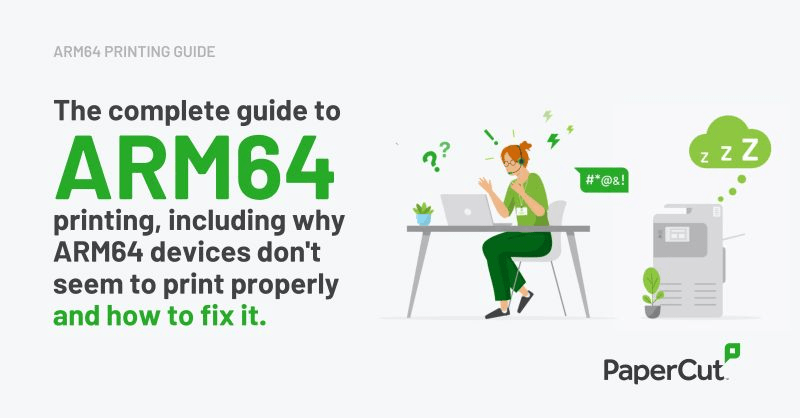
The IT Admin’s Guide to ARM64 and Print Management

Top Commercial Printing Industry Trends Reshaping Costs and Strategy

Top Print Security Threats and How MSPs Can Lock Down Your Fleet
Failed to load more articles
You're all caught up!
Check back later for more profile news.
SymQuest is a regionally based subsidiary of Konica Minolta Business Solutions U.S.A with locations in South Burlington and Rutland, VT, Plattsburgh and Watertown, NY, Keene and West Lebanon, NH and Westbrook and Lewiston, ME.
SymQuest has developed a national reputation for service excellence and innovation and is ranked Northern New England’s #1 managed IT services and copier provider by MSPmentor.
Top 10 Cloud Security Best Practices IT Leaders Should Know
Key Takeaways Most cloud breaches trace back to the customer's side of the shared responsibility model, not the provider's. Clarifying ownership closes more gaps than any single tool. Identity, not the network perimeter, is now the primary attack surface. MFA and least-privilege access remain the highest-leverage controls available. Encrypted, tested backups determine whether a breach becomes a headline or a footnote. Untested recovery plans fail when they're needed most. Unmonitored cloud assets accumulate risk quietly. Regular visibility audits catch what default settings miss. A
Key Takeaways Most cloud breaches trace back to the customer's side of the shared responsibility model, not the provider's. Clarifying ownership closes more gaps than any single tool. Identity, not the network perimeter, is now the primary attack surface. MFA and least-privilege access remain the highest-leverage controls available. Encrypted, tested backups determine whether a breach becomes a headline or a footnote. Untested recovery plans fail when they're needed most. Unmonitored cloud assets accumulate risk quietly. Regular visibility audits catch what default settings miss. An incident response plan matters more than any individual security tool. Preparation, not just prevention, determines how fast a business recovers. What Are the Top 10 Cloud Security Best Practices? Most cloud breaches do not start with an attacker breaking in. They start with a gap nobody was watching. Cloud security is now the fastest-growing segment of enterprise security spending, up 28.8 percent as organizations rush to close the gaps that put them at risk, based on Gartner's most recent information security forecast. For IT leaders, understanding cloud security best practices is no longer optional. It is how organizations close the gaps between what the cloud provider secures and what falls to internal teams.
Read full post on blog.symquest.com
The IT Challenges Schools Face That Generic Tech Support Can't Solve
Key Takeaways 82% of schools experienced a cyber incident between mid-2023 and late 2024, and ransomware activity against education has stayed elevated since. Generic tech support fills tickets; it doesn't own FERPA compliance, device fleet security, or audit-ready documentation. Managed IT services for schools should include continuous monitoring, device lifecycle management, and security mapped specifically to FERPA and CIPA. Predictable flat-fee budgeting fits how districts plan, and frees internal staff from constant triage. Compliance exposure runs through print and
Key Takeaways 82% of schools experienced a cyber incident between mid-2023 and late 2024, and ransomware activity against education has stayed elevated since. Generic tech support fills tickets; it doesn't own FERPA compliance, device fleet security, or audit-ready documentation. Managed IT services for schools should include continuous monitoring, device lifecycle management, and security mapped specifically to FERPA and CIPA. Predictable flat-fee budgeting fits how districts plan, and frees internal staff from constant triage. Compliance exposure runs through print and document workflows, not just the network, so a managed IT partner should cover both. Most school districts don't have an IT problem. They have a scope problem. A general help desk can reset a password or reimage a laptop, but it isn't built to FERPA compliance, manage a fleet of one-to-one devices, or catch a phishing attempt before it reaches a business office with wire-transfer access. Managed IT services for schools exist because that gap between "tech support" and "IT partner built for education" has real consequences, and districts across Vermont, New Hampshire, northern New York, and Maine are feeling it.
Read full post on blog.symquest.com
What Healthcare Organizations Should Look For in a Managed IT Provider
Key Takeaways Healthcare-specific expertise is non-negotiable. General IT providers can keep systems running, but healthcare data breaches average $7.42 million and take 279 days to contain, making compliance-aware support essential from day one. A signed BAA is not proof of active compliance management. Look for documented HIPAA risk assessments, endpoint detection, and a tested incident response plan. Fit and reliability outrank flashy tooling. KLAS Research found that misalignment on service expectations and escalation paths is the top reason healthcare IT partnerships fail. PHI m
Key Takeaways Healthcare-specific expertise is non-negotiable. General IT providers can keep systems running, but healthcare data breaches average $7.42 million and take 279 days to contain, making compliance-aware support essential from day one. A signed BAA is not proof of active compliance management. Look for documented HIPAA risk assessments, endpoint detection, and a tested incident response plan. Fit and reliability outrank flashy tooling. KLAS Research found that misalignment on service expectations and escalation paths is the top reason healthcare IT partnerships fail. PHI moves through print and fax, not just servers. A provider should manage document and communication workflows alongside network security, not as a separate vendor relationship. Request a network assessment before signing. A factual baseline of current vulnerabilities protects both sides from assumptions made during the sales process. Choosing a managed IT provider affects more than uptime. For healthcare organizations, the right managed IT services for healthcare protect patient data, support compliance, and keep clinical operations moving without disruption. Here is what leadership teams should evaluate before signing a contract.
Read full post on blog.symquest.com
Signs Your Small Business Has Outgrown Its Current IT Setup (And Needs Managed IT)
Key Takeaways Downtime costs scale faster than most businesses expect. Companies with 20-100 employees increasingly see costs exceed $100,000 per hour. A single internal IT hire cannot cover networking, cybersecurity, cloud, and help desk at the same standard a specialized team can. Shadow AI, unpatched systems, and unapproved tools create security gaps that often go undetected until a breach or audit surfaces them. Hiring delays, slow hardware refresh cycles, and cloud migration friction are signs infrastructure has become a growth constraint. Managed IT replaces reactive, unpredi
Key Takeaways Downtime costs scale faster than most businesses expect. Companies with 20-100 employees increasingly see costs exceed $100,000 per hour. A single internal IT hire cannot cover networking, cybersecurity, cloud, and help desk at the same standard a specialized team can. Shadow AI, unpatched systems, and unapproved tools create security gaps that often go undetected until a breach or audit surfaces them. Hiring delays, slow hardware refresh cycles, and cloud migration friction are signs infrastructure has become a growth constraint. Managed IT replaces reactive, unpredictable IT spending with a proactive, fixed-cost model built around 24/7 coverage. The signs rarely announce themselves as an IT problem. They show up as a missed deadline, a help desk ticket that sits for days, or a security patch nobody remembers scheduling. For many owners, that quiet erosion is the first real signal that it's time to consider small business managed IT services, before a bigger disruption forces the decision.
Read full post on blog.symquest.com
Microsoft Is Disabling SMTP AUTH. What It Means for Your MFP Fleet
HIPAA IT Support for Healthcare Providers: What Your Practice Actually Needs
Key Takeaways HIPAA compliance is only as strong as the IT infrastructure behind it. Every access control, audit log, and encrypted transmission depends on how well your systems and support are configured. General IT support and HIPAA-aligned IT support are not the same thing. Healthcare providers need a partner who understands the specific technical safeguards the Security Rule requires. Proposed HIPAA Security Rule updates make incident response planning, 72-hour system restoration procedures, penetration testing, and vendor accountability requirements mandatory. Print environments
Key Takeaways HIPAA compliance is only as strong as the IT infrastructure behind it. Every access control, audit log, and encrypted transmission depends on how well your systems and support are configured. General IT support and HIPAA-aligned IT support are not the same thing. Healthcare providers need a partner who understands the specific technical safeguards the Security Rule requires. Proposed HIPAA Security Rule updates make incident response planning, 72-hour system restoration procedures, penetration testing, and vendor accountability requirements mandatory. Print environments are a documented HIPAA liability. Secure print release, hard drive management, and managed print services are required controls, not operational upgrades. Digital fax and document management close the PHI transmission loop, replacing analog infrastructure with encrypted, auditable workflows that hold up under OCR scrutiny. HIPAA compliance doesn't live in a policy binder; it lives in your IT infrastructure.
Read full post on blog.symquest.com
What is Shadow AI and How To Detect It
Key Takeaways Shadow AI—the use of AI tools without IT approval—is already present in most organizations, with only 22% of American workers using exclusively employer-provided AI tools, according to IBM. Employees turn to unauthorized AI primarily because enterprise-provided tools don't meet their productivity needs, not out of malicious intent. According to IBM's 2025 Cost of a Data Breach Report, shadow AI adds an average of $670,000 to breach costs, with 97% of AI-related breaches occurring in organizations that lacked proper access controls. Detecting shadow AI requires layered m
Key Takeaways Shadow AI—the use of AI tools without IT approval—is already present in most organizations, with only 22% of American workers using exclusively employer-provided AI tools, according to IBM. Employees turn to unauthorized AI primarily because enterprise-provided tools don't meet their productivity needs, not out of malicious intent. According to IBM's 2025 Cost of a Data Breach Report, shadow AI adds an average of $670,000 to breach costs, with 97% of AI-related breaches occurring in organizations that lacked proper access controls. Detecting shadow AI requires layered monitoring: network traffic analysis, browser-level auditing, and identity signal correlation, capabilities that align directly with managed IT and cybersecurity services. Detection alone isn't enough. Organizations need governance frameworks backed by policy, enforcement, and continuous auditing to close the gap between AI adoption and AI oversight. Your team is using AI every single day. Some of those tools went through IT review. Most did not.
Read full post on blog.symquest.com
The IT Admin’s Guide to ARM64 and Print Management
Top Commercial Printing Industry Trends Reshaping Costs and Strategy
Top Print Security Threats and How MSPs Can Lock Down Your Fleet
Failed to load more articles
You're all caught up!
Check back later for more profile news.