We handle IT for you.
Discover leading Managed IT Service Providers across USA, Canada & the United Kingdom.
- 100s of leading MSPs
- Find a MSP near you
- Latest IT news for SMBs

How to Secure Contractor and Vendor Access Without Expanding Your MDM Footprint
For most enterprises today, third-party access is just part of work. Contractors, vendors, consultants, and short-term staff all need quick access to internal apps and files so things don’t slow down. But security teams are already overloaded. More tools, more devices, more rules. It adds up fast. This is where the old MDM-first approach starts to feel heavy and outdated. IAM, IT Ops, and security leaders are asking a fair question now. How do we secure access without forcing MDM on personal devices or creating privacy issues? Managing devices we don’t own never feels clean, and it rarely sca
For most enterprises today, third-party access is just part of work. Contractors, vendors, consultants, and short-term staff all need quick access to internal apps and files so things don’t slow down. But security teams are already overloaded. More tools, more devices, more rules. It adds up fast. This is where the old MDM-first approach starts to feel heavy and outdated. IAM, IT Ops, and security leaders are asking a fair question now. How do we secure access without forcing MDM on personal devices or creating privacy issues? Managing devices we don’t own never feels clean, and it rarely scales well. This article breaks down why MDM often fails with third-party access, how modern access models actually work today, and how AI-driven edge security helps teams move forward, especially in messy BYOD environments. Why MDM Falls Short for Contractors and Vendors Mobile Device Management was built for corporate-owned endpoints. It assumes long-term employees, standardized hardware, and full administrative control. None of that reflects how contractors and vendors actually work today. Common MDM challenges with third parties include: In short, forcing MDM on external users increases friction without meaningfully reducing risk. Worse, it can delay projects and push teams toward insecure workarounds. The Real Risk: Access, Not the Device Security leaders are increasingly shifting focus from device control to access control. The real question isn’t “Is this device managed?” but: Contractors typically need limited, time-bound access to specific applications, not full network visibility. Managing the entire device to solve that problem is excessive. This is why access-first security models are gaining traction. Modern Requirements for Secure Third-Party Access Securing contractors and vendors is tricky, especially if you don’t want to bloat your MDM. But some basics really help. 1. Zero Trust Access Don’t assume anything. Every access request should be checked all the time. It does not matter where the user is or what device they’re using. Trust nothing, verify everything. 2. BYOD-Friendly Controls Most contractors use their own devices. Security needs to work without invading privacy or using heavy tools. Otherwise, people just push back. 3. Context-Aware Risk Decisions Access should change based on behavior, location, device health, and session risk. Static rules aren’t enough. 4. Fast Onboarding and Clean Offboarding Contractors need access quickly. And when they leave, access should disappear automatically. No leftovers, no messy cleanup. AI-Powered Edge Security: A Cleaner, Smarter Way to Protect Access A growing number of organizations are turning to AI-driven edge security to address these challenges. Instead of pushing agents and profiles onto devices, security is enforced at the access layer. Netzilo has introduced an AI-powered edge security approach designed specifically for modern BYOD and third-party scenarios. Rather than expanding MDM, this model evaluates risk in real time and applies granular access controls without managing the entire device. Key advantages of this approach include: This aligns closely with how third-party access actually works in the real world. How AI-Powered Edge Security Reduces MDM Footprint While Keeping Systems Safe By shifting enforcement to the edge, organizations can: This model is particularly effective for vendors who rotate frequently or contractors who work across multiple clients. IT teams stay in control of access, not hardware. Aligning With Industry Security Guidance This access-first way of thinking isn’t random. It lines up with guidance from trusted US institutions like the National Institute of Standards and Technology. NIST keeps pushing zero-trust ideas for a reason. Don’t assume trust. Keep checking it all the time. Their frameworks focus more on who the user is, what they’re doing, and how risky it looks right now. Not who owns the laptop. This matters even more in hybrid and remote setups, where devices, locations, and users are all over the place. Operational Benefits for IAM and IT Ops Teams Beyond security, reducing MDM expansion delivers tangible operational gains: Security teams gain better visibility into access patterns, while IT Ops avoids becoming the support desk for non-employees. Supporting Vendor Risk Management Programs Vendor risk management is no longer just a procurement concern; it’s a security priority. An access-centric approach allows organizations to: Agencies such as the Cybersecurity and Infrastructure Security Agency (CISA) also advocate for zero trust maturity models that reduce reliance on network location and device ownership, key principles when working with external users. When MDM Still Makes Sense (And When It Doesn’t) MDM is not useless. It just gets used in the wrong places sometimes. For company-owned laptops and phones, it works fine. IT owns the device, sets the rules, and controls updates. The same goes for highly regulated roles where full device visibility is required by policy. Long-term internal employees also fit this model better. Problems start when the same approach is pushed onto contractors and short-term vendors. These people come and go. They use personal devices. Forcing MDM slows access, creates pushback, and often leads to shortcuts. That’s when risk actually grows. In these cases, access-layer security feels cleaner, lighter, and easier to manage. Final Thoughts Securing contractor and vendor access doesn’t have to mean more MDM or a worse user experience. Chasing device ownership only adds noise. What really matters is identity, context, and what’s happening in real time. When access is checked properly, critical systems stay protected without slowing people down. For teams handling nonstop third-party access and BYOD headaches, AI-driven edge security offers a cleaner way forward. It balances security, privacy, and daily operations without piling on extra tools. FAQs
Read full post on gocorptech.com
MSPdb™ News

VoIP Problems: Fix Call Quality Issues in 2026
Struggling with VoIP problems? Discover solutions to fix call quality issues in 2026, including key metrics and root causes for better clarity.
Struggling with VoIP problems? Discover solutions to fix call quality issues in 2026, including key metrics and root causes for better clarity.
Read full post on rivell.com

Why PCI Compliance Matters for Small Business Security
Without experience running a business, the intricacies of accepting credit card payments probably wouldn’t occur to the average person. However, there is a complex maze of requirements, rules, and standards that a business must meet before it may do so. These are what make up the Payment Card Industry Data Security Standard. Let’s go over what this standard demands and what you need to do to ensure compliance is achieved… plus, why compliance is so critical in the first place.
Without experience running a business, the intricacies of accepting credit card payments probably wouldn’t occur to the average person. However, there is a complex maze of requirements, rules, and standards that a business must meet before it may do so. These are what make up the Payment Card Industry Data Security Standard. Let’s go over what this standard demands and what you need to do to ensure compliance is achieved… plus, why compliance is so critical in the first place.
Read full post on coretechllc.com
Best Managed IT Services Providers in Dallas (2026)
MSP 501 Recognized 6 Years SOC 2 Certified HIPAA Seal of Compliance 25+ Years in ... Learn More
MSP 501 Recognized 6 Years SOC 2 Certified HIPAA Seal of Compliance 25+ Years in ... Learn More
Read full post on uprite.com

California Now Requires Cybersecurity Audits. Does Your Business Qualify?
Direct Answer: California’s new CCPA cybersecurity audit rule requires covered businesses to conduct annual independent security audits and file a written certification with the state. Whether your business qualifies depends on revenue and data volume, not just company size. A new California privacy law that took effect January 1, 2026 quietly added a requirement that
Direct Answer: California’s new CCPA cybersecurity audit rule requires covered businesses to conduct annual independent security audits and file a written certification with the state. Whether your business qualifies depends on revenue and data volume, not just company size. A new California privacy law that took effect January 1, 2026 quietly added a requirement that
Read full post on adaptiveis.net

3CX vs RingCentral vs Teams Phone 2026 — Head-to-Head
3CX vs RingCentral vs Microsoft Teams Phone for small businesses in 2026 — head-to-head comparison on cost, features, support, and which fits your business.
3CX vs RingCentral vs Microsoft Teams Phone for small businesses in 2026 — head-to-head comparison on cost, features, support, and which fits your business.
Read full post on simplyit.biz
Uprite vs Dataprise: Which Managed IT Provider Fits a Texas Business?
A Texas-focused comparison of Uprite and Dataprise for managed IT, covering company size, ownership, seat minimums, pricing, and local support.
A Texas-focused comparison of Uprite and Dataprise for managed IT, covering company size, ownership, seat minimums, pricing, and local support.
Read full post on uprite.com
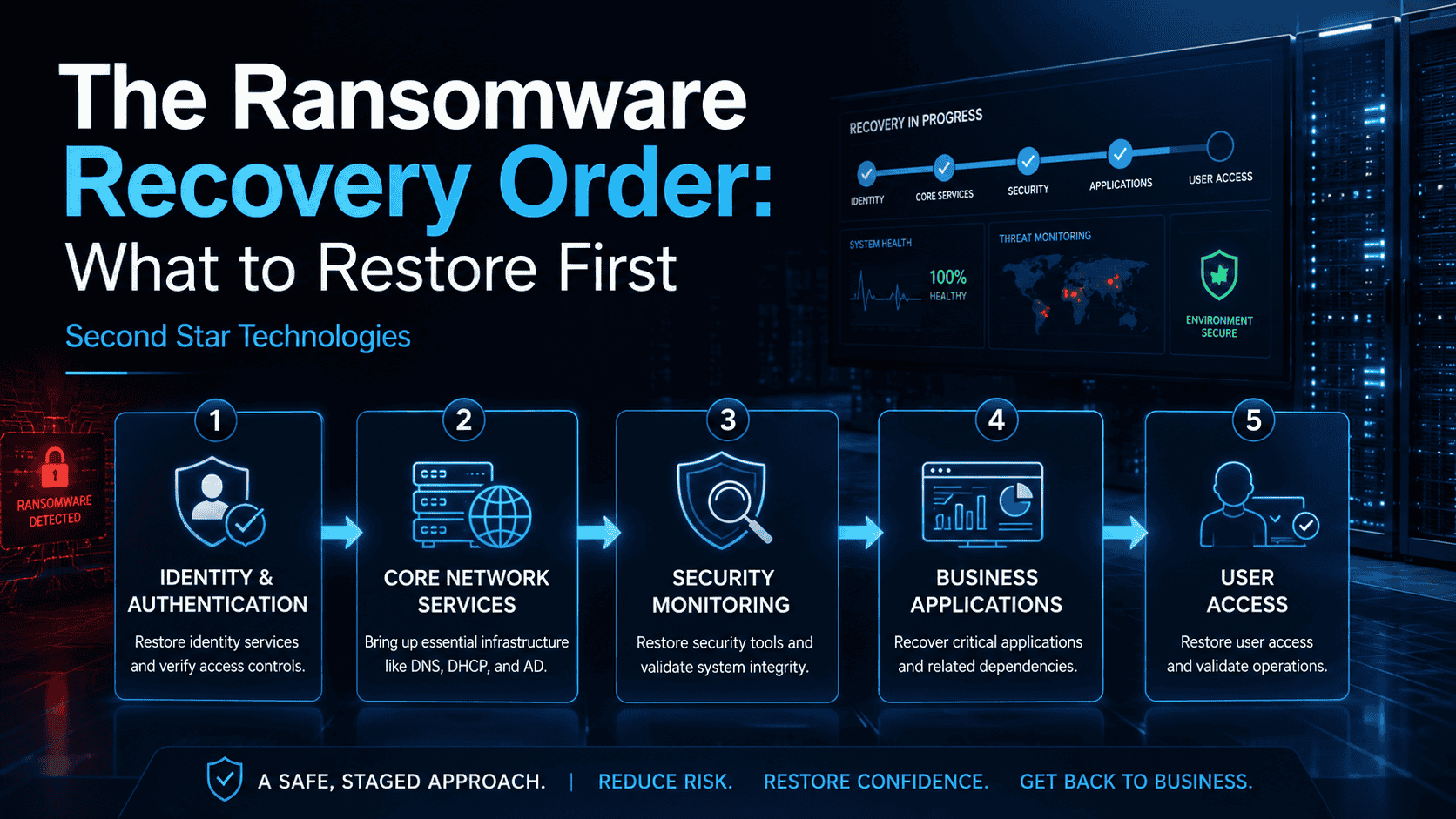
The Ransomware Recovery Order: What to Restore First


Summer Cyber Risks: Why Attacks Spike When Teams Are Short-Staffed
Summer vacations, lighter staffing, remote work, and busy schedules can create cybersecurity gaps for small businesses and government contractors. This blog explains why attackers take advantage of short-staffed teams and what organizations can do to reduce risk during the summer months.
Summer vacations, lighter staffing, remote work, and busy schedules can create cybersecurity gaps for small businesses and government contractors. This blog explains why attackers take advantage of short-staffed teams and what organizations can do to reduce risk during the summer months.
Read full post on v2systems.com

Top 3 Best Managed IT Service Providers 2026
Compare the top 3 best managed IT service providers to find the best option for your needs and enhance your operational efficiency.
Compare the top 3 best managed IT service providers to find the best option for your needs and enhance your operational efficiency.
Read full post on rivell.com

Cost Benefit Analysis for IT Projects: A Practical Guide
Learn how to conduct a cost benefit analysis for major IT projects like cloud migration or cybersecurity. A practical guide for Canadian business leaders.
Learn how to conduct a cost benefit analysis for major IT projects like cloud migration or cybersecurity. A practical guide for Canadian business leaders.
Read full post on cloudorbis.com
Just Added to MSPdb™

MSP Jobs
All Jobs

MSP Marketplace
View All


Popular MSPs
View All