Talk to an MSP today.
Discover leading Managed IT Service Providers across USA, Canada & the United Kingdom.
- 100s of leading MSPs
- Find a MSP near you
- Latest IT news for SMBs

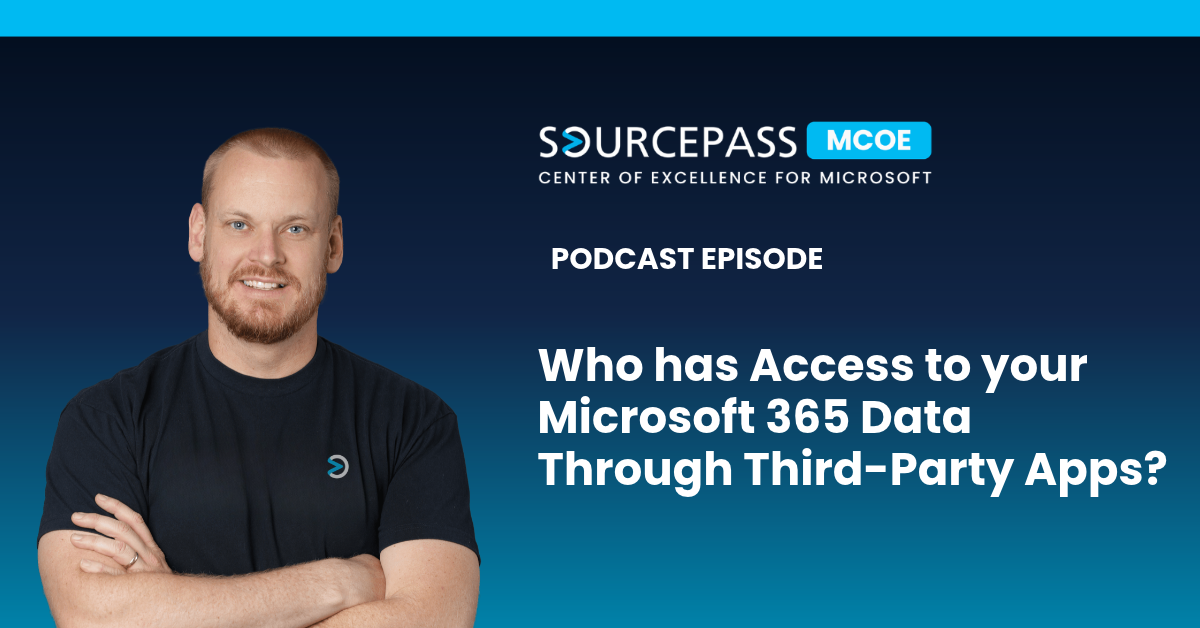
Who has Access to your Microsoft 365 Data? | Sourcepass MCOE
Your backup provider, scheduling tool, and reporting platform can all reach into your Microsoft 365 environment. Few organizations can say which of those connections are still active, what permissions they hold, or who approved them. When one of those vendors is compromised, the attacker gets the same access the vendor had. The risk is rising because AI has changed how quickly vulnerabilities are found and exploited. Many small businesses have more than 200 enterprise apps connected to their tenant, and each one is another possible way in. Third-party apps are a major Microsoft 365 securi
Your backup provider, scheduling tool, and reporting platform can all reach into your Microsoft 365 environment. Few organizations can say which of those connections are still active, what permissions they hold, or who approved them. When one of those vendors is compromised, the attacker gets the same access the vendor had. The risk is rising because AI has changed how quickly vulnerabilities are found and exploited. Many small businesses have more than 200 enterprise apps connected to their tenant, and each one is another possible way in. Third-party apps are a major Microsoft 365 security risk, how to audit and restrict app permissions in Microsoft Entra ID, how AI is changing vulnerability exploitation, and which security controls still give SMBs the strongest protection. In this episode of the Demystifying Microsoft podcast, host Nathan Taylor talks with cybersecurity leader Matt Lee about the SkyKick and ConnectWise cloud backup incident, the risk of over-privileged enterprise apps, and what AI-assisted attacks mean for IT leaders who are already stretched thin. Why are Backup and Other Third-Party Apps a Risk to Microsoft 365 Data? OAuth-based enterprise apps are a better option than handing vendors stored passwords. They tie access back to your own identities and support Conditional Access policies. The problem is how much access some of these apps need. A cloud backup service has to read all of your data, and to restore files it often needs to write data too. If an app with that level of access is compromised, all three parts of the CIA triad are exposed: Confidentiality: the attacker can read sensitive data. Integrity: the attacker can change records and files. Availability: the attacker can delete data, including the backups you would use to recover. How do you Audit Enterprise App Permissions in Microsoft Entra ID? Start by listing every enterprise application and service principal in your tenant, and check the permissions each one holds. Look closely at apps left behind by former vendors or a previous MSP. Organizations often find active credentials for tools nobody has used in years. Consumer apps turn up more often than you would expect. Security assessments of small business tenants regularly find apps like Amazon Alexa connected to corporate environments. For each app, ask: Is it still in use, and does anyone own it? Does it need write or delete access, or would read-only access work? Could elevated permissions be granted only when needed, such as during a restore? How do you Stop Users from Approving Third-Party Apps in Microsoft 365? Many tenants still let users consent to apps themselves. That is how unreviewed tools end up with access to company data. Restrict user consent in Microsoft Entra ID and send requests through the admin consent workflow, so IT reviews each app before it connects. This slows down access to new tools, but it means nothing gets into your environment without someone approving it. What to Do When a Third-Party Vendor with Microsoft 365 Access is Breached Check for the indicators of compromise (IOCs) the vendor or researchers have published. Do not assume you were not affected because you have not noticed anything unusual. If an MSP manages your environment, confirm they have a defined process for deciding when an event becomes an incident and for telling you about it. It is also worth asking the vendors that hold privileged access how they protect it: How often are access keys rotated, and are they separated for each customer tenant? Do they monitor sign-ins by their own service principal inside customer tenants? Would they detect their credentials being used from unfamiliar IP addresses before an outside party reported it? How is AI Changing the Way Vulnerabilities are Found and Exploited? AI tools can now spend large amounts of computing power searching for software flaws. Some in the security community call the predicted surge a "vuln apocalypse." The worst-case scenarios have not happened yet, but the early signs are clear: unusually large Microsoft Patch Tuesday releases, and far more AI-assisted findings than vendors can fix. Why can IT Teams not Patch Every Vulnerability Attackers only face technical obstacles. Defenders also must work around budgets, competing priorities, internal politics, and getting people to agree. Development teams rarely have spare sprint capacity for a growing backlog of bugs, and bug fixes don't drive sales the way new features do. Even vendors with good intentions end up triaging and fixing only the most severe issues first. Are Hard-to-Exploit Vulnerabilities Still Low Risk? Not anymore. Two patterns are worth planning around: One vulnerability in the wild usually means more will follow. Once attackers know a product fails in a certain way, AI tools can keep probing for related flaws of the same type or impact. Complexity no longer protects you. Flaws once rated lower because they required precise race conditions or memory manipulation can now be worked out in hours instead of weeks. Severity scores based on how hard a flaw is to exploit deserve a second look before you postpone a patch. How do Attackers use AI to Chain Vulnerabilities Together? Most attackers used to go through the first open door they found and stop there. AI-driven tools do not stop. They map every weakness they can find, connect them, and learn the pattern of mistakes an organization tends to make. AI is not thinking on its own. People are directing it. But it greatly increases how much ground a single attacker can cover. Defenders can use the same tools, and attackers adapt just as fast. In one recent case, a small group of security practitioners used AI-assisted analysis to decompile malware behind a hijacked Discord account and got the attacker's infrastructure taken down. Within hours, the attacker had relaunched on new hosting with repackaged code. What Cybersecurity Controls Protect Against AI-Driven Attacks? No IT leader can follow every new AI tool and threat while also running daily operations. The more sustainable approach is to strengthen the controls that make new threats less relevant to your environment. Why is Asset Inventory the First Security Control? You can not protect, patch, or monitor systems you do not know about. A complete inventory covers devices, BYOD endpoints with email access, websites and their patch status, and underlying technologies like PHP or Node.js. Recognized frameworks such as the CIS Controls and ENISA's NIS2 guidance give you a structure for building and maintaining that inventory. How does Reducing your Attack Surface Lower Risk? Attackers cannot exploit technology you do not run. A few examples: Legacy SSL VPN appliances have been a constant target. Cloud-based, identity-centered access removes the exposed public-facing device. Self-hosted CMS platforms like WordPress bring a whole set of plugin and PHP vulnerabilities. Static sites avoid most of them. Microsoft Entra ID–joined devices without hybrid identity, combined with blocking outbound SMB (Server Message Block) traffic, make some credential-theft attacks ineffective because there are no on-premises credentials to steal. How does a Defined Patching Process Improve Defensibility? Legal standards often depend on whether an organization acted reasonably. Following a recognized framework and keeping a documented patching policy, with set timelines for business-critical and non-critical systems, shows that diligence. It also means a larger patch volume is just more routine work, not a crisis. How can IT Teams Use AI to Strengthen Security Controls? The most reliable use of AI right now is building repeatable outputs, such as scripts, reports, and asset inventory programs that run the same way every time. That way you are not relying on a model to give the right answer on every run. Fewer tools also helps. Every vendor, API key, and platform adds its own code base and supply chain dependencies, so consolidating reporting and automation onto a well-structured data platform shrinks your exposure. Should Businesses Allow Employees to Use AI Tools? Employees are already using AI, approved or not, sometimes by moving files to personal devices to get work done faster. Blocking it completely takes a lot of tooling and a tightly configured environment, and it rarely works. A better approach is to provide approved, properly configured AI tools, train people to use them, and set up a clear path for requesting new ones. Early steam boilers were dangerous, but the businesses that waited for every risk to be solved fell behind. The goal is controlled adoption: deciding where the risk sits so a failure stays contained. Find Out Who has Access to your Microsoft 365 Data Before an Attacker Does AI-assisted attacks will keep getting faster, but they still need a way in. Organizations that know every app and asset in their environment, and limit what each one can access, leave attackers far fewer options. If you're unsure which third-party apps can access your Microsoft 365 tenant, or how your environment would hold up against AI-assisted attacks, contact the Sourcepass MCOE team. Our experts can review your app permissions, identify unnecessary exposure, and help you put controls in place that hold up as threats change.
Read full post on blog.sourcepass.com
MSPdb™ News
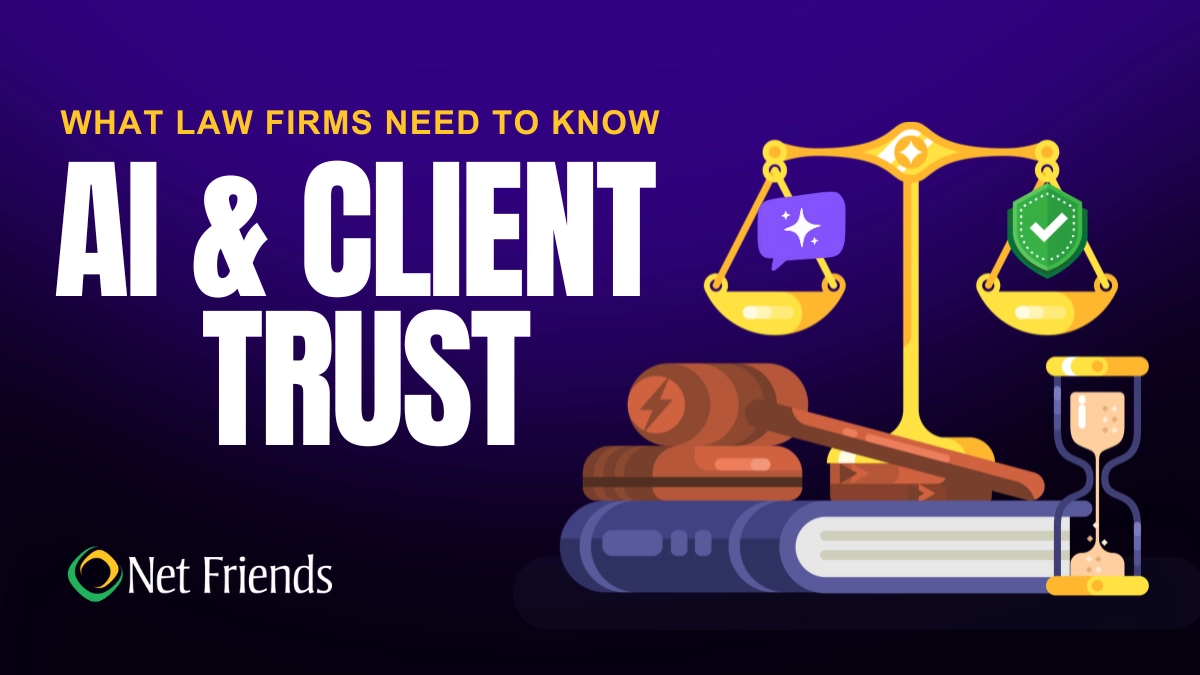
What Law Firms Need to Know About AI and Client Trust
Can AI keep client secrets? A practical guide to AI for North Carolina law firms, covering the ethics rules, safe uses, vendor vetting, and where attorneys must stay in charge.
Can AI keep client secrets? A practical guide to AI for North Carolina law firms, covering the ethics rules, safe uses, vendor vetting, and where attorneys must stay in charge.
Read full post on netfriends.com


Protecting Customer Outcomes in Volatile Times
In the AI Economy, technology value is shifting from what gets delivered to the measurable business outcomes those investments create.
In the AI Economy, technology value is shifting from what gets delivered to the measurable business outcomes those investments create.
Read full post on resources.compugen.com

AI Consulting in Chicago: What It Does and When You Need It

How Healthcare Data Privacy Changed, and What Security Risks Matter Most Today?
Healthcare data privacy has evolved from protecting physical medical records to securing electronic protected health information (ePHI) across a highly connected environment. While electronic health records made patient information easier to access and share for care, but digitization also expanded the number of systems where sensitive information can be exposed. The 2026 Verizon Data Breach Investigations Report found from 1,492 healthcare security incidents, including 1,438 confirmed disclosuresthat system intrusion accounted for 61% of healthcare breaches in its dataset, up from 53% in 202
Healthcare data privacy has evolved from protecting physical medical records to securing electronic protected health information (ePHI) across a highly connected environment. While electronic health records made patient information easier to access and share for care, but digitization also expanded the number of systems where sensitive information can be exposed. The 2026 Verizon Data Breach Investigations Report found from 1,492 healthcare security incidents, including 1,438 confirmed disclosuresthat system intrusion accounted for 61% of healthcare breaches in its dataset, up from 53% in 2025's report. Today, understanding how healthcare reached this point helps explain why protecting patient data now requires both HIPAA compliance and an active cybersecurity strategy.
Read full post on blog.centretechnologies.com

What Is Shadow AI? Where It Hides in a Small Business
Shadow AI is AI being used for work that the business never approved. Here are the four places it hides in a small business - personal sign-ups, features inside software you already own, meeting recorders and browser add-ons - and what to do about it, in order.
Shadow AI is AI being used for work that the business never approved. Here are the four places it hides in a small business - personal sign-ups, features inside software you already own, meeting recorders and browser add-ons - and what to do about it, in order.
Read full post on tvgconsulting.com

AI-Powered Sentiment and Priority Scoring: Stop Missing Urgent Client Requests
Every small business executive knows the feeling: a buried email from your best client that should have been escalated three hours ago. A Slack message marked “routine” that contained contract-threatening language. A support ticket that sat in the general queue while the client quietly shopped your competitor. AI-powered sentiment and priority scoring fixes this. Today.... <p>
Every small business executive knows the feeling: a buried email from your best client that should have been escalated three hours ago. A Slack message marked “routine” that contained contract-threatening language. A support ticket that sat in the general queue while the client quietly shopped your competitor. AI-powered sentiment and priority scoring fixes this. Today.... <p>
Read full post on xitx.com
Windows 10 ESU Year Two: How to Decide What Technology to Carry Into 2027
Every office has a few technology habits that nobody chose on purpose. A computer takes ten minutes to start, so its owner makes coffee while it loads. A spreadsheet copies data between two systems that were never connected. A device still runs an old operating system because it hosts one application nobody wants to touch.
Every office has a few technology habits that nobody chose on purpose. A computer takes ten minutes to start, so its owner makes coffee while it loads. A spreadsheet copies data between two systems that were never connected. A device still runs an old operating system because it hosts one application nobody wants to touch.
Read full post on kairosit.com
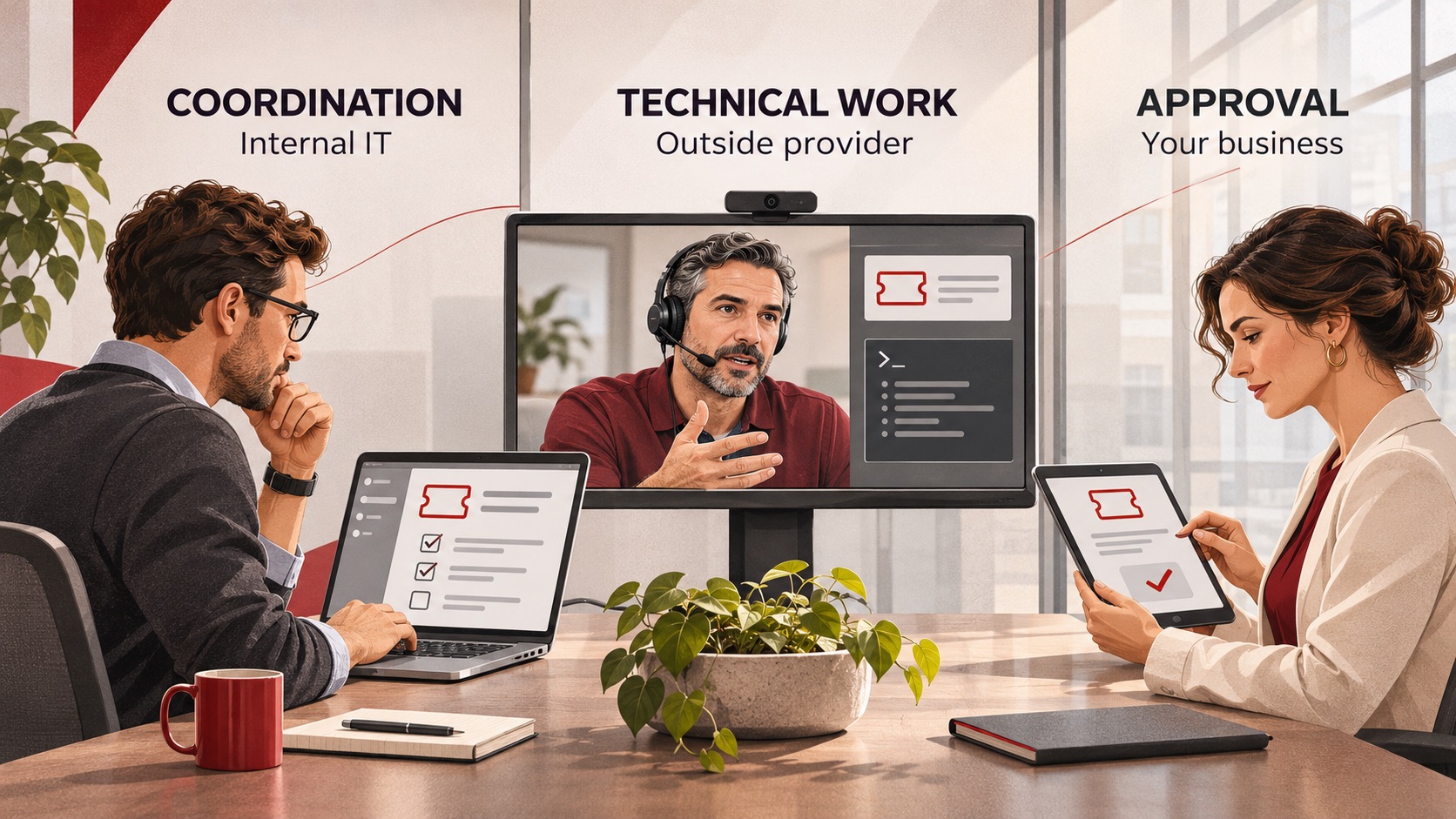
Co-Managed IT Services: What to Outsource When You Already Have an IT Team
Already have an IT team but need more capacity or specialist support? Learn what to delegate through co-managed IT services, what to keep in-house, and how to define responsibilities, handoffs and approvals before choosing a provider.
Already have an IT team but need more capacity or specialist support? Learn what to delegate through co-managed IT services, what to keep in-house, and how to define responsibilities, handoffs and approvals before choosing a provider.
Read full post on ctmsit.com
The Vendor Fraud Email That Already Knew Your Supplier's Name
The most convincing invoice fraud looks exactly like a normal bill. See how it works and the simple checks that keep the money where it belongs.
The most convincing invoice fraud looks exactly like a normal bill. See how it works and the simple checks that keep the money where it belongs.
Read full post on cnwr.com

When Everything Feels Like a Priority, How Do You Build an IT Budget?
If your roof is leaking and your kitchen is showing its age, both may need work. But only one of them is going to ruin your week. Your IT budget can put you in the same position. There may be plenty worth spending money on, but deciding what comes first isn’t always obvious. A few
If your roof is leaking and your kitchen is showing its age, both may need work. But only one of them is going to ruin your week. Your IT budget can put you in the same position. There may be plenty worth spending money on, but deciding what comes first isn’t always obvious. A few
Read full post on timefortitan.com
Just Added to MSPdb™


MSP Jobs
All Jobs

MSP Marketplace
View All

Popular MSPs
View All