Ready to get IT sorted?
Discover leading Managed IT Service Providers across USA, Canada & the United Kingdom.
- 100s of leading MSPs
- Find a MSP near you
- Latest IT news for SMBs

Post-Merger IT Integration: A Guide to the First 90 Days
In the first 90 days after closing an acquisition, your IT integration plan determines whether the deal creates value or quietly leaks it. Stabilize operations and lock down identity in days 1 to 30, harden security in days 31 to 60, then integrate systems in days 61 to 90. Defer transformation work to day 91 and beyond. Why Do the First 90 Days After a Deal Close Matter So Much? When a deal closes, the buyer inherits two things at once: a balance sheet and a threat surface. The legal entities are merged. The networks are not. The identity systems are not. The vendor contracts are not. Eve
In the first 90 days after closing an acquisition, your IT integration plan determines whether the deal creates value or quietly leaks it. Stabilize operations and lock down identity in days 1 to 30, harden security in days 31 to 60, then integrate systems in days 61 to 90. Defer transformation work to day 91 and beyond. Why Do the First 90 Days After a Deal Close Matter So Much? When a deal closes, the buyer inherits two things at once: a balance sheet and a threat surface. The legal entities are merged. The networks are not. The identity systems are not. The vendor contracts are not. Every day the two organizations operate as a loosely connected federation is a day where deal value can erode and risk can compound. The data is unambiguous. Roughly 70% of mergers fail to capture the synergies announced at signing.1 In Bain's 2023 research, 83% of practitioners in failed deals identified poor post-close integration as the leading cause.2 The security exposure is not theoretical either. In a recent Infosys study, 52% of acquirers reported discovering major cybersecurity risks during post-close integration, after the deal had already been signed.3 The Marriott and Starwood breach is the cautionary tale every operator already knows. Marriott acquired Starwood in 2016, kept the legacy reservation systems running, reduced much of the security staff who knew them, and discovered two years later that attackers had been inside the Starwood network since 2014. The result: roughly 500 million guest records exposed and a £99 million GDPR fine from the UK ICO.4 The breach happened before the acquisition. The accountability transferred at close. The first 90 days is where you either get ahead of these risks or inherit them. How Should an Acquirer Sequence the IT Integration Work? Sentry's clients work through a Technology Maturity Model with four stages: Operate, Secure, Integrate, and Innovate. In a post-close environment, those four stages also map almost perfectly to a 90-day cadence. The acquired entity's IT environment has its own maturity level on day one, and the buyer's job is to bring it up to a level where the combined organization can run, defend, and eventually grow as one. The temptation in every deal is to skip ahead. New owners want quick wins. They want to consolidate logos, move to the parent's productivity stack on day 7, and announce an AI rollout in the press release. That impulse is what creates the integration failures the data describes. Sequence matters more than speed. Days 1 to 30: Operate. Stabilize the Inherited Environment. The first 30 days are not about transformation. They are about visibility, continuity, and control. Five priorities define this phase. Asset and access inventory. You cannot defend what you have not catalogued. Build a single source of truth covering every endpoint, server, SaaS tenant, and privileged account inherited at close. The acquired team almost always knows where the bodies are buried, and this is the time to ask. Identity takeover. Disable accounts for departed employees within 24 hours of close. Audit every administrative and service account. Stolen credentials were the initial access vector in 22% of breaches in the 2025 Verizon Data Breach Investigations Report,5 and acquired environments routinely carry shared admin passwords, dormant accounts, and orphaned service principals. MSP and vendor lockdown. The acquired company's outsourced IT provider, security vendors, and managed service partners all retain access until you change it. Inventory every third party with administrative access, terminate or extend contracts based on the integration plan, and rotate credentials on every system the outgoing parties touched. Secure communications. Stand up a single, encrypted channel for the joint integration team on day one. Email is not it. Group texts are not it. Whatever the chosen tool, it should sit inside the acquirer's tenant, not the target's. Backups, verified. Run a real restore test on the acquired entity's most critical data sets. A backup that has never been restored is a hypothesis, not a recovery plan. The average breach lifecycle in 2025 was 241 days from intrusion to containment.6 The first time you find out backups do not work cannot be the day you need them. Days 31 to 60: Secure. Close the Exposure Window. By day 30, the joint environment is stable. The work in days 31 to 60 is to bring the acquired environment up to the buyer's security baseline. Three priorities matter most. Multi-factor authentication everywhere, with phishing-resistant factors where possible. Phishing was the second-most-common initial access vector in the 2025 DBIR, behind credential theft. The human element remained part of 60% of breaches.7 MFA on every account that can reach company data is the single highest-leverage control to deploy in this window. Endpoint protection consolidation. Two endpoint detection and response (EDR) tools running side by side is two attack surfaces and one set of blind spots between them. Pick the surviving platform, migrate the acquired endpoints, and decommission the legacy agent. Compliance gap assessment. The acquired entity has its own compliance posture, whether SOC 2, HIPAA, PCI, CMMC, or something more informal. Map its current controls against the buyer's framework. The gaps you find here are the ones a regulator or insurer will eventually find too. The average US data breach now costs $10.22 million.8 A controls gap discovered on day 45 is much cheaper than the same gap discovered after an incident. Days 61 to 90: Integrate. Combine Without Breaking. By day 60 the combined environment is secure. The next 30 days are the systems integration window. This is where the announced synergies start landing in operations. Three core workstreams: Network and domain consolidation. Decide what merges and what stays separate. Forest trusts and federated identity are common stop-gaps; full Active Directory or Entra ID consolidation is a longer initiative. The 90-day milestone is a clear plan with named owners and dates, not a fully merged directory. Financial and operational systems. ERP, accounting, HR, and CRM data flows are the connective tissue of the combined business. Identify which systems will survive, which will retire, and how data will move between them in the interim. Reporting cycles cannot be the place where integration gaps surface. Productivity stack rationalization. Microsoft 365 versus Google Workspace, Teams versus Slack, the various SaaS tools each side has accumulated. Pick the standard, communicate the timeline, and start the migration. Productivity stack drag is one of the most common drains on integration value. What About Day 91 and Beyond? The hardest discipline in post-merger IT is what you do not do in the first 90 days. AI rollouts, ERP replacements, customer-facing platform consolidations, and other transformation work can wait. Trying to do them inside the integration window is what causes the synergy failures Bain documented, and what created the conditions Marriott walked into. After day 90, with a stable, secure, integrated environment, the combined organization can move into Innovate with a foundation that supports it. Five Mistakes That Derail Post-Merger IT Integration Treating the close as the finish line rather than the starting line. Letting the acquired environment run on its own infrastructure indefinitely. Cutting the inherited IT and security staff before extracting their institutional knowledge. Announcing AI or transformation initiatives during the integration window. Skipping a real backup restore test on the acquired data. Where Sentry Fits Sentry Technology Solutions has guided buyers through post-close IT integration across franchise systems, mid-market growth companies, and private-equity-backed transactions. The Technology Maturity Model gives clients a shared language for the work. The first 90 days are not where deals are won, but they are where deals are most often lost. Having a guide who has done it before changes the math. If you have a deal closing in the next two quarters, the right time to plan the first 90 days is before the close, not after. Visit sentryitsolutions.com to start the conversation. Frequently Asked Questions How long does post-merger IT integration actually take? The first 90 days establish stability, security, and a credible integration plan. Full systems integration, especially identity and ERP consolidation, typically runs 12 to 24 months depending on deal size and complexity. Should we integrate networks immediately or keep them separate? Keep them separate at close. Establish secure connectivity through federated identity or a domain trust, then plan a deliberate consolidation. Immediate forced merges are a frequent source of outages. What is the biggest cybersecurity risk in the first 90 days? Inherited identity. Dormant accounts, shared admin passwords, third-party access, and undocumented service accounts are the most common entry points after a deal closes. Do we need a managed IT services provider for post-merger integration? You need integration capacity that does not exist in your steady-state IT team, and you need it for a fixed window. Whether that comes from internal hires, a consulting partner, or a managed service provider is a sizing question. The mistake is assuming the existing teams have the bandwidth. When can we start AI or modernization initiatives in the acquired entity? After the first 90 days, when the environment is stable, secure, and integrated to a working baseline. Earlier than that, transformation work tends to consume the integration window and derail synergy capture. References 1 Bain & Company. Bain's Bedrock Beliefs on How to Create Value from M&A. 2022. https://www.bain.com/insights/how-to-create-value-m-and-a-report-2022/ 2 Bain & Company analysis cited in 50+ Post-Merger Integration Statistics, PMI Stack, 2026. https://pmistack.com/blog/post-merger-integration-statistics 3 West Monroe, Cybersecurity Due Diligence in M&A research summary. https://www.westmonroe.com/insights/cybersecurity-due-diligence-in-manda 4 U.S. Federal Trade Commission. FTC Takes Action Against Marriott and Starwood Over Multiple Data Breaches. October 2024. https://www.ftc.gov/news-events/news/press-releases/2024/10/ftc-takes-action-against-marriott-starwood-over-multiple-data-breaches 5 Verizon. 2025 Data Breach Investigations Report. https://www.verizon.com/business/resources/reports/dbir/ 6 IBM. Cost of a Data Breach Report 2025. https://www.ibm.com/reports/data-breach 7 Verizon. 2025 Data Breach Investigations Report (human element finding). 8 IBM. Cost of a Data Breach Report 2025 (United States average breach cost).
Read full post on sentrytechsolutions.com
MSPdb™ News

3 Areas Where Industrial Inflation Hides (And How to Fix It)
While headline consumer inflation looks stable on paper, Midwest factory floors are quietly bleeding cash. From Ohio to Illinois, industrial CFOs are finding that conventional margin levers—like raising prices or squeezing vendors—have hit a hard limit. The real enemy isn't external pricing anymore; it's the invisible cost leaks hiding inside your own operational data. If you want to protect your bottom line this quarter, you have to stop looking at global supply chains and start looking at these three internal inflation traps. 1. Unplanned Downtime and Maintenance Premiums Every hour an au
While headline consumer inflation looks stable on paper, Midwest factory floors are quietly bleeding cash. From Ohio to Illinois, industrial CFOs are finding that conventional margin levers—like raising prices or squeezing vendors—have hit a hard limit. The real enemy isn't external pricing anymore; it's the invisible cost leaks hiding inside your own operational data. If you want to protect your bottom line this quarter, you have to stop looking at global supply chains and start looking at these three internal inflation traps. 1. Unplanned Downtime and Maintenance Premiums Every hour an automotive or machinery assembly line sits idle, it burns through heavily inflated labor and overhead costs. Sourcing replacement parts under duress in 2026 means paying massive expedited freight premiums and inflated distributor markups.
Read full post on andromeda.tech

Commercial WiFi That Actually Reaches: Wireless Network Design in Savannah
Adding another access point rarely fixes a dead spot. Here is what actually decides whether a commercial wireless network reaches every corner of a Savannah building: what the walls are made of, why consumer mesh gear does not survive the jump, and the difference between coverage and capacity.
Adding another access point rarely fixes a dead spot. Here is what actually decides whether a commercial wireless network reaches every corner of a Savannah building: what the walls are made of, why consumer mesh gear does not survive the jump, and the difference between coverage and capacity.
Read full post on lowcountrytech.com

Why Isn’t Traditional IT Enough for Mid Market Organizations Today?
Organizations aren’t operating in the same environment they were even a few years ago. Business moves faster, technology is more complex, and the consequences of disruption are greater than ever. Technology now shapes every strategic conversation: revenue growth, customer experience, compliance, productivity, and resilience. Yet many leadership teams still rely on an IT model built ... Read more
Organizations aren’t operating in the same environment they were even a few years ago. Business moves faster, technology is more complex, and the consequences of disruption are greater than ever. Technology now shapes every strategic conversation: revenue growth, customer experience, compliance, productivity, and resilience. Yet many leadership teams still rely on an IT model built ... Read more
Read full post on leapfrogservices.com
The More Flexible Your Workplace, the More Inflexible Your Security Needs to Be
The workplace got flexible. Your security needs to be inflexible. Here's what a secure remote work environment actually looks like for a small business.
The workplace got flexible. Your security needs to be inflexible. Here's what a secure remote work environment actually looks like for a small business.
Read full post on cnwr.com

TKS Newsletter – 2026 August
We’re entering the era of agentic AI. Smart, autonomous systems that don’t only assist people, but act on their behalf. Unlike traditional tools that wait for someone to click, type or browse, agentic AI can read data, talk to other systems, and complete entire tasks end-to-end.
We’re entering the era of agentic AI. Smart, autonomous systems that don’t only assist people, but act on their behalf. Unlike traditional tools that wait for someone to click, type or browse, agentic AI can read data, talk to other systems, and complete entire tasks end-to-end.
Read full post on turnkeysol.com

Why MSP Readiness Matters More Than Ever
What the latest Corsica research reveals about trust, readiness, and the future of the MSP relationship Our latest research does not show widespread unhappiness with MSPs. Most customers are satisfied. The real finding is that satisfaction no longer secures loyalty. Organizations are being asked to modernize faster, strengthen security, support AI initiatives, and manage growing
What the latest Corsica research reveals about trust, readiness, and the future of the MSP relationship Our latest research does not show widespread unhappiness with MSPs. Most customers are satisfied. The real finding is that satisfaction no longer secures loyalty. Organizations are being asked to modernize faster, strengthen security, support AI initiatives, and manage growing
Read full post on corsicatech.com

Lowering Your Cyber Insurance Premiums Starts with Better Cybersecurity
Cyber insurance premiums continue to rise, and many organizations are discovering that obtaining coverage is no longer as simple as completing an application and paying a premium. Insurance carriers are asking tougher questions, requiring stronger security controls, and increasingly denying claims when basic cybersecurity protections are not in place. The good news? Many of the
Cyber insurance premiums continue to rise, and many organizations are discovering that obtaining coverage is no longer as simple as completing an application and paying a premium. Insurance carriers are asking tougher questions, requiring stronger security controls, and increasingly denying claims when basic cybersecurity protections are not in place. The good news? Many of the
Read full post on mainstream-tech.com

Trust Is the New AI Battleground in Financial Services
AI is no longer a future initiative for financial institutions. It has quietly become embedded in many of the systems, workflows, and customer experiences that organizations rely on every day. Yet while much of the industry's attention remains focused on productivity gains and operational efficiencies, a more significant challenge is beginning to emerge. As AI becomes more involved in decision-making, customer interactions, and risk management, financial institutions are entering an era where trust may ultimately become more important than automation itself.
AI is no longer a future initiative for financial institutions. It has quietly become embedded in many of the systems, workflows, and customer experiences that organizations rely on every day. Yet while much of the industry's attention remains focused on productivity gains and operational efficiencies, a more significant challenge is beginning to emerge. As AI becomes more involved in decision-making, customer interactions, and risk management, financial institutions are entering an era where trust may ultimately become more important than automation itself.
Read full post on blog.centretechnologies.com
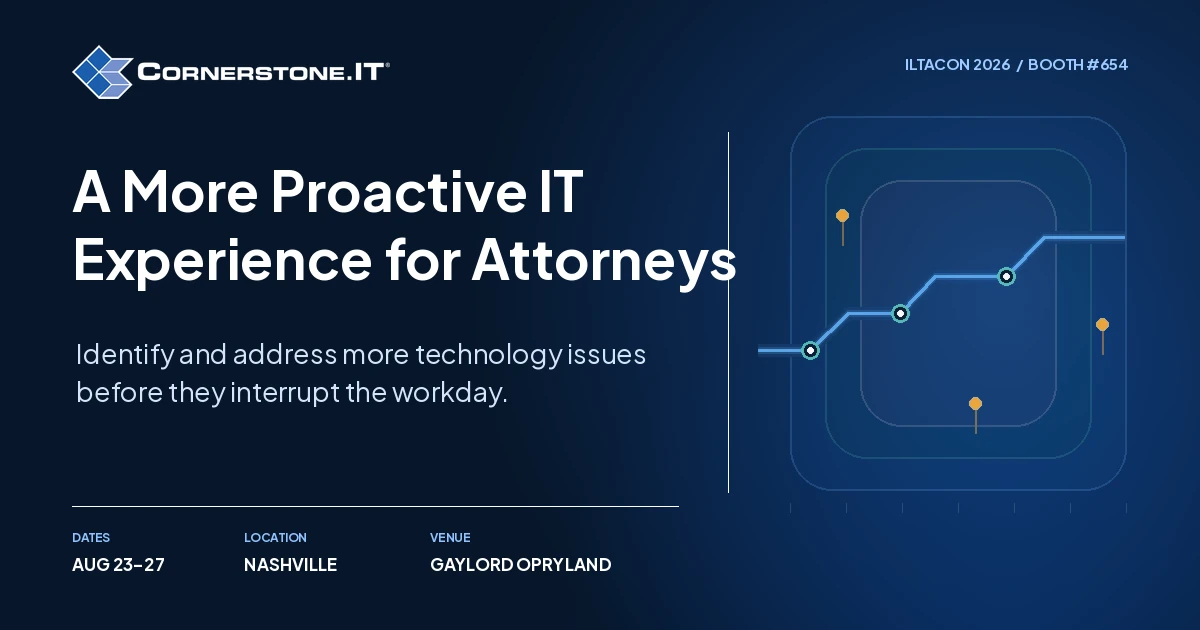
A More Proactive IT Experience for Attorneys at ILTACON 2026
What if your attorneys never need to call the help desk? Meet Cornerstone.IT at ILTACON 2026 and see how strategic planning, cybersecurity, AI cloud integration, and managed services reduce technology friction across the attorney day.
What if your attorneys never need to call the help desk? Meet Cornerstone.IT at ILTACON 2026 and see how strategic planning, cybersecurity, AI cloud integration, and managed services reduce technology friction across the attorney day.
Read full post on cornerstone.it

Sage Intacct Construction vs. Trimble Vista
Compare Sage Intacct Construction and Trimble Vista across architecture, job costing, WIP, payroll, reporting, integrations, and multi-entity management.
Compare Sage Intacct Construction and Trimble Vista across architecture, job costing, WIP, payroll, reporting, integrations, and multi-entity management.
Read full post on swktech.com
Just Added to MSPdb™



MSP Jobs
All Jobs

MSP Marketplace
View All

Popular MSPs
View All