Find the IT consulting you need.
Discover leading Managed IT Service Providers across USA, Canada & the United Kingdom.
- 100s of leading MSPs
- Find a MSP near you
- Latest IT news for SMBs


What is a Data Breach?
In recent security news, the talk of data breaches is causing nervous jitters among IT professionals. With loads of data being generated and shared through every aspect of business operations, it’s important to defend company infrastructure from all angles against global threats and, even more so, from the hard-hitting costs that data breaches can cause.
In recent security news, the talk of data breaches is causing nervous jitters among IT professionals. With loads of data being generated and shared through every aspect of business operations, it’s important to defend company infrastructure from all angles against global threats and, even more so, from the hard-hitting costs that data breaches can cause.
Read full post on blog.centretechnologies.com
MSPdb™ News

Microsoft 365 Account Takeovers: Cybersecurity Threat, Prevention, and Protection
Key Takeaways: An email from a vendor you’ve worked with for years lands in your inbox. Their name, email address and tone are all the same. The email contains a document they’ve shared with you on OneDrive to look over. When you click the link, your Microsoft login prompt appears. You enter your details, do…
Key Takeaways: An email from a vendor you’ve worked with for years lands in your inbox. Their name, email address and tone are all the same. The email contains a document they’ve shared with you on OneDrive to look over. When you click the link, your Microsoft login prompt appears. You enter your details, do…
Read full post on intrust-it.com

The ITeam Announces Partnership with the Calgary Stampeders
FOR IMMEDIATE RELEASE Calgary, Alberta – June 2026 — The ITeam Ltd., a leading managed IT services provider based in Calgary, is proud to announce its official partnership with the Calgary Stampeders, one of the Canadian Football League’s most respected and storied franchises. This partnership represents a shared commitment to excellence, performance, and community. As a Calgary-based ...
FOR IMMEDIATE RELEASE Calgary, Alberta – June 2026 — The ITeam Ltd., a leading managed IT services provider based in Calgary, is proud to announce its official partnership with the Calgary Stampeders, one of the Canadian Football League’s most respected and storied franchises. This partnership represents a shared commitment to excellence, performance, and community. As a Calgary-based ...
Read full post on theiteam.ca

6 AI-Related Cybersecurity Risks Businesses Can’t Ignore
Attackers are no longer writing phishing emails by hand or manually testing for weaknesses. They are using AI to automate attacks, personalize fraud at scale, and exploit vulnerabilities faster than most security teams can respond.
Attackers are no longer writing phishing emails by hand or manually testing for weaknesses. They are using AI to automate attacks, personalize fraud at scale, and exploit vulnerabilities faster than most security teams can respond.
Read full post on sirkit.ca

Is Your Business IT Actually Secure? 8 Questions to Ask Yourself
Assuming that your network is fully protected just because you pay for standard IT services could mean arriving on Monday morning to a ransomware note on every screen. The next thing you know, a vendor calls asking why a large wire transfer went to a fraudulent account. Suddenly, that assumed protection vanishes and you are
Assuming that your network is fully protected just because you pay for standard IT services could mean arriving on Monday morning to a ransomware note on every screen. The next thing you know, a vendor calls asking why a large wire transfer went to a fraudulent account. Suddenly, that assumed protection vanishes and you are
Read full post on unityit.com
Five Ways Employees Accidentally Expose Company Data (And How SMBs Can Prevent It)
Are your employees using AI tools, cloud apps, or personal devices without realizing the security risks? Could a simple mistake like sharing the wrong file or clicking the wrong link expose sensitive company information? Do you know where ...
Are your employees using AI tools, cloud apps, or personal devices without realizing the security risks? Could a simple mistake like sharing the wrong file or clicking the wrong link expose sensitive company information? Do you know where ...
Read full post on truadvantage.com

Taming the Wild Dog: Agentic AI Security with HashiCorp
Agentic AI is already in your organization — whether you realize it or not. It’s like a wild dog running around your office. Wily, fast, and capable of mass destruction. It needs a fence, a leash, and some serious training. That’s the reality facing IT and security leaders today. Autonomous AI agents are proliferating across enterprises at a
Agentic AI is already in your organization — whether you realize it or not. It’s like a wild dog running around your office. Wily, fast, and capable of mass destruction. It needs a fence, a leash, and some serious training. That’s the reality facing IT and security leaders today. Autonomous AI agents are proliferating across enterprises at a
Read full post on voltainc.com
Cybersecurity Basics Every Small Business in BC Should Know
Cybersecurity is no longer only a concern for large companies. Small businesses in British Columbia rely on email, cloud tools,...
Cybersecurity is no longer only a concern for large companies. Small businesses in British Columbia rely on email, cloud tools,...
Read full post on digitalskysolutions.com
AI-Ready Infrastructure: Is Your Network Built for What Is Coming?
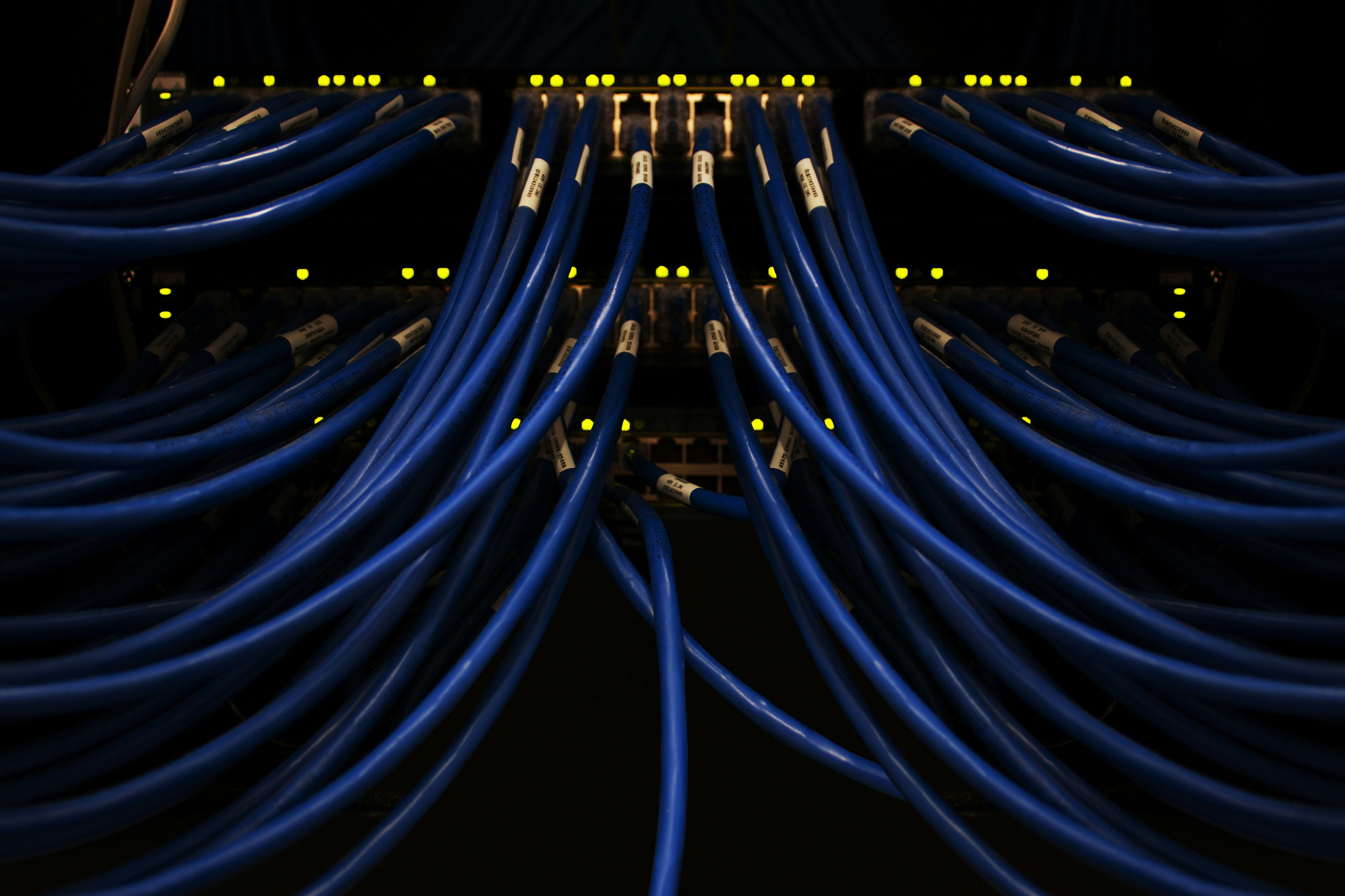
Most networks are not ready for AI. Only 15% of organizations have infrastructure fully capable of handling modern AI workloads, while 83% of companies plan to deploy AI agents in the next year. AI-ready infrastructure is not a single product. It is the combination of network capacity, low-latency edge compute, scalable storage, clean data pipelines, and security designed for decisions made at machine speed. The Gap Between Ambition and Wiring AI is in every pitch deck, every earnings call, every Monday morning meeting. Nearly 88% of companies now use AI in at least one business function.2
Most networks are not ready for AI. Only 15% of organizations have infrastructure fully capable of handling modern AI workloads, while 83% of companies plan to deploy AI agents in the next year. AI-ready infrastructure is not a single product. It is the combination of network capacity, low-latency edge compute, scalable storage, clean data pipelines, and security designed for decisions made at machine speed. The Gap Between Ambition and Wiring AI is in every pitch deck, every earnings call, every Monday morning meeting. Nearly 88% of companies now use AI in at least one business function.2 The urgency is obvious. What is less obvious, and far more dangerous, is the quiet gap between where your business wants to go with AI and what your existing network can actually carry. Most business networks were built for a different era. They were designed for email, file shares, web browsing, and the occasional video call. Agentic AI, real-time inference, and copilots embedded in every app are not occasional traffic. They are constant, bursty, and unforgiving of latency. You are the one accountable for whether the business can actually use AI. The good news is that becoming AI-ready is a process, not a moonshot. You do not need a data center in Reykjavik. You need a plan. What Does “AI-Ready Infrastructure” Actually Mean? AI-ready infrastructure is a network and compute environment that can support AI workloads today and scale to support more of them tomorrow, without creating security, performance, or cost surprises. Practically, that means five things working together: Network capacity and low latency. AI-powered operations, especially inference and agentic workflows, demand near-zero latency to function effectively.3 Compute built for AI workloads. GPUs, accelerators, and cloud access sized for the models you plan to run. Cisco’s 2024 AI Readiness Index found only 21% of organizations had sufficient GPUs for current and future demand.4 Clean, accessible, well-governed data. AI is only as good as the data it touches. Only 19% of organizations have fully centralized data infrastructure.5 Security designed for machine-speed decisions. Identity, access, and monitoring that assume AI agents will act on behalf of your people. Governance and observability. Visibility into what AI is doing, with whom, on which systems, at what cost. Miss any one of these, and you are not AI-ready. You are AI-aspirational. Why Your Current Network Is Already Behind Here is the uncomfortable part. Cisco’s 2025 AI Readiness Index found that 54% of organizations say their networks cannot scale for today’s complexity or data volume.1 That is before most have deployed agentic AI at scale. Three specific pressures are reshaping what “enough” looks like: Inference is latency-sensitive. AI training happens in big centralized data centers, but inference, the live decisions AI makes in your apps, needs to happen fast and close to the user. Industry guidance is pushing enterprises toward scalable edge infrastructure to keep data processed close to the source.3 Agents create compounding traffic. When AI agents talk to other agents, every hop matters. Small delays that were invisible at human speed become costly at machine speed. With 83% of companies planning to deploy AI agents, the volume of machine-to-machine traffic on your network is about to change shape.1 AI workloads spike unpredictably. Unlike payroll or billing, AI load is not a calendar event. A single new use case can multiply bandwidth requirements overnight. The Five Pillars of an AI-Ready Infrastructure If you want a framework to evaluate where you stand, here it is. 1. Network You need bandwidth, low latency, and the ability to segment traffic. That usually means a modern SD-WAN or SASE posture, Wi-Fi 6E or better for in-office AI workloads, and quality-of-service policies that understand AI traffic is not optional. 2. Compute Not every business needs on-premises GPUs. Most do not. What they need is a clear answer to: where does our AI workload run, at what cost, under what latency ceiling, with what data residency requirements? For many SMBs and franchise operators, the right answer is a mix of cloud inference plus thoughtful edge compute at key locations. 3. Data Your AI is only as strong as your data pipeline. That means knowing where data lives, who owns it, how it is cleaned, and how it gets to the model that needs it. It also means resolving the data silos that will otherwise quietly starve your AI investment. 4. Security and Identity Identity is the new perimeter, and AI agents need identities too. You need conditional access, strong MFA, logging, and a clear policy on what AI agents are permitted to touch. Assume agents will, at some point, try to do something you did not plan for. Design for that. 5. Governance and Cost Control AI consumption can get expensive fast. Governance is not just about privacy policies. It is about knowing which AI tools are running in your environment, what data they see, and what they cost per month. Without that visibility, your AI budget is a hope, not a plan. How Do I Assess My AI Readiness? A practical first pass takes about 30 minutes with your leadership team and your IT partner. Ask: Can our network deliver consistent, low-latency performance to every user, including remote and in-store? Do we know where our most important business data lives, and is it clean enough to feed an AI model? Do we have MFA, endpoint protection, and logging in place across every user and device? Do we know which AI tools our team is already using (approved or not)? Do we have a budget line item for AI consumption and a way to monitor it? If you hesitate on more than two, your infrastructure is not ready to carry the AI story your leadership team is already telling customers and investors. Where the Technology Maturity Model Fits Sentry built the Technology Maturity Model (TMM) because infrastructure cannot be fixed in one sprint. It is built in stages: Operate, Secure, Integrate, Innovate. AI-ready infrastructure lives at the Integrate and Innovate stages of the model. You cannot leapfrog. If your organization is still firefighting tickets (Operate) or patching exposures after the fact (Secure), trying to bolt on agentic AI will amplify whatever is already brittle. The Pacesetters in Cisco’s 2025 research are not magical. They are disciplined. 98% of them design their infrastructure with future demand in mind.1 That is exactly what the TMM forces a business to do: decide what the next two years need to look like and build toward it. The Cost of Waiting IDC forecasts global AI infrastructure spending will reach over $902 billion by 2029.6 Your competitors are spending now. So are your vendors. So is every platform your business depends on. Downtime caused by under-built infrastructure is expensive even when AI is not in the picture. Gartner’s industry figure for IT downtime is roughly $5,600 per minute, with small and mid-sized businesses typically feeling $137 to $427 per minute depending on industry.7 Add AI-dependent workflows to that equation, and the cost of an outage is not just lost productivity. It is a customer-facing AI experience that fails in front of the very people you were trying to impress. FAQ: AI-Ready Infrastructure Do I need on-premises GPUs to be AI-ready? No. Most small and mid-sized businesses will never need on-prem GPUs. Cloud inference, thoughtful edge compute, and disciplined data practices are usually the right starting point. What is the biggest AI infrastructure mistake businesses make? Assuming AI is a software problem. Leaders buy AI tools, then find the network, data, and security underneath them cannot support what the tools promised. How long does it take to become AI-ready? Most organizations can reach a baseline in 90 to 180 days. Reaching the Innovate stage of the Technology Maturity Model, where AI is integrated into the business model, typically takes 12 to 24 months of focused work. Is AI-ready the same as cloud-ready? No. Cloud readiness focuses on where workloads run. AI readiness adds requirements around latency, data quality, model governance, and agent-aware security. A business can be fully in the cloud and still not AI-ready. Who owns AI readiness inside the company? It is a shared responsibility between the CEO, CIO or technology partner, and the business unit leaders deploying AI. One-person ownership is a red flag. So is zero-person ownership. The Sentry Take The question is not whether AI will change your business. It is whether your infrastructure can keep up with the AI your team is already using, with or without permission. You do not need a research lab. You need a roadmap, a partner who understands what AI-ready actually means, and a commitment to build in stages. Trusted. Secure. Connected. Ready to assess where your infrastructure stands? Let’s have a 30-minute conversation. Visit sentryitsolutions.com to schedule a Technology Maturity Model assessment. References Cisco, “2025 AI Readiness Index: Realizing the Value of AI,” October 2025. Retrieved from cisco.com. McKinsey & Company, “The State of AI 2025: Agents, Innovation, and Transformation,” November 2025. Retrieved from mckinsey.com. Cisco Blogs and Lightpath Communications industry guidance, “Optimizing Networks for AI in 2025” and “AI-Ready Infrastructure: A New Era of Data Center Design,” 2025. Retrieved from blogs.cisco.com and lightpathfiber.com. Cisco, “2024 AI Readiness Index,” November 2024. Retrieved from cisco.com. Cisco, “2025 AI Readiness Index,” October 2025. Retrieved from cisco.com. IDC, “Artificial Intelligence Infrastructure Spending to Reach $902Bn by 2029,” 2025. Retrieved from idc.com. Gartner industry benchmark referenced in Erwood Group and SysTech MSP analyses, 2024-2025. Retrieved from erwoodgroup.com and systechmsp.com.
Read full post on sentrytechsolutions.com

How to Spot a Phishing Email: A Practical Guide for Businesses
How to Spot a Phishing Email: A Practical Guide for Businesses Phishing emails are one of the most common and effective cyber threats facing organizations today. They are designed to trick recipients into clicking malicious links, opening infected attachments, or sharing sensitive information such as passwords, banking details, or login credentials. As these attacks become
How to Spot a Phishing Email: A Practical Guide for Businesses Phishing emails are one of the most common and effective cyber threats facing organizations today. They are designed to trick recipients into clicking malicious links, opening infected attachments, or sharing sensitive information such as passwords, banking details, or login credentials. As these attacks become
Read full post on litechadvisors.com
What is a Data Breach?
In recent security news, the talk of data breaches is causing nervous jitters among IT professionals. With loads of data being generated and shared through every aspect of business operations, it’s important to defend company infrastructure from all angles against global threats and, even more so, from the hard-hitting costs that data breaches can cause.
In recent security news, the talk of data breaches is causing nervous jitters among IT professionals. With loads of data being generated and shared through every aspect of business operations, it’s important to defend company infrastructure from all angles against global threats and, even more so, from the hard-hitting costs that data breaches can cause.
Read full post on blog.centretechnologies.com
Just Added to MSPdb™



MSP Jobs
All Jobs
MSP Marketplace
View All


Popular MSPs
View All