How can we help you?
Discover leading Managed IT Service Providers across USA, Canada & the United Kingdom.
- 100s of leading MSPs
- Find a MSP near you
- Latest IT news for SMBs

The 7 Elements of an Effective HIPAA Compliance Policy
Any and every organization that handles protected health information (PHI) must adhere to rules and regulations laid down by the Health Insurance Portability and Accountability Act (HIPAA). Failing to comply with these standards can result in hefty fines, legal consequences, and loss of trust from patients. A well-structured HIPAA compliance policy will help to prevent breaches – and it also ensures your organization meets all regulatory requirements. 1. Privacy Rule Adherence The HIPAA Privacy Rule sets the standard for how healthcare organizations must handle patients’ protected health infor
Any and every organization that handles protected health information (PHI) must adhere to rules and regulations laid down by the Health Insurance Portability and Accountability Act (HIPAA). Failing to comply with these standards can result in hefty fines, legal consequences, and loss of trust from patients. A well-structured HIPAA compliance policy will help to prevent breaches – and it also ensures your organization meets all regulatory requirements. 1. Privacy Rule Adherence The HIPAA Privacy Rule sets the standard for how healthcare organizations must handle patients’ protected health information (PHI). This rule ensures that patients have control over their health information and dictates how and when PHI can be shared. Your HIPAA compliance policy should begin by ensuring strict adherence to the Privacy Rule, which focuses on: Patient Rights: Patients have the right to access their medical records, request corrections, and obtain information on how their data has been used or disclosed. Your policy must clearly define the procedures for responding to these requests in a timely and compliant manner. Limiting Use and Disclosure: PHI should only be used or disclosed for treatment, payment, or healthcare operations unless the patient gives explicit consent. Your policy should outline how your organization will
Read full post on davenportgroup.com
MSPdb™ News

What Is Shadow AI? The Hidden Risk Inside Your Business
Artificial intelligence is reshaping how businesses operate, and the pace of adoption is accelerating fast. According to Microsoft’s 2025 Canadian small and medium-sized business (SMB) Report, AI adoption among SMBs has surged, with 71% now using AI or generative AI in their operations. That creates a major opportunity, but it also raises an important question:...
Artificial intelligence is reshaping how businesses operate, and the pace of adoption is accelerating fast. According to Microsoft’s 2025 Canadian small and medium-sized business (SMB) Report, AI adoption among SMBs has surged, with 71% now using AI or generative AI in their operations. That creates a major opportunity, but it also raises an important question:...
Read full post on daxtech.ca

How to Evaluate Cloud Service Provider Security for Businesses
As more organizations move critical applications and data to the cloud, choosing the right provider has become a strategic business decision. While cloud technology offers flexibility, scalability, and cost savings, security remains a top concern. Businesses must carefully evaluate cloud service provider security to ensure sensitive information remains protected and compliance requirements are met. For businesses in Orange County and beyond, understanding…
As more organizations move critical applications and data to the cloud, choosing the right provider has become a strategic business decision. While cloud technology offers flexibility, scalability, and cost savings, security remains a top concern. Businesses must carefully evaluate cloud service provider security to ensure sensitive information remains protected and compliance requirements are met. For businesses in Orange County and beyond, understanding…
Read full post on swifttechsolutions.com
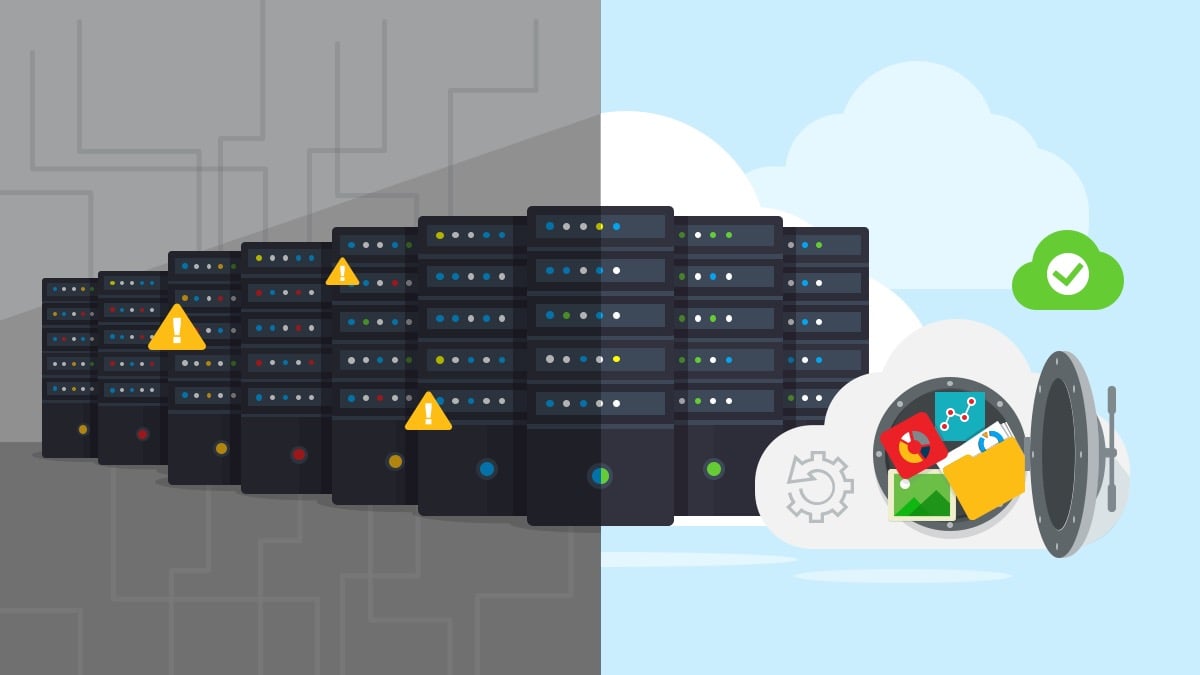
Traditional Infrastructure vs. Cloud Services
Between traditional "on-premise" (onsite) infrastructure and cloud, there's a lot to consider when deciding on the best IT model for a business. Every company is different and therefore requires different things to make sure operational efficiency isn't affected. Still, regardless of who you are, every company needs to ensure scalability, cost-consciousness, reliability, and security for their business. While there has been a major pivot over recent years from traditional IT infrastructure to the cloud, many forget that not all solutions work for everyone. Let's walk through the pros and cons
Between traditional "on-premise" (onsite) infrastructure and cloud, there's a lot to consider when deciding on the best IT model for a business. Every company is different and therefore requires different things to make sure operational efficiency isn't affected. Still, regardless of who you are, every company needs to ensure scalability, cost-consciousness, reliability, and security for their business. While there has been a major pivot over recent years from traditional IT infrastructure to the cloud, many forget that not all solutions work for everyone. Let's walk through the pros and cons (and our recommendations at the end!).
Read full post on blog.centretechnologies.com

Microsoft Verified MXDR: Getting the Advanced Protection You Need
Microsoft Verified MXDR services offer comprehensive coverage against complex, cross-domain cyberthreats. Where traditional MDR focuses on endpoints, managed XDR (extended detection and response) takes a holistic view of your environment, enabling coordinated, comprehensive response to threats. When the solution is Microsoft Verified, as Corsica Technologies’ solution is, you can rest assured that it meets the
Microsoft Verified MXDR services offer comprehensive coverage against complex, cross-domain cyberthreats. Where traditional MDR focuses on endpoints, managed XDR (extended detection and response) takes a holistic view of your environment, enabling coordinated, comprehensive response to threats. When the solution is Microsoft Verified, as Corsica Technologies’ solution is, you can rest assured that it meets the
Read full post on corsicatech.com

Quishing Awareness: Protecting Your Team from QR Code Phishing
QR code phishing (quishing) is one of the fastest-growing cyber threats in 2026. Learn how to protect your small business team with scan-smart habits, MFA, and a clear incident response plan.
QR code phishing (quishing) is one of the fastest-growing cyber threats in 2026. Learn how to protect your small business team with scan-smart habits, MFA, and a clear incident response plan.
Read full post on ecnitsolutions.com

Cloud Employees are Happier Employees: The Stages Of Cloud Adoption
What are the stages of cloud adoption, and why should a business leader care? Because getting cloud adoption right or wrong doesn’t just affect your servers. It affects your people. Their mornings. Their frustrations. The speed at which they can do the work you hired them to do. Most companies adopted cloud tools in a
What are the stages of cloud adoption, and why should a business leader care? Because getting cloud adoption right or wrong doesn’t just affect your servers. It affects your people. Their mornings. Their frustrations. The speed at which they can do the work you hired them to do. Most companies adopted cloud tools in a
Read full post on stringfellow.com

Is Your Network Failing?
7 Signs You Need Upgraded Support Imagine your network as the technology brain of your organization. When it’s healthy, your business grows, scales, and stays secure. But when your network starts to wear out, it can show signs of “brain fog”—unexplained delays, constant buffering, and missed updates. Suddenly, your network has become a liability. Maybe
7 Signs You Need Upgraded Support Imagine your network as the technology brain of your organization. When it’s healthy, your business grows, scales, and stays secure. But when your network starts to wear out, it can show signs of “brain fog”—unexplained delays, constant buffering, and missed updates. Suddenly, your network has become a liability. Maybe
Read full post on fuellednetworks.com

Network Security for Small Business: Tools & Techniques
One weak password or unsafe link can stop work fast. Files lock, systems crash, and clients wait. You do not need a big budget to stop that from happening. You only need a plan that fits your size and goals. Our approach to network security for a small business starts simple and grows with you.
One weak password or unsafe link can stop work fast. Files lock, systems crash, and clients wait. You do not need a big budget to stop that from happening. You only need a plan that fits your size and goals. Our approach to network security for a small business starts simple and grows with you.
Read full post on mdltechnology.com
Intrust IT Joins Nashville Area Chamber of Commerce, Expanding Its Commitment to Middle Tennessee Businesses
Intrust IT, a 100 percent employee-owned managed IT services provider (MSP) headquartered in Cincinnati, Ohio, recently joined the Nashville Area Chamber of Commerce. The membership marks a significant step in Intrust IT’s expansion into the Middle Tennessee market, where it is actively serving small and mid-sized businesses seeking proactive IT support, practical AI solutions, cybersecurity…
Intrust IT, a 100 percent employee-owned managed IT services provider (MSP) headquartered in Cincinnati, Ohio, recently joined the Nashville Area Chamber of Commerce. The membership marks a significant step in Intrust IT’s expansion into the Middle Tennessee market, where it is actively serving small and mid-sized businesses seeking proactive IT support, practical AI solutions, cybersecurity…
Read full post on intrust-it.com

Microsoft Teams Rooms Pro License: Setup and Pricing Guide
What Is Microsoft Teams Rooms Pro License? The Microsoft Teams Rooms Pro License is an advanced licensing solution designed to power intelligent and collaborative meeting rooms. It enables organizations to transform conference spaces into fully connected hybrid meeting environments using Microsoft Teams Rooms devices. As hybrid work continues to grow, businesses need meeting rooms that
What Is Microsoft Teams Rooms Pro License? The Microsoft Teams Rooms Pro License is an advanced licensing solution designed to power intelligent and collaborative meeting rooms. It enables organizations to transform conference spaces into fully connected hybrid meeting environments using Microsoft Teams Rooms devices. As hybrid work continues to grow, businesses need meeting rooms that
Read full post on trndigital.com
Just Added to MSPdb™



MSP Jobs
All Jobs
MSP Marketplace
View All


Popular MSPs
View All