What's your biggest IT challenge?
Discover leading Managed IT Service Providers across USA, Canada & the United Kingdom.
- 100s of leading MSPs
- Find a MSP near you
- Latest IT news for SMBs

Why Cyber Insurance Has Become Essential in the Mid-Market
Mid-market organizations face the same attack patterns as large enterprises but without the scale or redundancy to absorb disruption. Most operate with limited security engineering capacity and shared responsibility models across internal teams and service providers. As environments expand through SaaS, remote work, and third-party integrations, attack surfaces have grown faster than headcount. At the same time, breach costs have accelerated. Organizations often absorb expenses related to: Legal counsel and regulatory response Forensics and containment Operational downtime Data rest
Mid-market organizations face the same attack patterns as large enterprises but without the scale or redundancy to absorb disruption. Most operate with limited security engineering capacity and shared responsibility models across internal teams and service providers. As environments expand through SaaS, remote work, and third-party integrations, attack surfaces have grown faster than headcount. At the same time, breach costs have accelerated. Organizations often absorb expenses related to: Legal counsel and regulatory response Forensics and containment Operational downtime Data restoration Customer notification and support Contractual disputes Reputational damage and churn Large enterprises can often dilute these impacts. Mid-market companies cannot. A single incident may disrupt cash flow, delay customer deliverables, or affect contractual obligations. Boards now expect clear prevention strategies and defined financial resilience plans. Cyber insurance sits at the center of those expectations. How Today’s Cyber Insurance Market Evolved Cyber policies originally focused on third-party liability. As threats escalated, insurers added coverage for business interruption, data restoration, and incident management. Cloud adoption, remote work, and targeted ransomware further tightened underwriting requirements. The biggest shift today is insurer scrutiny. Carriers now demand proof that core controls are implemented, monitored, and documented. Gaps or outdated practices often lead to higher premiums, reduced limits, or limited eligibility. For mid-market organizations, cyber insurance now acts as both a financial backstop and a direct incentive to strengthen foundational security. Rising Regulatory Pressures Increase the Value of Coverage Regulatory expectations continue to expand. Privacy laws (HIPAA, GDPR, state privacy acts), critical infrastructure rules, and incident reporting requirements all shape how organizations must respond after a breach. Public companies face additional SEC disclosure obligations. After an incident, teams may need to execute mandatory notifications, produce investigation reports, demonstrate remediation, and coordinate with regulators. These activities require specialized technical and legal expertise. Cyber insurance helps fund these efforts—subject to policy terms—and provides access to breach counsel, forensic firms, and vetted IR partners. For mid-market teams without deep in-house resources, this support is often essential to maintaining continuity. How Underwriters Evaluate Your Environment Underwriting is now a structured assessment of your security posture. Most carriers expect documented, functioning controls. Key areas influencing pricing and eligibility include: Identity and Access Management MFA for administrative and remote access Privileged access management or equivalent processes Regular access reviews and removal of stale accounts Endpoint and Server Protection Modern EDR/XDR with centralized monitoring Patch management with defined timelines Log retention with visibility for internal teams or your MSSP Backup and Recovery Backups isolated from production Support for immutability or write-once storage Documented and tested recovery procedures Network and Cloud Configuration Segmentation for critical systems Secure remote access Clearly defined MSP/MSSP responsibilities Incident Response A written and tested IR plan Defined escalation paths with MSP/MSSP partners Evidence of tabletop exercises Organizations able to demonstrate strong, well-documented controls typically earn better pricing and broader coverage. First-Party vs. Third-Party Coverage: What Each Protects Understanding coverage categories helps determine whether your policy aligns with your risk profile. First-Party Coverage Protects your organization’s direct losses, such as: Incident response and forensics Data restoration and system recovery Business interruption costs Notification and call center operations Credit monitoring Crisis communications Certain regulatory fines (where allowed) Extortion response costs Example: A ransomware attack halts production and encrypts data. First-party coverage funds containment, recovery, restoration, and lost income during downtime. Third-Party Liability Coverage Applies when external parties claim your organization caused them harm. Often includes: Legal defense Settlements or judgments Contractual liability Privacy or regulatory claims brought by external entities This is especially relevant when MSP/MSSP partners are involved. Misconfigurations, missed alerts, or unclear responsibility boundaries can expose organizations to customer or partner claims. Most mid-market companies require both types of coverage to address their full risk landscape. What Cyber Insurance Covers — and What It Excludes While policies vary by carrier, most comprehensive policies include: Typically Covered Incident response and forensics Data restoration Business interruption and extra expenses Notification and credit monitoring Legal and regulatory defense Crisis communications Certain extortion payments Access to vetted IR firms Common Exclusions Physical injury or property damage Loss of physical devices Fraud or criminal acts by the insured Failures driven by utility outages Claims arising when required controls were not maintained Acts of war or nation-state activity (depending on carrier) Mid-market leaders should review policy language in partnership with brokers, counsel, and MSP/MSSP teams to ensure alignment across responsibilities and insurer expectations. How Insurers Price Policies in the Mid-Market Premiums vary widely based on business profile and control maturity. Key Pricing Factors Organizational Characteristics Revenue Industry risk profile Volume/sensitivity of data Geographic footprint Security PostureProof of: MFA Centralized EDR/XDR Secure remote access Network segmentation Validated backups Vendor risk management Third-Party DependenciesInsurers assess: MSP/MSSP access models Shared responsibility documentation Contractual security requirements Claims History + Requested LimitsPast incidents and higher limits influence price. Most mid-market organizations pay from several thousand dollars to tens of thousands annually, depending on maturity and exposure. Deductibles, Limits, and Structuring Coverage Three financial levers anchor cyber insurance planning: DeductibleYour up-front cost before reimbursement begins. Coverage LimitsThe maximum the insurer pays during the policy period. Mid-market companies often start with $1M–$3M and adjust based on regulatory and contractual obligations. SublimitsLower caps for specific categories (e.g., extortion, business interruption). Sublimits significantly affect real incident support. Align these elements with finance, legal, and risk stakeholders to ensure coverage reflects your risk tolerance. The Role of MSPs and MSSPs in Cyber Insurance Readiness For many mid-market organizations, MSP/MSSP partners are central to meeting security and underwriting requirements. Their support directly influences documentation quality, visibility, and response maturity. Where MSP/MSSP Partnerships Add Value Implementing and maintaining required controls Managing EDR tooling and alerting Ensuring backups are functional and tested Supporting IR plan development and exercises Providing evidence for underwriting Delivering 24×7 monitoring and escalation Maintaining documentation insurers often request Where Leaders Need Clarity Carriers often ask: Who owns patching and hardening? Who manages identity governance? How is privileged access handled across MSP boundaries? What logs are collected, retained, and monitored? How quickly can the MSP/MSSP escalate or contain incidents? A documented shared responsibility model reduces risk and eliminates ambiguity during underwriting or incident response. Using Cyber Insurance and Security Together Cyber insurance is not a substitute for strong controls, nor does it guarantee full reimbursement. It is most effective when aligned with a mature security program. Security controls reduce likelihood and impact. Insurance reduces financial volatility. MSP/MSSP partners operationalize both. The most resilient mid-market organizations maintain strong baselines, document responsibilities clearly, integrate MSP/MSSP teams into IR planning, and use insurance to absorb residual risk. This balanced approach builds leadership confidence and strengthens overall resilience. Final Thought Cyber insurance has become a strategic tool for mid-market technology leaders. It shapes budgeting, informs security investments, and strengthens board communication. When security controls, operational processes, and insurance planning work together, organizations respond faster, maintain continuity, and limit financial exposure. Strengthen Your Cyber Insurance Readiness With Logically If you want clearer visibility into your risk posture or help aligning your controls with insurer expectations, Logically can support you. We partner with mid-market technology and security teams to: Validate your current control environment Strengthen the controls insurers prioritize Improve documentation and shared responsibility models Reduce operational risk and improve insurability Enhance IR planning across MSP/MSSP ecosystems To discuss your insurance readiness, connect with Logically. A short conversation can help you understand your current position and identify the steps that will deliver the greatest reduction in risk and exposure. Additional Resources From Logically For more guidance as you prepare for coverage evaluations or underwriting: Cysurance & Logically Partnership — Integrated cyber protection and insurability solutions Cybersecurity Coverage Guide — How insurability shapes cybersecurity priorities Understanding Cybersecurity Insurance for SMBs — Practical background for smaller teams
Read full post on go.logically.comMSPdb™ News

5 Benefits of Hiring a Local IT Company in Orange County
Technology is essential to keeping modern businesses productive, secure, and competitive. Whether you’re managing daily operations, protecting sensitive business data, or supporting remote employees, having dependable IT support is critical. This is why many organizations choose a local IT company in Orange County that understands the needs of businesses in the region and can provide responsive, personalized technology services. …
Technology is essential to keeping modern businesses productive, secure, and competitive. Whether you’re managing daily operations, protecting sensitive business data, or supporting remote employees, having dependable IT support is critical. This is why many organizations choose a local IT company in Orange County that understands the needs of businesses in the region and can provide responsive, personalized technology services. …
Read full post on swifttechsolutions.com

Advanced Networks Named to the Channel Futures MSP 501 — A Leading Managed IT Services Provider in Los Angeles
LOS ANGELES, CA — Advanced Networks has been named to the Channel Futures 2026 MSP 501 for the third consecutive year, earning recognition among the most capable managed service providers in the world. For organizations searching for dependable managed IT services in Los Angeles, the honor is more than a trophy on the wall. It
LOS ANGELES, CA — Advanced Networks has been named to the Channel Futures 2026 MSP 501 for the third consecutive year, earning recognition among the most capable managed service providers in the world. For organizations searching for dependable managed IT services in Los Angeles, the honor is more than a trophy on the wall. It
Read full post on adv-networks.com
Reliable Technology Services Recognized on the 2026 MSP 501 List of the World’s Top Managed Service Providers
Annual MSP 501 Ranking Recognizes Leading Technology Providers Driving Business Growth Through Innovation, Operational Excellence, and Strategic IT Leadership JUNE 27, 2026 – Reliable Technology Services (RTS), a Maryland-based managed IT and cybersecurity provider, has been named to the prestigious 2026 MSP 501 list, recognizing the world’s top managed service providers for operational excellence, financial
Annual MSP 501 Ranking Recognizes Leading Technology Providers Driving Business Growth Through Innovation, Operational Excellence, and Strategic IT Leadership JUNE 27, 2026 – Reliable Technology Services (RTS), a Maryland-based managed IT and cybersecurity provider, has been named to the prestigious 2026 MSP 501 list, recognizing the world’s top managed service providers for operational excellence, financial
Read full post on reliabletechnology.co

How to Protect Your Company Without Overcomplicating IT
Cybersecurity for Businesses Small businesses face many of the same cyber threats as large enterprises,
Cybersecurity for Businesses Small businesses face many of the same cyber threats as large enterprises,
Read full post on wolftg.com
Cloud Data Protection: A Complete Guide for Canadian SMBs
Protect your business with our complete guide to cloud data protection for Canadian SMBs. Learn about threats, compliance like PIPEDA, and technical solutions.
Protect your business with our complete guide to cloud data protection for Canadian SMBs. Learn about threats, compliance like PIPEDA, and technical solutions.
Read full post on cloudorbis.com
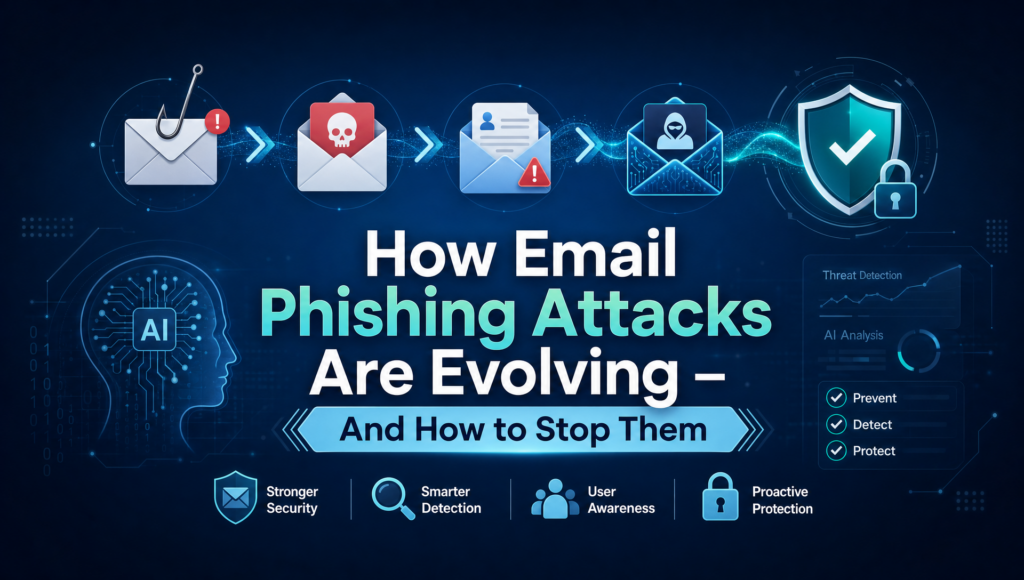
How Email Phishing Attacks Are Evolving – And How to Stop Them
For years, phishing emails were relatively easy to spot. Poor grammar, suspicious links, and generic greetings made them stand out. Today, that’s no longer the case. Modern email phishing attacks are powered by artificial intelligence, automation, and stolen business data, making them more convincing than ever. Attackers can impersonate trusted vendors, executives, or even coworkers
For years, phishing emails were relatively easy to spot. Poor grammar, suspicious links, and generic greetings made them stand out. Today, that’s no longer the case. Modern email phishing attacks are powered by artificial intelligence, automation, and stolen business data, making them more convincing than ever. Attackers can impersonate trusted vendors, executives, or even coworkers
Read full post on sunitsolutions.ca

Building a Zero Trust Security Strategy with Palo Alto Networks
Cybercriminals no longer rely on brute-force attacks alone. Today’s attackers steal identities, exploit trusted users,…
Cybercriminals no longer rely on brute-force attacks alone. Today’s attackers steal identities, exploit trusted users,…
Read full post on blog.synergyit.ca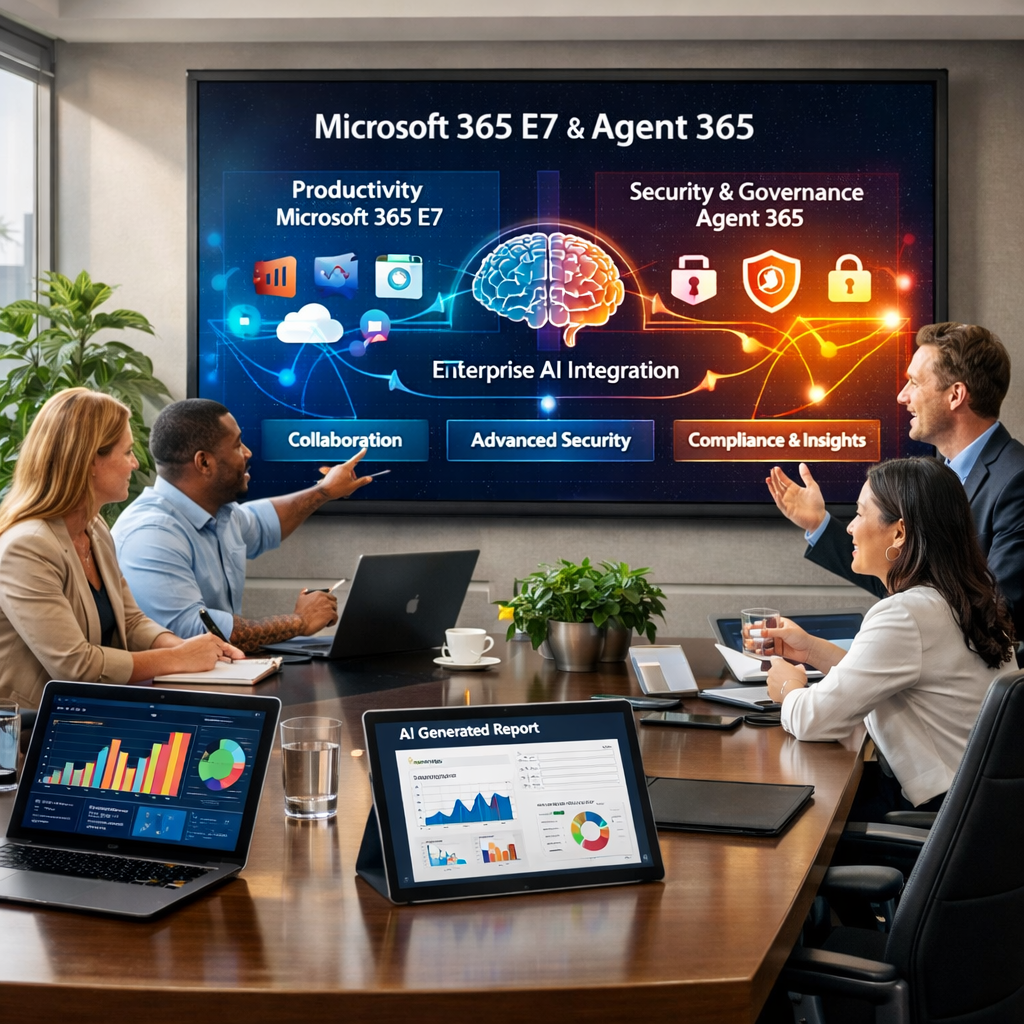
Microsoft 365 E7 & Agent 365: What the Next Phase of Enterprise AI Means for Businesses
Artificial intelligence adoption is entering a new phase. Over the past few years, most organizations have focused primarily on experimentation by testing copilots, automating repetitive tasks, and exploring how generative AI can improve productivity. Now, however, the conversation has evolved beyond simple experimentation. Businesses are no longer asking whether AI can create value; instead, they are trying to determine how to deploy AI securely, govern it consistently across departments, monitor AI behavior at scale, prevent shadow AI risks, and generate measurable business outcomes from the
Artificial intelligence adoption is entering a new phase. Over the past few years, most organizations have focused primarily on experimentation by testing copilots, automating repetitive tasks, and exploring how generative AI can improve productivity. Now, however, the conversation has evolved beyond simple experimentation. Businesses are no longer asking whether AI can create value; instead, they are trying to determine how to deploy AI securely, govern it consistently across departments, monitor AI behavior at scale, prevent shadow AI risks, and generate measurable business outcomes from their AI investments. Microsoft’s general availability launch of Microsoft 365 E7 represents one of the company’s largest efforts to address these operational challenges at the enterprise level.
Read full post on datalinknetworks.net

Cybersecurity Risks for Mid-Size Manufacturers
Cybersecurity Risks for Mid-Size Manufacturers | LG Networks Your production line goes down on a Monday morning, again. Not because a machine failed or someone called in sick, but because someone locked you out of your own systems and wants $200,000 to give them back. You have 72 hours to decide, and a shipment is
Cybersecurity Risks for Mid-Size Manufacturers | LG Networks Your production line goes down on a Monday morning, again. Not because a machine failed or someone called in sick, but because someone locked you out of your own systems and wants $200,000 to give them back. You have 72 hours to decide, and a shipment is
Read full post on lgnetworksinc.com
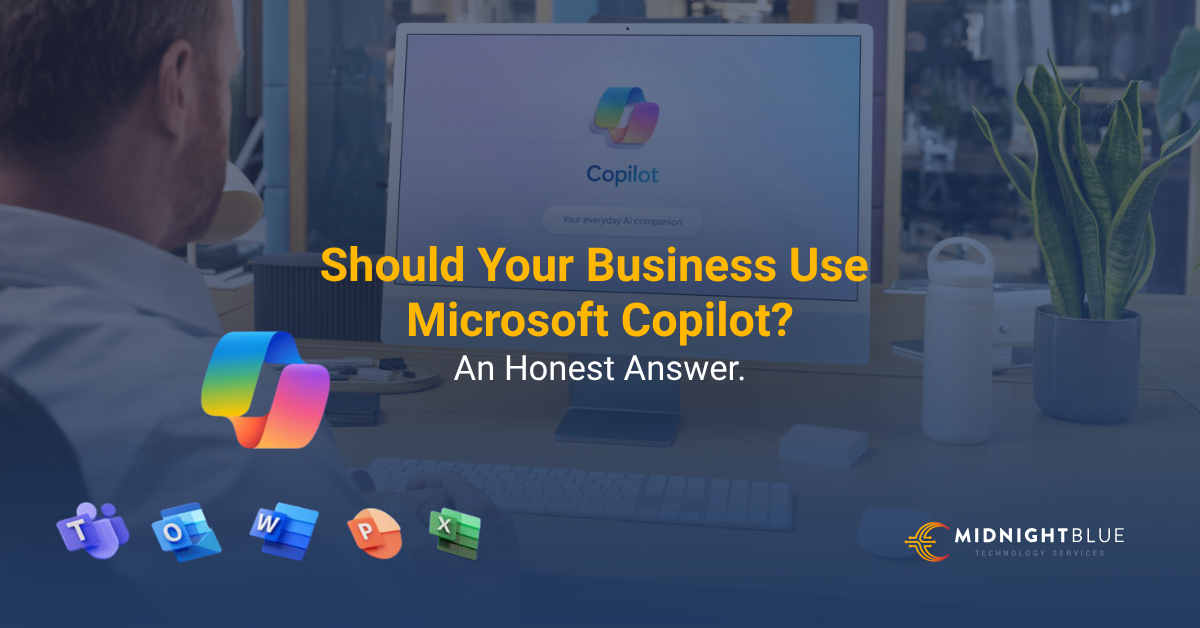
Should Your Business Use Microsoft Copilot? An Honest Answer.
The short answer Wondering if your business should be using Copilot? The short answer is yes, if two specific conditions are in place. If either is missing, the right move is to get those conditions right first. Rushing into Copilot without them does not usually end with a failed AI project. It ends with a
The short answer Wondering if your business should be using Copilot? The short answer is yes, if two specific conditions are in place. If either is missing, the right move is to get those conditions right first. Rushing into Copilot without them does not usually end with a failed AI project. It ends with a
Read full post on midnightbluetech.com
Just Added to MSPdb™

MSP Jobs
All Jobs
MSP Marketplace
View All


Popular MSPs
View All