MSPdb™ News
The Proposed HIPAA Security Rule Update: A Checklist for 2026
Your HIPAA risk assessment is a document, not a feeling. Here's what the proposed rule changes.
Your HIPAA risk assessment is a document, not a feeling. Here's what the proposed rule changes.
Read full post on kairosit.com

US Compliance Teams: Make AI for Healthcare Compliance Audit Ready
Practical checklist for US healthcare compliance teams to inventory AI, meet HIPAA, NIST, FDA, ONC, and FTC rules, and be audit ready.
Practical checklist for US healthcare compliance teams to inventory AI, meet HIPAA, NIST, FDA, ONC, and FTC rules, and be audit ready.
Read full post on mytekrescue.com
Avoid OCR Penalties: $143M, HIPAA Security Rule for U.S. Practices
A practical U.S. compliance atlas that maps HHS and NIST guidance to SMB actions. Get OCR ready: documented risk analysis, NIST mappings, and 6 month scans.
A practical U.S. compliance atlas that maps HHS and NIST guidance to SMB actions. Get OCR ready: documented risk analysis, NIST mappings, and 6 month scans.
Read full post on mytekrescue.com
PHI vs PII: Classify Data Before It Becomes a HIPAA Breach
Clear, practical guide to PHI versus PII under U.S. HIPAA. Follow a four question checklist to classify records, secure BAAs, and avoid reportable breach...
Clear, practical guide to PHI versus PII under U.S. HIPAA. Follow a four question checklist to classify records, secure BAAs, and avoid reportable breach...
Read full post on mytekrescue.com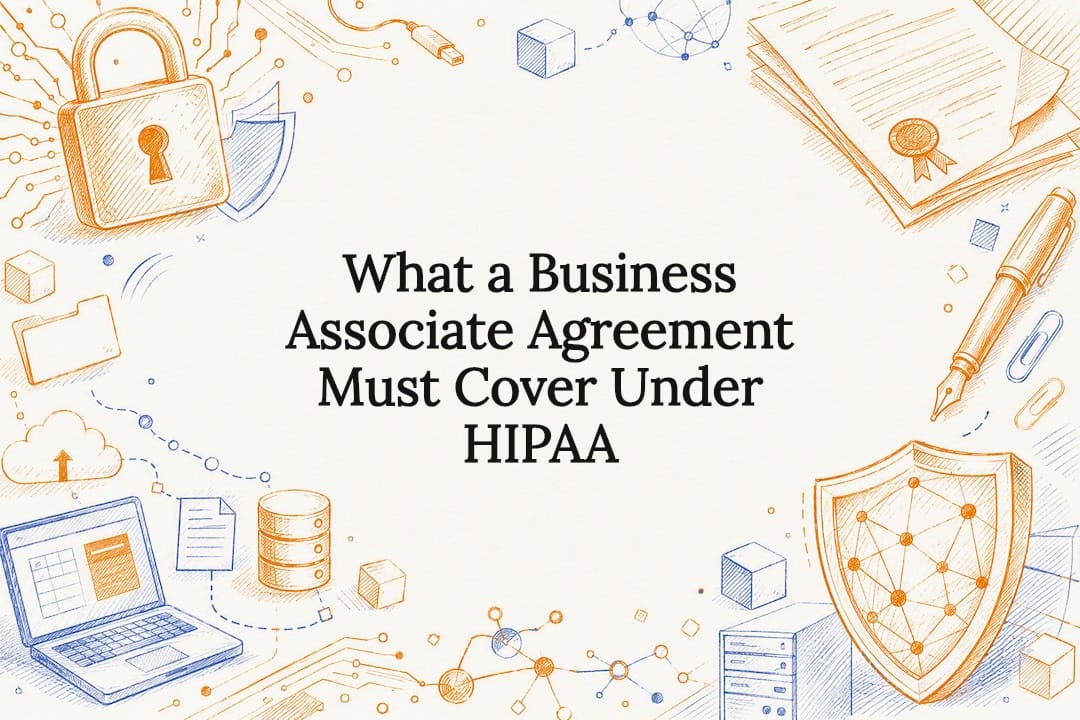
What a Business Associate Agreement Must Cover Under HIPAA
Learn what essential elements your business associate agreement must include to comply with HIPAA and safeguard protected health information.
Learn what essential elements your business associate agreement must include to comply with HIPAA and safeguard protected health information.
Read full post on mytekrescue.com
New HIPAA Security Rule Changes: Preparing for OCR Audits
Healthcare organizations are facing increasing pressure from cyber threats, rising compliance requirements, and growing scrutiny from the Office for Civil Rights (OCR). While the proposed HIPAA Security Rule updates have not yet been finalized, recent OCR enforcement actions make one thing clear: healthcare providers can no longer afford to treat cybersecurity as an annual checklist
Healthcare organizations are facing increasing pressure from cyber threats, rising compliance requirements, and growing scrutiny from the Office for Civil Rights (OCR). While the proposed HIPAA Security Rule updates have not yet been finalized, recent OCR enforcement actions make one thing clear: healthcare providers can no longer afford to treat cybersecurity as an annual checklist
Read full post on turnkeysol.com

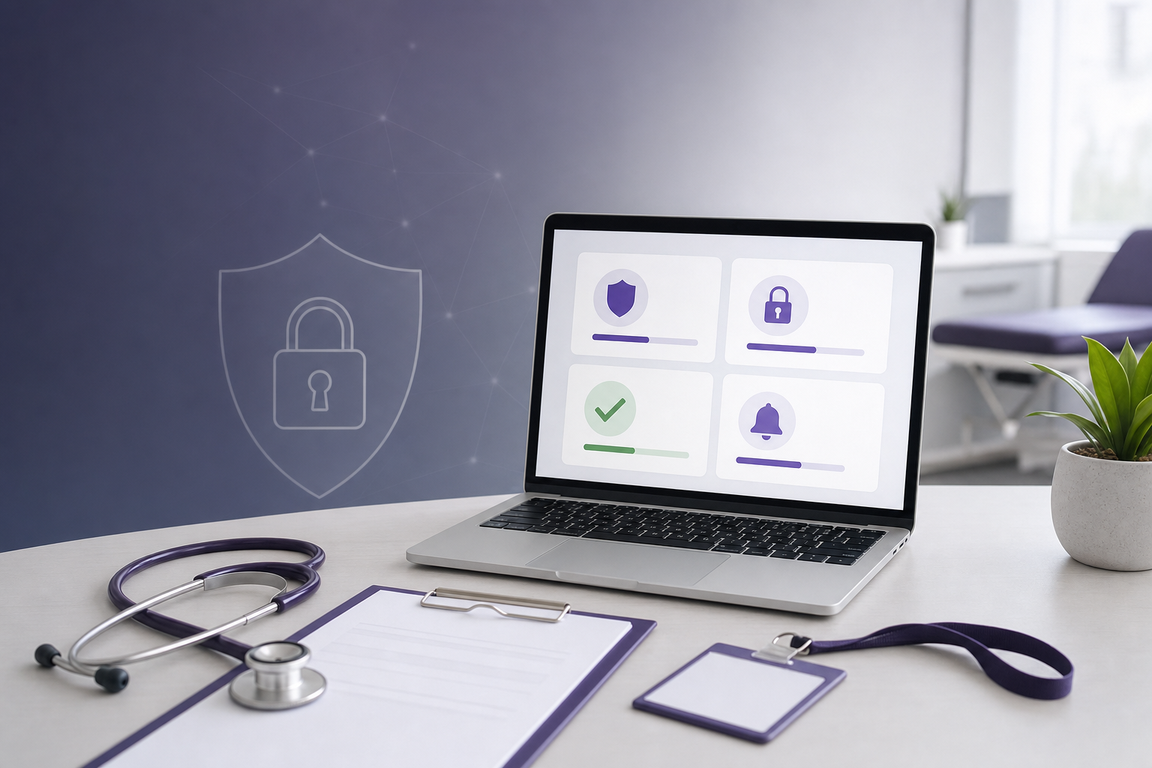
What security awareness training do healthcare employees need to meet HIPAA requirements?
HIPAA requires covered entities and business associates to train workforce members on security and privacy policies and procedures relevant to their roles. The HIPAA Security Rule at 45 CFR §164.308(a)(5) requires covered entities and business associates to implement a security awareness training program for workforce members. The rule identifies four addressable implementation specifications under the
HIPAA requires covered entities and business associates to train workforce members on security and privacy policies and procedures relevant to their roles. The HIPAA Security Rule at 45 CFR §164.308(a)(5) requires covered entities and business associates to implement a security awareness training program for workforce members. The rule identifies four addressable implementation specifications under the
Read full post on magna5.com
The Proposed HIPAA Security Rule: A Step-by-Step Guide for Medical and Dental Practices
If you run a medical or dental practice, you have probably heard that HIPAA is about to get a lot stricter. That is partly true and partly premature, and the difference matters for how you spend your time and money this year. Here is the honest status. In January 2025, the HHS Office for Civil
If you run a medical or dental practice, you have probably heard that HIPAA is about to get a lot stricter. That is partly true and partly premature, and the difference matters for how you spend your time and money this year. Here is the honest status. In January 2025, the HHS Office for Civil
Read full post on harmony-msp.com
AI and HIPAA compliance: What your practice needs before AI touches patient data
An HR analyst at a 3,000-person hospital system used Microsoft Copilot to look up employee benefits. Routine query, nothing unusual. The response came back with patient treatment notes pulled from a SharePoint folder that had been sitting there for four years with broad permissions that nobody had ever cleaned up. One query. Forty-seven patient records
An HR analyst at a 3,000-person hospital system used Microsoft Copilot to look up employee benefits. Routine query, nothing unusual. The response came back with patient treatment notes pulled from a SharePoint folder that had been sitting there for four years with broad permissions that nobody had ever cleaned up. One query. Forty-seven patient records
Read full post on focushcs.com

Get Ready for Major HIPAA Security Rule Changes in 2026 | Dynamic Computing
If your organization is in healthcare, or is healthcare adjacent, the proposed HIPAA Security Rule updates from the U.S. government expected in 2026 are something you should already be planning for, not waiting on.
If your organization is in healthcare, or is healthcare adjacent, the proposed HIPAA Security Rule updates from the U.S. government expected in 2026 are something you should already be planning for, not waiting on.
Read full post on dynamiccomputing.com

Guarding Patient Data with Cybersecurity for Hospitals
Cybersecurity for hospitals protects sensitive patient data and strengthens daily healthcare operations. With the increase in cyber threats in healthcare, hospitals require stronger digital protection strategies to reduce security risks. Data from Health-ISAC reveals that healthcare data breaches have risen by 55% in the last year alone. This is a wake-up call for hospitals and healthcare facilities to
Cybersecurity for hospitals protects sensitive patient data and strengthens daily healthcare operations. With the increase in cyber threats in healthcare, hospitals require stronger digital protection strategies to reduce security risks. Data from Health-ISAC reveals that healthcare data breaches have risen by 55% in the last year alone. This is a wake-up call for hospitals and healthcare facilities to
Read full post on pegasustechnologies.com

Navigating the 2026 HIPAA Security Rule Changes
HIPAA’s Security Rule changes so little that it’s easy to set your compliance strategy on autopilot and let it coast. However, one of the rare changes to these requirements is happening soon. What does soon mean? It’s hard to say—but industry experts believe the changes will take effect in late 2026 or early 2027 because some key milestones have been completed that indicate a final rule publication is coming. While that seems far off, in the world of business that’s right around the corner. And these aren’t minor changes. They’re significant and may require a great deal of work, especially if
HIPAA’s Security Rule changes so little that it’s easy to set your compliance strategy on autopilot and let it coast. However, one of the rare changes to these requirements is happening soon. What does soon mean? It’s hard to say—but industry experts believe the changes will take effect in late 2026 or early 2027 because some key milestones have been completed that indicate a final rule publication is coming. While that seems far off, in the world of business that’s right around the corner. And these aren’t minor changes. They’re significant and may require a great deal of work, especially if you take advantage of HIPAA’s many “optional” requirements and exceptions. What does significant mean? Think mandatory encryption, required multifactor authentication, and the elimination of the long-standing "addressable" safeguard category that many organizations lean on to avoid implementing certain controls. This article walks through 10 of the most important proposed changes, what they mean in plain terms, and what your organization may need to do to remain compliant once the updated final rule takes effect.
Read full post on vc3.com

Real Time Patient Data: Enabling a Software-Defined Clinic
Patient care is the foremost priority for every healthcare provider. In our rapidly advancing technological world, however, traditional methods of managing care can sometimes fall short. This is where real-time patient data makes a significant difference. By gathering, processing, and analyzing health data as it’s created, you can gain immediate, actionable insights. This article will
Patient care is the foremost priority for every healthcare provider. In our rapidly advancing technological world, however, traditional methods of managing care can sometimes fall short. This is where real-time patient data makes a significant difference. By gathering, processing, and analyzing health data as it’s created, you can gain immediate, actionable insights. This article will
Read full post on vcsolutions.com

What Are the New Credit Card Security Rules Business Leaders and Professionals Must Follow?
Running your payment systems on outdated security protocols is like locking your front door but leaving your safe wide open… anyone who knows where to look will be able to walk right in. Today, we will talk about the new credit card security rules every business owner must follow.
Running your payment systems on outdated security protocols is like locking your front door but leaving your safe wide open… anyone who knows where to look will be able to walk right in. Today, we will talk about the new credit card security rules every business owner must follow.
Read full post on coretechllc.com
Cybersecurity Healthcare Checklist: Become HIPAA Compliant and Cyber Insured
Healthcare practices know HIPAA compliance isn’t optional. Federal law requires you to protect patient data, train your staff, and implement security safeguards to protect electronic protected health information (ePHI). What HIPAA doesn’t require — at least on paper — is Cyber insurance. But here’s the reality most healthcare providers are now discovering the hard way:
Healthcare practices know HIPAA compliance isn’t optional. Federal law requires you to protect patient data, train your staff, and implement security safeguards to protect electronic protected health information (ePHI). What HIPAA doesn’t require — at least on paper — is Cyber insurance. But here’s the reality most healthcare providers are now discovering the hard way:
Read full post on reliabletechnology.co


Healthcare Security Systems: Protecting Hospitals and Patient Data
Healthcare Security Systems That Protect Patients and Providers Healthcare organizations face constant pressure to protect patient data, secure facilities, and maintain...
Healthcare Security Systems That Protect Patients and Providers Healthcare organizations face constant pressure to protect patient data, secure facilities, and maintain...
Read full post on maxwellit.com

MFA for Healthcare: Protecting PHI and HIPAA Compliance
MFA for Healthcare: A Simple Step That Protects Patient Records and HIPAA Compliance If you run a medical practice, clinic, or healthcare organization, your systems are not just “IT.” They are part of patient care. Your EHR, email, lab portals, imaging systems, and file shares contain Protected Health Information (PHI). That makes healthcare organizations prime
MFA for Healthcare: A Simple Step That Protects Patient Records and HIPAA Compliance If you run a medical practice, clinic, or healthcare organization, your systems are not just “IT.” They are part of patient care. Your EHR, email, lab portals, imaging systems, and file shares contain Protected Health Information (PHI). That makes healthcare organizations prime
Read full post on novatech.net
Healthcare Managed Security Services: Protecting Patient Data in 2026
In 2026, managed security services for healthcare are more than a technical concern. They’re an organization-wide concern that now directly affects patient safety. For enterprise healthcare organizations, a security failure actually impacts the entire operation. Cyberattacks stall clinical systems, delay patient care, and disrupt critical workflows. From there, the pressure escalates to breach notifications, audits, enforcement actions, and rising financial consequences. Breaches damage trust fast. Reputational fallout can last much longer, shaking patient confidence and slowing the organizati
In 2026, managed security services for healthcare are more than a technical concern. They’re an organization-wide concern that now directly affects patient safety. For enterprise healthcare organizations, a security failure actually impacts the entire operation. Cyberattacks stall clinical systems, delay patient care, and disrupt critical workflows. From there, the pressure escalates to breach notifications, audits, enforcement actions, and rising financial consequences. Breaches damage trust fast. Reputational fallout can last much longer, shaking patient confidence and slowing the organization down. Attackers keep targeting healthcare because its systems connect deeply, carry strict regulations, and are tough to secure at scale. You can learn more with our blog: Microsoft Copilot for Healthcare: Transforming Patient Care and Compliance. Why Patient Data Is Uniquely Vulnerable Healthcare records are deeply personal and long-lasting. This makes them more exposed and harder to protect than other forms of confidential data. Patient records differ from other forms of sensitive data in several critical ways: Healthcare organizations retain patient records for decades and must keep them confidential These records combine identity details, medical history, insurance data, and billing information Clinical teams rely on this data every day, embedding it into core workflows You can cancel a credit card or reset
Read full post on davenportgroup.com

HIPAA Device Hardening for Copiers and Printers
Device Hardening for Copiers and Printers That Touch PHI If your copiers and printers are not hardened, they are easy targets for anyone trying to access patient data. Locking down these devices is one of the fastest ways to reduce HIPAA risk. The Hidden Computer in the Hallway Many healthcare leaders still treat copiers and
Device Hardening for Copiers and Printers That Touch PHI If your copiers and printers are not hardened, they are easy targets for anyone trying to access patient data. Locking down these devices is one of the fastest ways to reduce HIPAA risk. The Hidden Computer in the Hallway Many healthcare leaders still treat copiers and
Read full post on novatech.net

HIPAA Compliance in 2026
HIPAA compliance in 2026 requires you to implement mandatory encryption for all patient data and multi-factor authentication for system access. You’ll face bolstered risk assessments with eight new elements and stricter business associate agreements. Non-compliance penalties now range from $10,000 to $1.19 million per violation, with 2024’s average settlement hitting $514,305. The most common violation—missing
HIPAA compliance in 2026 requires you to implement mandatory encryption for all patient data and multi-factor authentication for system access. You’ll face bolstered risk assessments with eight new elements and stricter business associate agreements. Non-compliance penalties now range from $10,000 to $1.19 million per violation, with 2024’s average settlement hitting $514,305. The most common violation—missing
Read full post on wheelhouseit.com
Why Protecting Patient Data Matters
WHY PROTECTING PATIENT DATA MATTERS In healthcare, patients count on you for more than their medical care. They also trust you to keep their personal information safe. That data is...
WHY PROTECTING PATIENT DATA MATTERS In healthcare, patients count on you for more than their medical care. They also trust you to keep their personal information safe. That data is...
Read full post on bravertechnology.com


Protecting Patient Data: A Cybersecurity Checklist for Healthcare Leaders
Patient data is one of the most sensitive forms of information, containing details like medical history, insurance numbers, and personal contact information. For healthcare leaders,...
Patient data is one of the most sensitive forms of information, containing details like medical history, insurance numbers, and personal contact information. For healthcare leaders,...
Read full post on uprite.com

Preparing for New HIPAA Cybersecurity Rules: What Practices Must Do Now for Safe AI Use
HIPAA’s Security Rule is about to get its biggest update in years – and it’s coming at a time when medical and dental practices are adopting AI faster than ever. For Florida practices, that means two realities collide: new federal cybersecurity requirements and the growing risks of shadow AI. Here’s how to get ahead of
HIPAA’s Security Rule is about to get its biggest update in years – and it’s coming at a time when medical and dental practices are adopting AI faster than ever. For Florida practices, that means two realities collide: new federal cybersecurity requirements and the growing risks of shadow AI. Here’s how to get ahead of
Read full post on nerdsquad.net
Protecting Patient Data and Healthcare Staff with Access Control
Investing in access control is not just about compliance—it’s about creating a safer space for healing, working, and caring.
Investing in access control is not just about compliance—it’s about creating a safer space for healing, working, and caring.
Read full post on wactel.com

Protecting patient data: Why HIPAA matters to your healthcare business
If your company operates in the healthcare industry or works with related organizations, you’re likely familiar with the Health Insurance Portability and Accountability Act of 1996 (HIPAA). But do you really know what being HIPAA-compliant means for your business? From avoiding hefty fines to keeping patient trust intact, this article unpacks the rationale behind the
If your company operates in the healthcare industry or works with related organizations, you’re likely familiar with the Health Insurance Portability and Accountability Act of 1996 (HIPAA). But do you really know what being HIPAA-compliant means for your business? From avoiding hefty fines to keeping patient trust intact, this article unpacks the rationale behind the
Read full post on stringfellow.com


Proposed HIPAA 2025 Security Rule Update: What It Means for Your Practice
For the first time in over a decade, the U.S. Department of Health and Human Services (HHS) has proposed significant updates to the HIPAA Security Rule. These proposed changes are designed to strengthen cybersecurity protections for electronic protected health information (ePHI), in response to the alarming rise in cyberattacks targeting the healthcare industry. If these ... Read more
For the first time in over a decade, the U.S. Department of Health and Human Services (HHS) has proposed significant updates to the HIPAA Security Rule. These proposed changes are designed to strengthen cybersecurity protections for electronic protected health information (ePHI), in response to the alarming rise in cyberattacks targeting the healthcare industry. If these ... Read more
Read full post on meriplex.com
Endpoint Detection and Response: Securing Patient Data in Biomedical Tech
Protect your biomedical tech company before it's too late.
Protect your biomedical tech company before it's too late.
Read full post on networkthinking.com


HIPAA Compliance & Google Workspace: Easy Steps (BAA)
Navigating HIPAA Compliance with Google Workspace As healthcare organizations increasingly rely on digital tools to streamline operations and manage sensitive patient data, understanding the HIPAA
Navigating HIPAA Compliance with Google Workspace As healthcare organizations increasingly rely on digital tools to streamline operations and manage sensitive patient data, understanding the HIPAA
Read full post on itgoat.com
2025 HIPAA Rule Changes: How to Best Prepare Your Healthcare Organization Now
The Department of Health and Human Services (HHS) is rolling out significant updates to the 2025 HIPAA Security Rule. These updates are designed to address evolving cybersecurity threats, protect sensitive patient data, and ensure healthcare organizations remain resilient in an era of sophisticated cyberattacks. With these changes on the horizon, healthcare organizations must act now
The Department of Health and Human Services (HHS) is rolling out significant updates to the 2025 HIPAA Security Rule. These updates are designed to address evolving cybersecurity threats, protect sensitive patient data, and ensure healthcare organizations remain resilient in an era of sophisticated cyberattacks. With these changes on the horizon, healthcare organizations must act now
Read full post on stringfellow.com
The 7 Elements of an Effective HIPAA Compliance Policy
Any and every organization that handles protected health information (PHI) must adhere to rules and regulations laid down by the Health Insurance Portability and Accountability Act (HIPAA). Failing to comply with these standards can result in hefty fines, legal consequences, and loss of trust from patients. A well-structured HIPAA compliance policy will help to prevent breaches – and it also ensures your organization meets all regulatory requirements. 1. Privacy Rule Adherence The HIPAA Privacy Rule sets the standard for how healthcare organizations must handle patients’ protected health infor
Any and every organization that handles protected health information (PHI) must adhere to rules and regulations laid down by the Health Insurance Portability and Accountability Act (HIPAA). Failing to comply with these standards can result in hefty fines, legal consequences, and loss of trust from patients. A well-structured HIPAA compliance policy will help to prevent breaches – and it also ensures your organization meets all regulatory requirements. 1. Privacy Rule Adherence The HIPAA Privacy Rule sets the standard for how healthcare organizations must handle patients’ protected health information (PHI). This rule ensures that patients have control over their health information and dictates how and when PHI can be shared. Your HIPAA compliance policy should begin by ensuring strict adherence to the Privacy Rule, which focuses on: Patient Rights: Patients have the right to access their medical records, request corrections, and obtain information on how their data has been used or disclosed. Your policy must clearly define the procedures for responding to these requests in a timely and compliant manner. Limiting Use and Disclosure: PHI should only be used or disclosed for treatment, payment, or healthcare operations unless the patient gives explicit consent. Your policy should outline how your organization will
Read full post on davenportgroup.com
Failed to load more articles
You're all caught up!
Check back later for more compliance news.
MSPdb™ News
The Proposed HIPAA Security Rule Update: A Checklist for 2026
Your HIPAA risk assessment is a document, not a feeling. Here's what the proposed rule changes.
Your HIPAA risk assessment is a document, not a feeling. Here's what the proposed rule changes.
Read full post on kairosit.com
US Compliance Teams: Make AI for Healthcare Compliance Audit Ready
Practical checklist for US healthcare compliance teams to inventory AI, meet HIPAA, NIST, FDA, ONC, and FTC rules, and be audit ready.
Practical checklist for US healthcare compliance teams to inventory AI, meet HIPAA, NIST, FDA, ONC, and FTC rules, and be audit ready.
Read full post on mytekrescue.com
Avoid OCR Penalties: $143M, HIPAA Security Rule for U.S. Practices
A practical U.S. compliance atlas that maps HHS and NIST guidance to SMB actions. Get OCR ready: documented risk analysis, NIST mappings, and 6 month scans.
A practical U.S. compliance atlas that maps HHS and NIST guidance to SMB actions. Get OCR ready: documented risk analysis, NIST mappings, and 6 month scans.
Read full post on mytekrescue.com
PHI vs PII: Classify Data Before It Becomes a HIPAA Breach
Clear, practical guide to PHI versus PII under U.S. HIPAA. Follow a four question checklist to classify records, secure BAAs, and avoid reportable breach...
Clear, practical guide to PHI versus PII under U.S. HIPAA. Follow a four question checklist to classify records, secure BAAs, and avoid reportable breach...
Read full post on mytekrescue.com
What a Business Associate Agreement Must Cover Under HIPAA
Learn what essential elements your business associate agreement must include to comply with HIPAA and safeguard protected health information.
Learn what essential elements your business associate agreement must include to comply with HIPAA and safeguard protected health information.
Read full post on mytekrescue.com
New HIPAA Security Rule Changes: Preparing for OCR Audits
Healthcare organizations are facing increasing pressure from cyber threats, rising compliance requirements, and growing scrutiny from the Office for Civil Rights (OCR). While the proposed HIPAA Security Rule updates have not yet been finalized, recent OCR enforcement actions make one thing clear: healthcare providers can no longer afford to treat cybersecurity as an annual checklist
Healthcare organizations are facing increasing pressure from cyber threats, rising compliance requirements, and growing scrutiny from the Office for Civil Rights (OCR). While the proposed HIPAA Security Rule updates have not yet been finalized, recent OCR enforcement actions make one thing clear: healthcare providers can no longer afford to treat cybersecurity as an annual checklist
Read full post on turnkeysol.com
What security awareness training do healthcare employees need to meet HIPAA requirements?
HIPAA requires covered entities and business associates to train workforce members on security and privacy policies and procedures relevant to their roles. The HIPAA Security Rule at 45 CFR §164.308(a)(5) requires covered entities and business associates to implement a security awareness training program for workforce members. The rule identifies four addressable implementation specifications under the
HIPAA requires covered entities and business associates to train workforce members on security and privacy policies and procedures relevant to their roles. The HIPAA Security Rule at 45 CFR §164.308(a)(5) requires covered entities and business associates to implement a security awareness training program for workforce members. The rule identifies four addressable implementation specifications under the
Read full post on magna5.com
The Proposed HIPAA Security Rule: A Step-by-Step Guide for Medical and Dental Practices
If you run a medical or dental practice, you have probably heard that HIPAA is about to get a lot stricter. That is partly true and partly premature, and the difference matters for how you spend your time and money this year. Here is the honest status. In January 2025, the HHS Office for Civil
If you run a medical or dental practice, you have probably heard that HIPAA is about to get a lot stricter. That is partly true and partly premature, and the difference matters for how you spend your time and money this year. Here is the honest status. In January 2025, the HHS Office for Civil
Read full post on harmony-msp.com
AI and HIPAA compliance: What your practice needs before AI touches patient data
An HR analyst at a 3,000-person hospital system used Microsoft Copilot to look up employee benefits. Routine query, nothing unusual. The response came back with patient treatment notes pulled from a SharePoint folder that had been sitting there for four years with broad permissions that nobody had ever cleaned up. One query. Forty-seven patient records
An HR analyst at a 3,000-person hospital system used Microsoft Copilot to look up employee benefits. Routine query, nothing unusual. The response came back with patient treatment notes pulled from a SharePoint folder that had been sitting there for four years with broad permissions that nobody had ever cleaned up. One query. Forty-seven patient records
Read full post on focushcs.com
Get Ready for Major HIPAA Security Rule Changes in 2026 | Dynamic Computing
If your organization is in healthcare, or is healthcare adjacent, the proposed HIPAA Security Rule updates from the U.S. government expected in 2026 are something you should already be planning for, not waiting on.
If your organization is in healthcare, or is healthcare adjacent, the proposed HIPAA Security Rule updates from the U.S. government expected in 2026 are something you should already be planning for, not waiting on.
Read full post on dynamiccomputing.com
Popular MSPs
View All
Stay Updated
Get the latest it compliance advice for growing companies delivered to your inbox.