Find MSPs specializing in your industry.
Discover leading Managed IT Service Providers across USA, Canada & the United Kingdom.
- 100s of leading MSPs
- Find a MSP near you
- Latest IT news for SMBs
Leave virus protection to your MSP Doctor
Leave virus protection to your MSP Doctor Cyberattacks on individuals and businesses for nasty purposes is nothing new. Stealing data, disrupting business, national activities, and just causing general mayhem has been going on for as long as there has been a digital world to attack. Ransomware, however, seems to stand out as a particularly unique
Read full post on coreit.caMSPdb™ News
Network Monitoring That Prevents Costly Downtime
Network monitoring helps California businesses spot IT issues early, reduce downtime, protect data, and keep employees productive with predictable support.
Read full post on rj-pro.net
How Much Time Is Slow Technology Costing Your Team?
Slow technology rarely appears as a single dramatic expense. More often, the cost is distributed across the workday: longer application response times, delayed file access, unreliable connections, slow startups, and repeated troubleshooting. Individually, these interruptions may seem minor. Across an entire team, they can reduce productive capacity, delay customer responses, and make routine work more
Read full post on crimsonit.com
Building Autonomous AI Agents: The Engineering Reality Behind the Hype
AI agents have become one of the most talked-about — and most misunderstood — frontiers in applied AI. Everyone wants to build one. Fewer people can clearly explain what separates a "chatbot with extra steps" from a genuinely autonomous system that can plan, act, and adapt on its own.
Read full post on theitcompany.com
Employee Training & Education That Turns Daily Workflows Into Safer Decisions
Staff make security decisions all day while moving between office systems, home networks, shared drives, email approvals, customer data, and help desk...
Read full post on turnkeysol.com
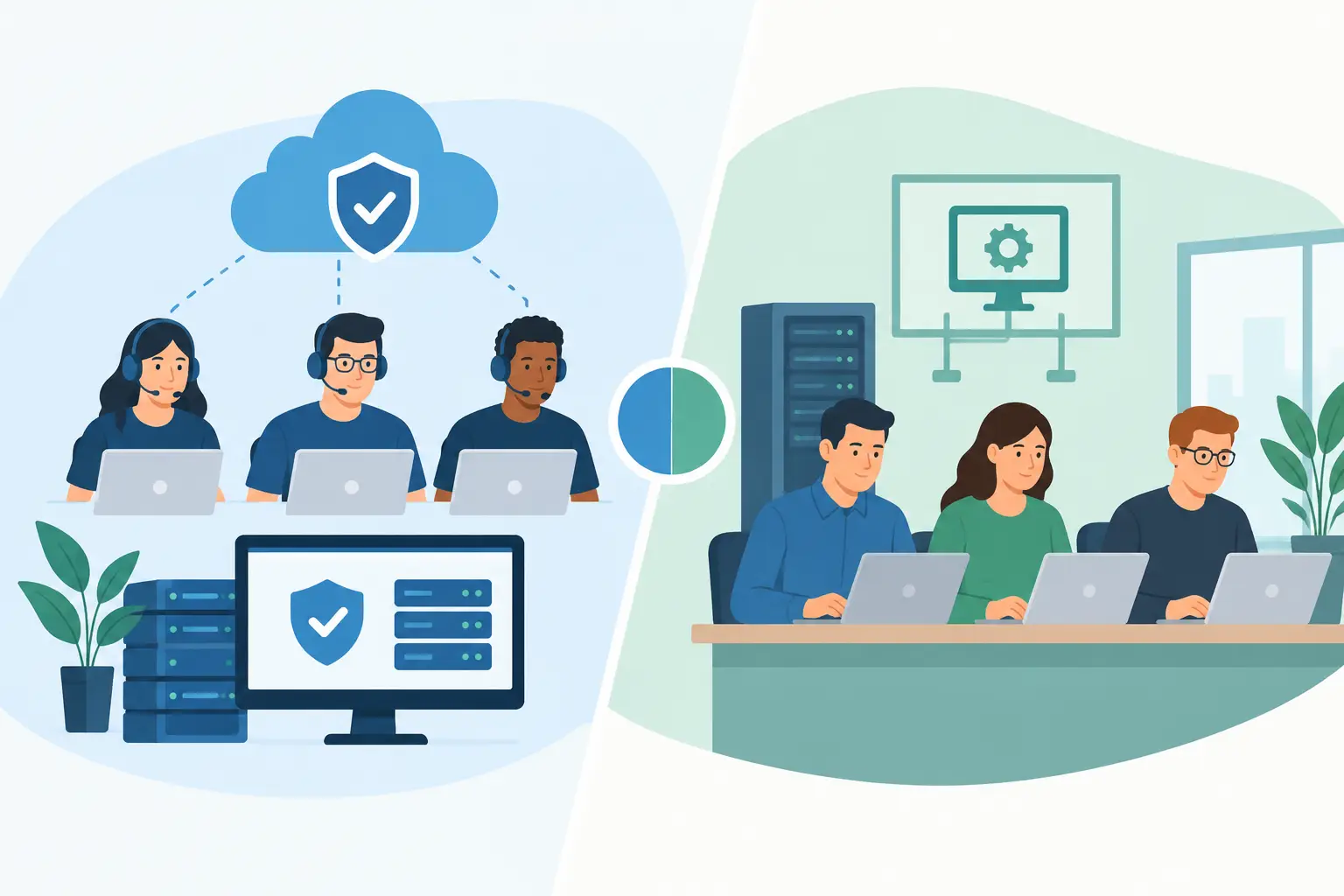
Can One IT Provider Support a Business With Multiple Locations?
Yes. A single managed IT service provider can support users, devices, networks, cybersecurity, and cloud services across multiple business locations. For Canadian businesses operating from several offices, branches, stores, clinics, warehouses, or other locations, having a different IT provider at every site can quickly become complicated. Different support processes. Different security standards. Different vendors. And when something goes wrong, figuring out who is responsible can become a...
Read full post on cleverdogit.com
IT Help Desk Services in Dallas: What Businesses Should Expect in 2026
If you’ve ever called an IT company and gotten a voicemail, or waited two days for someone to fix a printer that’s holding up your whole front office, you already know why this topic matters. IT help desk services in
Read full post on ightysupport.com
Schema Markup for Local Business: How to Tell AI Who You Serve
Schema markup for local business, explained in plain words. Run the prompt that shows whether AI can find you, then add the code that tells it who you serve.
Read full post on tracsoft.com
Beyond Technology: How Healthcare IT Supports Tribal Sovereignty | All Covered
Systems, software, and infrastructure are often viewed as the foundation of healthcare technology initiatives. For Tribal Nations, however, technology alone does not define success. Lasting outcomes are achieved when technology investments align with community goals, cultural traditions, workforce development, and patient care priorities. Across Indian Country, healthcare organizations are navigating the complex task of transforming legacy systems while preserving Tribal sovereignty and remaining true to the priorities of their communities. Success is measured by more than the deployment o
Systems, software, and infrastructure are often viewed as the foundation of healthcare technology initiatives. For Tribal Nations, however, technology alone does not define success. Lasting outcomes are achieved when technology investments align with community goals, cultural traditions, workforce development, and patient care priorities. Across Indian Country, healthcare organizations are navigating the complex task of transforming legacy systems while preserving Tribal sovereignty and remaining true to the priorities of their communities. Success is measured by more than the deployment of new technology. It is reflected in the ability to build resilient, sustainable healthcare environments that support self-governance, advance self-determination, and improve healthcare outcomes. Healthcare Technology as an Enabler of Tribal Sovereignty and Self-Determination Healthcare organizations across the country are under increasing pressure to improve operational efficiency, enhance patient experiences, and safeguard sensitive information. For Tribal healthcare organizations, these priorities are often accompanied by additional considerations, including Tribal sovereignty, unique governance structures, funding complexities, workforce constraints, and long-term community objectives. In this environment, technology decisions carry implications far beyond operational improvements. They influence how healthcare services are delivered, governed, and sustained while supporting the Nation's ability to maintain control over its data, processes, and future direction. The most successful modernization initiatives are not technology-driven; they are mission-driven. They begin with a clear vision for the future of healthcare within the community and a deliberate strategy for aligning technology investments with the Nation's priorities, values, and long-term goals. When approached in this way, technology becomes a powerful enabler of Tribal sovereignty, self-determination, and improved health outcomes for generations to come. "Technology should never dictate a Nation's future. The most successful healthcare transformation initiatives begin by listening, understanding community priorities, and aligning technology to support those goals. When strategy comes first, technology becomes an enabler of long-term success rather than the focus of the conversation." – Heather Nicholson, Tribal Healthcare Strategist, All Covered The principle is particularly relevant in Tribal healthcare, where modernization initiatives are often linked to broader objectives such as Tribal sovereignty, self-governance, and the long-term health and well-being of the community. Key Challenges Facing Tribal Healthcare Leaders While each Nation's journey is unique, many Tribal healthcare organizations face similar challenges and opportunities as they pursue modernization initiatives aligned with their strategic goals and community priorities. Legacy Systems and Growing Complexity Healthcare organizations often depend on a diverse mix of systems that have accumulated over time to meet evolving clinical, operational, and regulatory needs. While many of these platforms continue to provide value, fragmented technology environments can create challenges related to efficiency, data sharing, reporting, cybersecurity, and interoperability. As patient expectations continue to rise and regulatory requirements become more complex, maintaining and integrating aging systems can place increasing demands on healthcare organizations. Modernization provides an opportunity to simplify operations, strengthen security, improve access to information, and create a more connected healthcare ecosystem that supports both providers and the communities they serve. Workforce and Resource Constraints Like healthcare organizations across the country, Tribal healthcare providers continue to face workforce shortages, resource constraints, and increasing demands on their teams. Recruiting and retaining specialized healthcare and technology talent can be especially challenging, placing additional pressure on staff who are often responsible for supporting a wide range of operational and clinical priorities. Modernization can help alleviate many of these challenges by streamlining administrative processes, improving operational efficiency, and reducing reliance on manual tasks. However, realizing these benefits requires more than the deployment of new technology. Success depends on thoughtful planning, effective change management, and ongoing support to ensure solutions align with organizational goals, workforce capabilities, and community needs. Managing Organizational Change Modernization efforts are about more than implementing new technology. They often drive changes across workflows, operations, and the overall healthcare experience. Achieving lasting value requires a coordinated approach that brings together leadership, engages stakeholders, communicates a clear vision, and supports adoption at every stage of the transformation journey. Finding the Right Partners Not every technology partner fully understands the unique priorities, governance considerations, and operational realities of Tribal healthcare. The most successful partnerships begin with listening and a commitment to understanding each Nation's distinct needs, values, and long-term objectives. Rather than applying a one-size-fits-all model, technology decisions should be guided by the Nation's vision for healthcare, support Tribal sovereignty and self-governance, and align with the cultural, organizational, and community priorities that shape its future. When technology is tailored to these goals, it becomes a strategic enabler of sustainable growth, resilience, and improved health outcomes. Building a Foundation for the Future Modernization is not about replacing technology for the sake of change. It is about building a strong, sustainable foundation that can support high-quality healthcare delivery well into the future. That foundation may include strengthened cybersecurity, modernized infrastructure, cloud-based services, enhanced data and reporting capabilities, and more seamless access to critical information. However, the true value of modernization extends beyond the technology itself. At its core, modernization is about empowering healthcare organizations to remain resilient, adapt to evolving community needs, and deliver better outcomes over time. For Tribal healthcare leaders, it is an opportunity to create sustainable operations, support Tribal sovereignty and self-governance, and ensure that healthcare systems can effectively serve current and future generations. A Strategic Approach to Healthcare Transformation The most successful healthcare transformation initiatives often begin with a fundamental question: “What outcomes are we trying to achieve?” When healthcare organizations start with their mission, community needs, and long-term strategic goals, technology becomes a means to an end rather than the objective itself. A clear vision helps ensure that modernization efforts deliver meaningful value and support the outcomes that matter most. For Tribal Nations, this means investing in solutions that strengthen healthcare delivery, improve operational effectiveness, and enhance resiliency while supporting Tribal sovereignty, self-governance, and long-term community priorities. Technology is most effective when it aligns with the Nation's vision and empowers leaders to advance sustainable, community-centered care. While technology will continue to evolve, the principles that drive successful healthcare organizations remain constant. By approaching modernization through the lens of strategy, partnership, and self-determination, Tribal healthcare leaders can build lasting capabilities that improve care, strengthen organizational resilience, and create value. Looking for additional insights on healthcare cybersecurity, technology modernization, and operational resiliency? Visit our Healthcare Solutions page to learn how All Covered supports healthcare organizations nationwide.
Read full post on allcovered.com
We Reviewed 26 Nonprofit IT Audits. Here’s What Failed Most.
We Reviewed 26 Nonprofit IT Audits. Here’s What Failed Most. A nonprofit IT audit should show leaders more than what is wrong. It should reveal whether the technology supporting daily
Read full post on 7tech.com
The clocks aren't falling back this year. Your computers might anyway.
If you live in BC, Alberta, or Manitoba, November 1 is about to be a pretty boring Sunday. No fumbling with the microwave clock, no arguing about whether you gained or lost an hour. Your province has decided the time change is done.
Read full post on campfire.ca